
By Kai Ioh and KE TEAM Hawaii
Kai Ioh is a luxury real estate advisor based in Kona, Hawai‘i, specializing in second home, resort, and ultra-high-net-worth markets across the Big Island.
In my previous blog, Why Leis in Hawaii Are So Much More Than Flowers, I wrote about making graduation leis for our daughter Momo this year and how the experience helped me better understand the heart behind lei culture in Hawai‘i.
After spending hours picking flowers, washing them, refrigerating them, properly preparing them, and carefully stringing dozens of leis together, I understood why local families value them so deeply.
Leis are not simply decorations. They are expressions of aloha, appreciation, celebration, and connection.
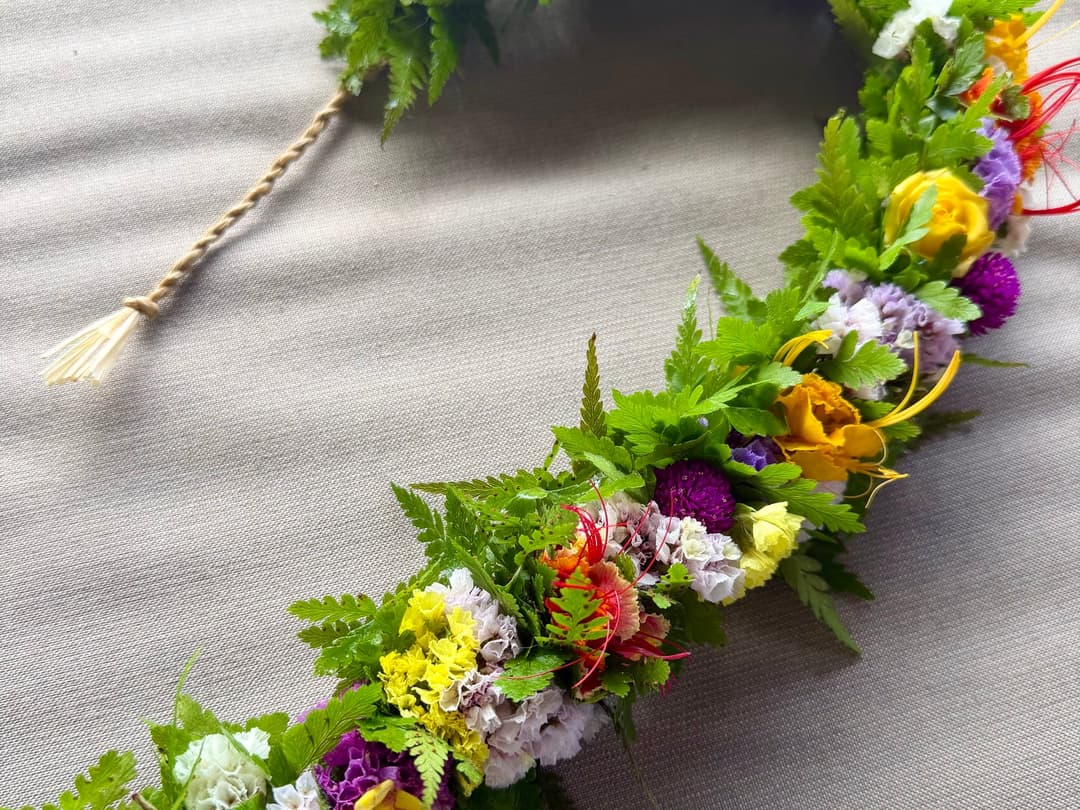
Haku Lei made by Barb for 2026 graduation
That experience also reminded me how many visitors — and honestly even longtime Hawai‘i residents like ourselves — may not realize there are quiet customs and meanings attached to leis beyond their beauty.
So before diving into today’s topic, let me start with a few quick questions.
- Should a pregnant woman receive a closed circular lei?
- Is it okay to remove a lei immediately after receiving it?
- Are leis traditionally only for women?
- Is placing a lei on the ground considered disrespectful?
- Why do some funeral leis remain open-ended?
If you are unsure about some of these, you are definitely not alone.
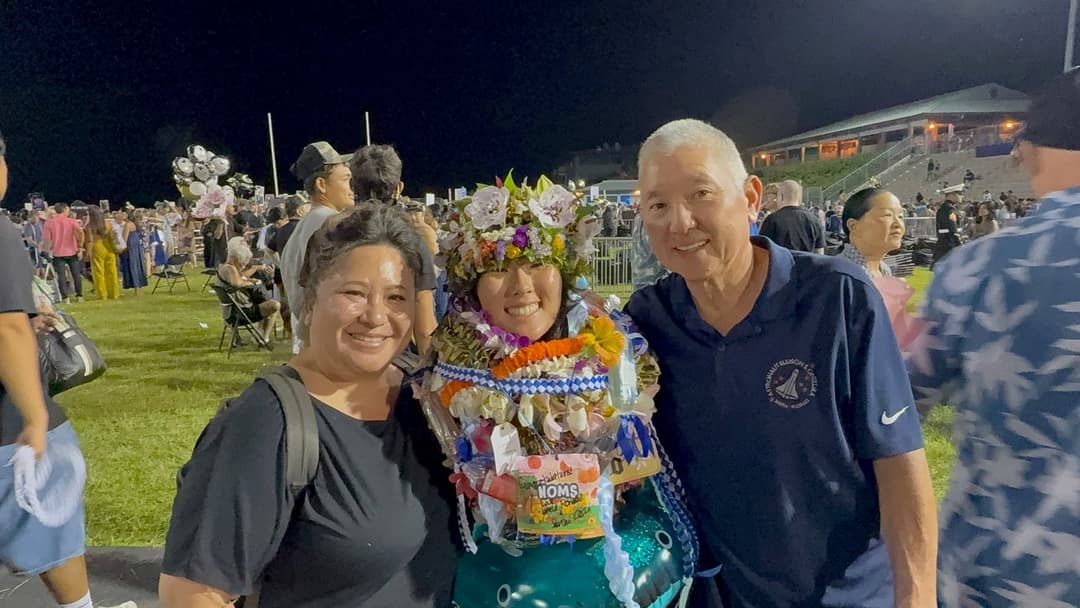
Mahalo Akemi -sensei and Ron!
Even after living on the Big Island for 25 years, our family is still learning ourselves. That is one of the beautiful things about Hawai‘i. Many traditions are quietly woven into daily life, and few traditions express aloha more deeply than the lei.
A Brief History of the Hawaiian Lei
The tradition of leis in Hawai‘i traces back to the earliest Polynesian voyagers who arrived in the islands centuries ago. They brought with them the custom of wearing and giving garlands made from plants, shells, seeds, feathers, and other natural materials.
The word “lei” itself is believed to come from the Tahitian language, though Hawaiian lei culture evolved into something uniquely local over generations.
In ancient Hawai‘i, leis were not simply decorative. They often reflected rank, spirituality, relationships, and even mana — the spiritual energy believed to exist within people and nature.
Chiefs and ali‘i sometimes wore highly elaborate feather leis crafted from native birds, while common people made leis from leaves, flowers, nuts, and vines gathered from the land.
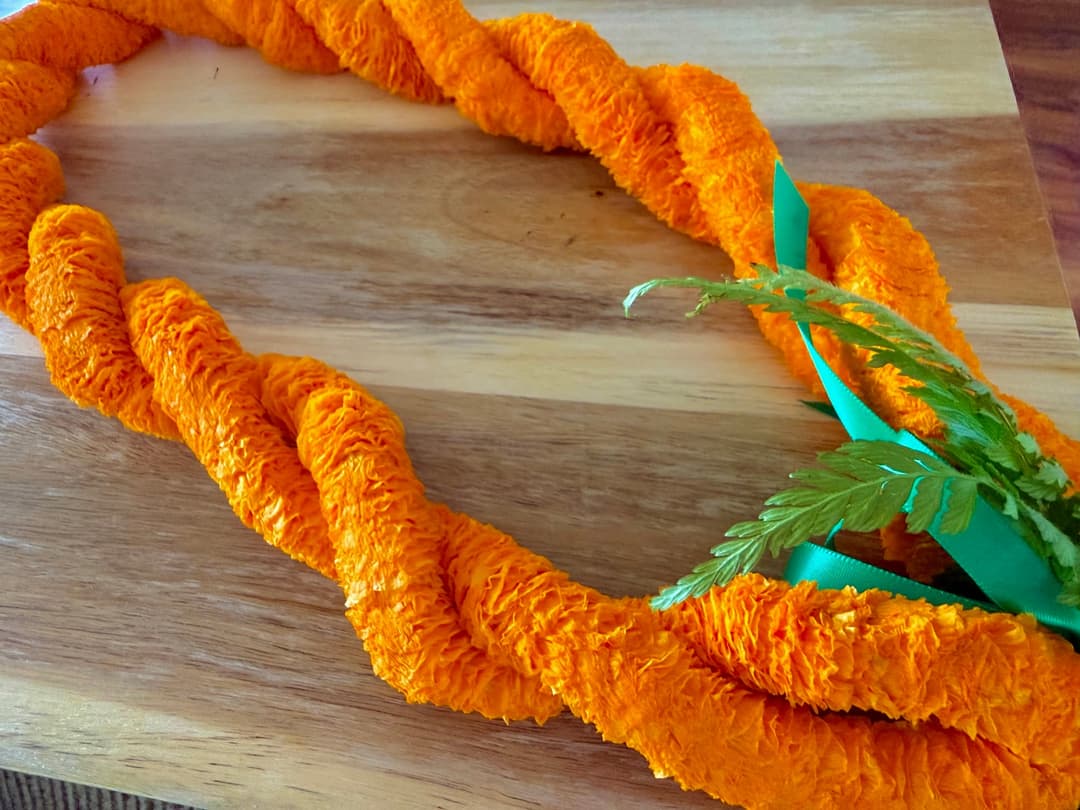
These are not feathers. 1000 Ilima flower petals.
Today, leis remain one of the strongest symbols of aloha and Hawai‘i’s spirit of connection.
A Lei Is Never “Just Flowers”
For many mainland visitors, a lei may initially seem like a simple Hawaiian welcome gift. Beautiful? Absolutely. But simple? Not quite.
Traditionally, leis represent affection, celebration, respect, gratitude, and connection. They are often given during important life moments:
- Graduations
- Weddings
- Birthdays
- Arrivals
- Farewells
- Funerals
In Hawai‘i, the act of making a lei is often considered a labor of love.
After helping make dozens of graduation leis this year for our daughter Momo, I finally understood why local families cherish them so deeply. Good leis take time, preparation, patience, and care. Flowers are picked carefully, cleaned, refrigerated, prepared properly, and strung one by one.
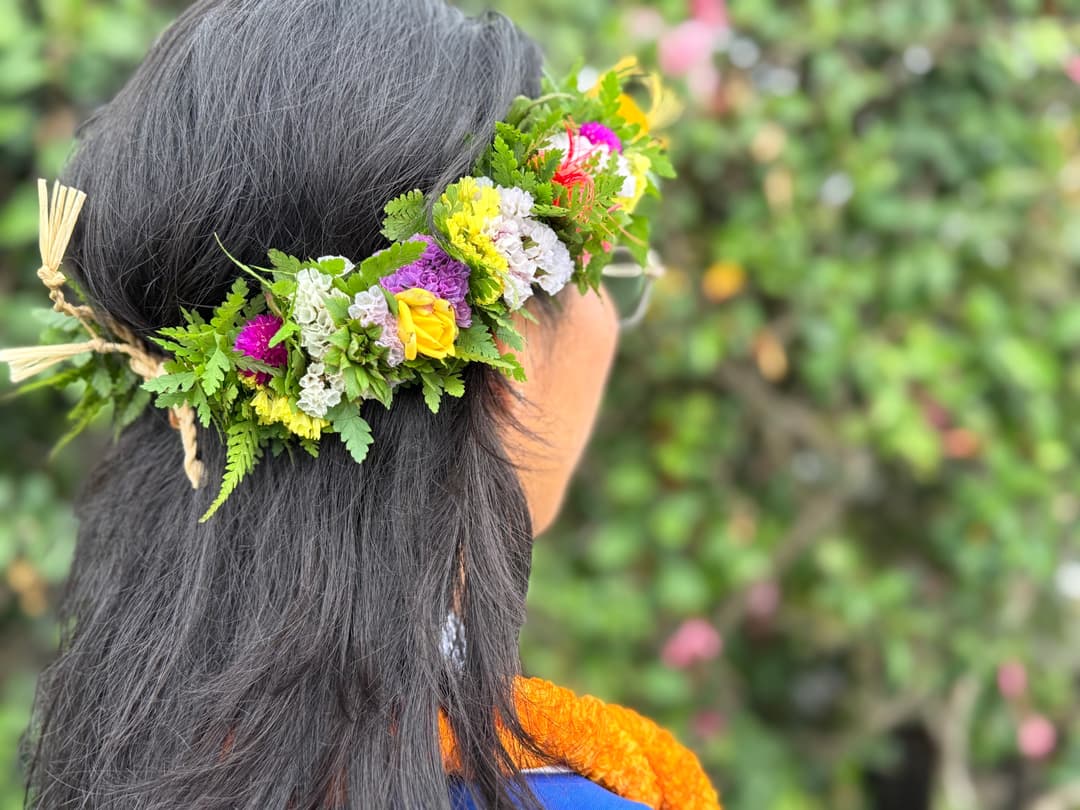
Elegant Haku Lei
And perhaps most importantly, leis are temporary.
The flowers fade quickly. Their beauty lasts only briefly. In some ways, that fleeting nature makes them even more meaningful. A lei honors a moment that will never happen exactly the same way again.
That spirit of aloha is part of what makes Hawai‘i feel different.
Not All Leis Are the Same
One thing many visitors are surprised to learn is that there is no single “Hawaiian lei.”
Leis can be made from:
- Flowers
- Leaves
- Seeds
- Shells
- Feathers
- Nuts
- Ribbon
- Candy
- Even money for graduations
Different islands, families, and occasions often have their own styles and preferences.
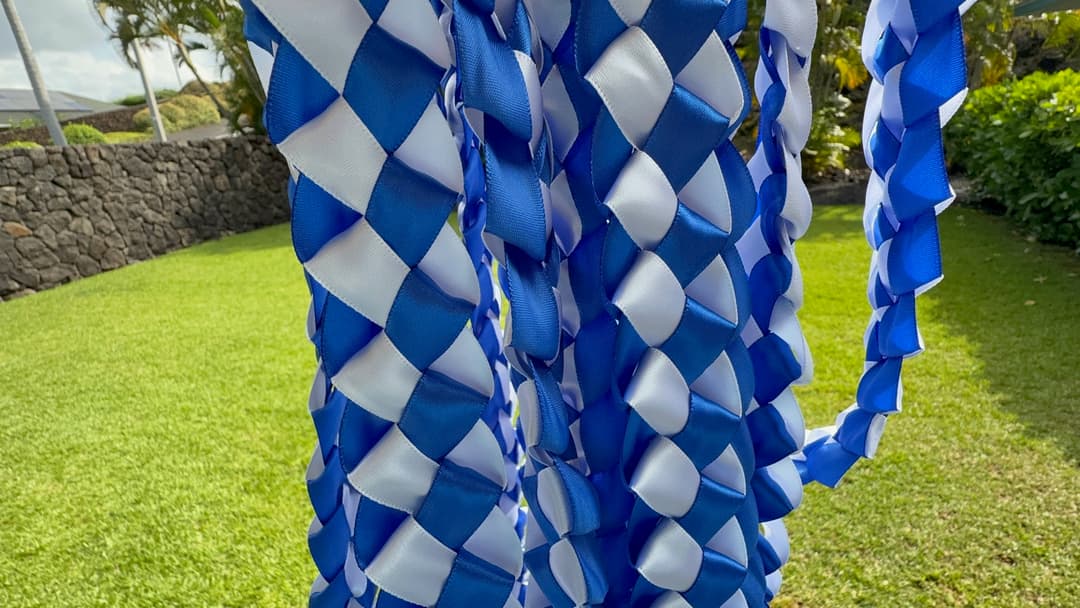
Ribbon lei by Momo
Some of the most commonly used flowers include:
- Plumeria
- Orchid
- Pikake
- Tuberose
- Crown flower
- Puakenikeni
- Ginger blossoms
Each flower carries its own fragrance, texture, and personality.
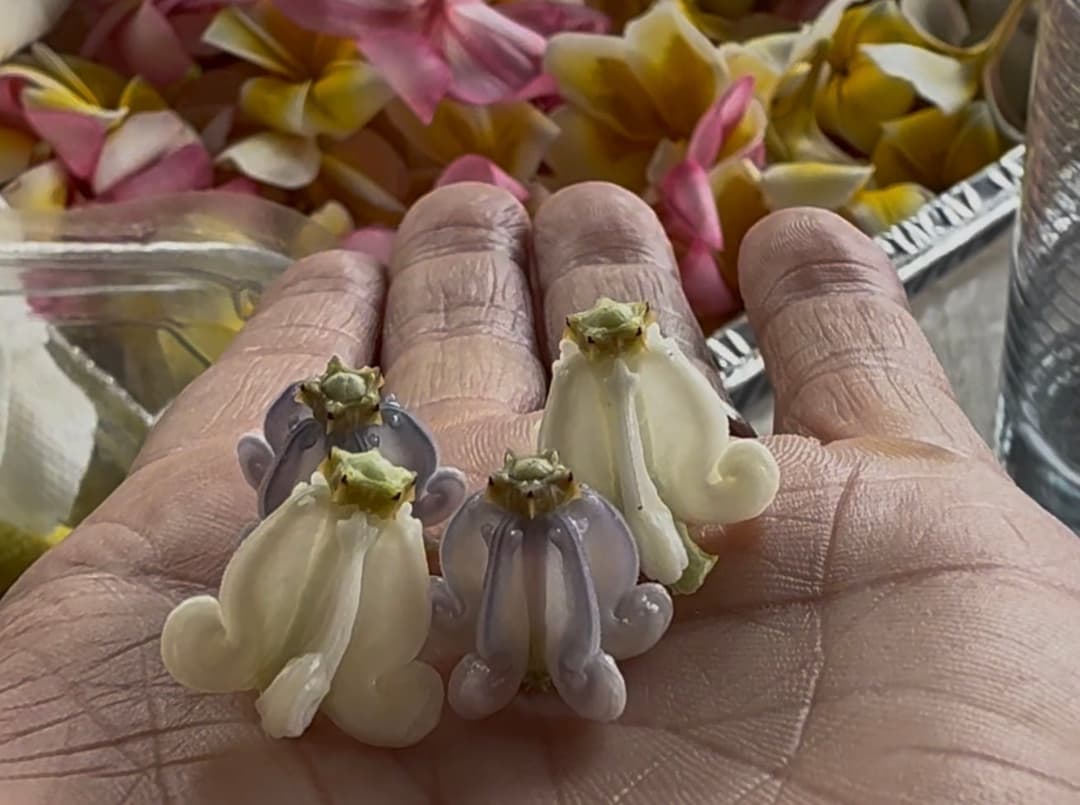
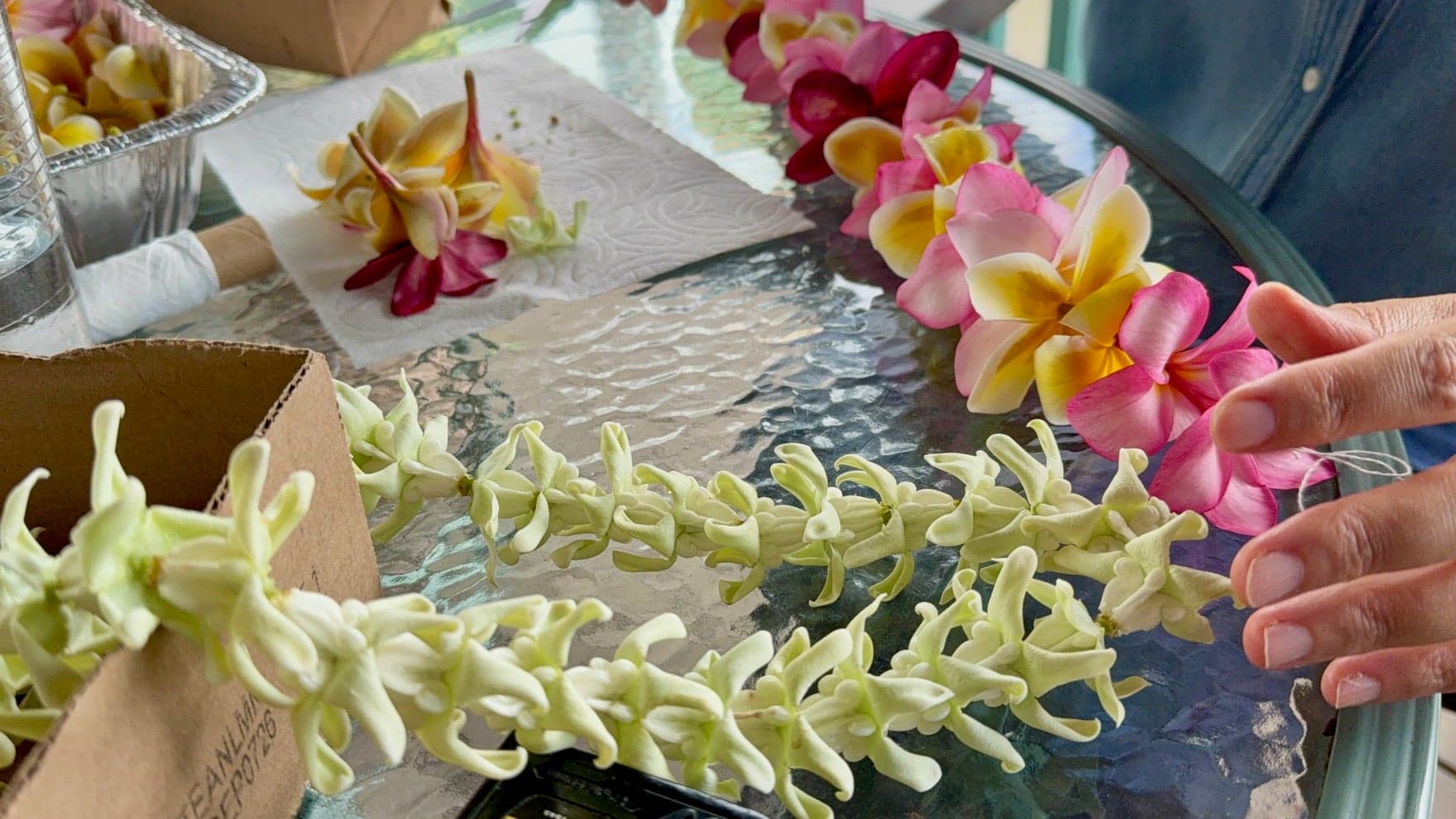
Queen Liliuokalani’s favorite flower – Crown flower
Plumeria leis are perhaps the most recognizable to visitors, especially on the Big Island. They are beautiful and fragrant, but also surprisingly labor-intensive because each flower must be carefully selected and handled gently.
Pikake leis are especially prized for their delicate jasmine fragrance, while puakenikeni flowers famously change color as they mature. Tuberose leis are wonderfully fragrant and often associated with celebrations and weddings.
Maile leis, traditionally made from fragrant green maile vines, are among the most respected leis in Hawai‘i and are commonly used for weddings, graduations, ceremonies, hula, and important occasions.
Kukui nut leis carry a completely different feeling altogether — elegant, earthy, and timeless.
And during graduation season, creativity takes over completely. Candy leis, ribbon leis, snack leis, and money leis now fill campuses across Hawai‘i. Some students can barely see over the mountain of leis around their necks by the end of the ceremony.
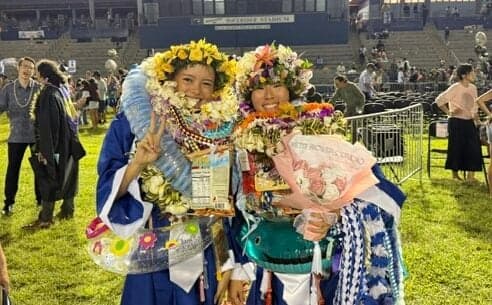
Honestly, it becomes part graduation, part survival challenge.
Quiet Etiquette That Many Visitors Do Not Know
One of the reasons lei culture remains meaningful in Hawai‘i is because it still carries quiet etiquette and respect.
Not everyone follows every custom perfectly today, and practices vary by family and community. Still, understanding the spirit behind these traditions matters.
How a Lei Should Be Worn
One of the most misunderstood parts of lei culture is how a lei should be worn.
A lei is traditionally meant to rest naturally on the shoulders, not hang tightly from the neck like a necklace.
When worn properly, the lei falls comfortably in the front and back with balanced weight. This not only looks more natural, but also helps protect delicate flowers from damage.
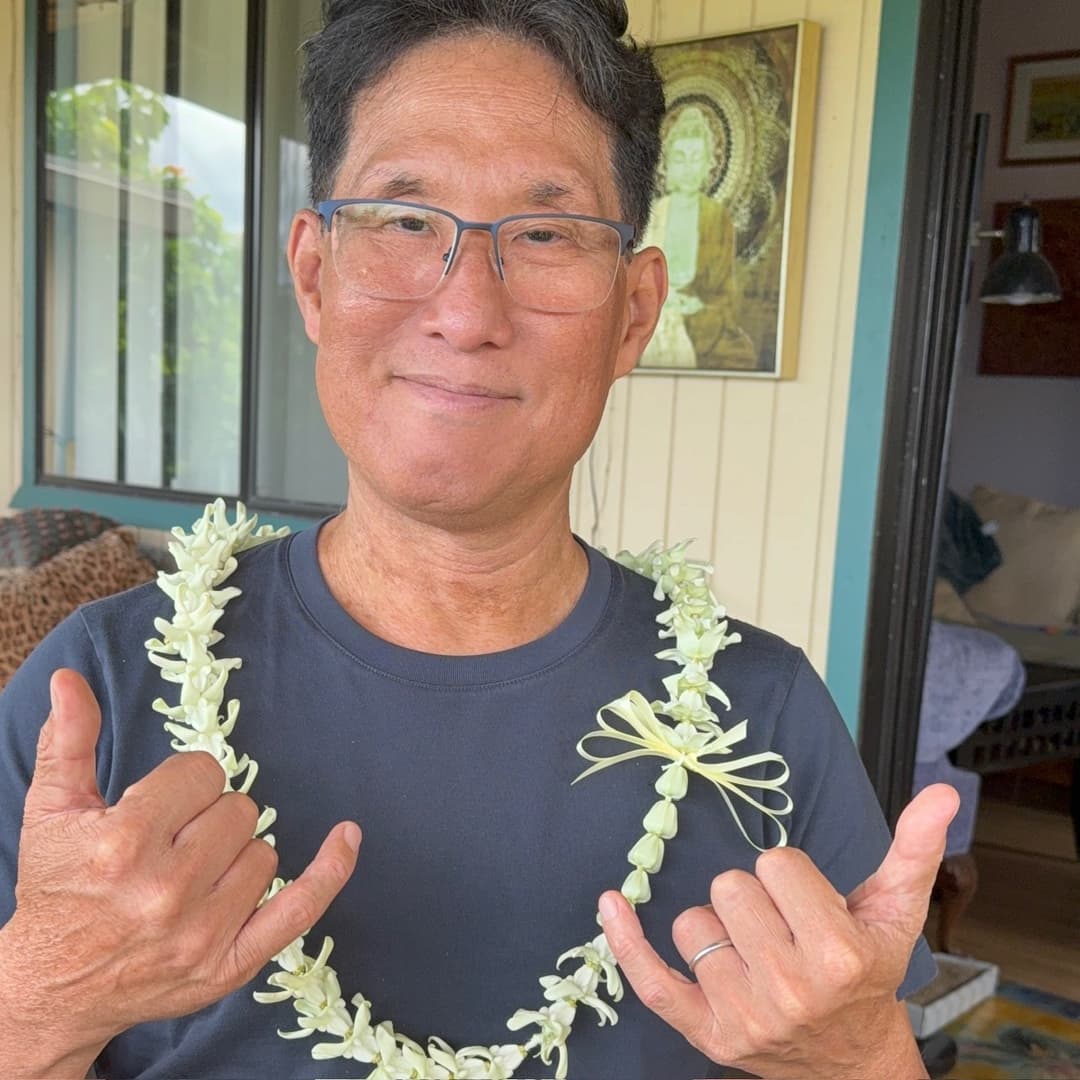
A lei should rest naturally on the shoulders. The ribbon should be on the left side (heart side).
Receiving a Lei
Traditionally, a lei should be accepted graciously and worn at least briefly in the presence of the giver.
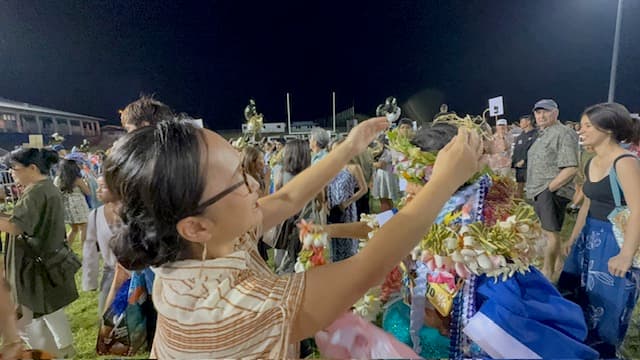
Immediately removing it can unintentionally feel dismissive, even if that was not the intention.
In Hawai‘i, the giving of a lei is often considered an emotional gesture, not merely a physical gift.
Do Not Refuse a Lei
Refusing a lei is generally considered impolite unless there is a serious reason, such as allergies.
Even simple airport greeting leis often carry genuine warmth and aloha.
Closed Lei vs Open Lei
One custom many people find interesting involves pregnant women.
Traditionally, a pregnant woman may receive an open-ended lei rather than a closed circular lei. Some families believe closed leis symbolize an “unbroken circle,” while open-ended leis represent openness and safe passage for childbirth.
This is not a strict universal rule today, but the tradition still exists in many local families.
Similarly, open-ended leis are sometimes used at funerals as symbolic gestures connected to transition and passage.
Avoid Placing Leis on the Ground
Many local families avoid placing leis on the ground or stepping over them.
Again, this connects to respect. Because leis often symbolize affection, honor, or remembrance, treating them carelessly can feel disrespectful.
Men Wear Leis Too
Some visitors mistakenly assume leis are primarily for women.
Not at all.
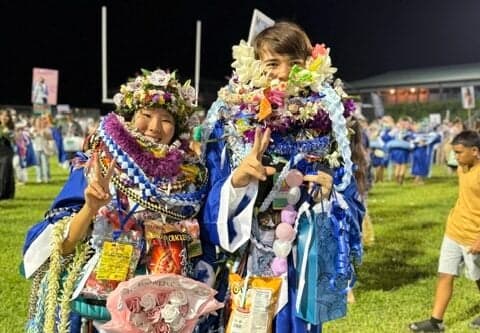
In Hawai‘i, men commonly wear leis for graduations, weddings, celebrations, ceremonies, and special events. Maile leis and kukui nut leis are especially popular among men, though flower leis are worn by everyone.
Lei Giving Reflects Hawai‘i’s Sense of Community
One thing I have come to appreciate over the years is how leis reflect Hawai‘i’s deeper sense of community.
On the mainland, celebrations often center around purchased gifts. In Hawai‘i, leis still carry a strong handmade tradition.
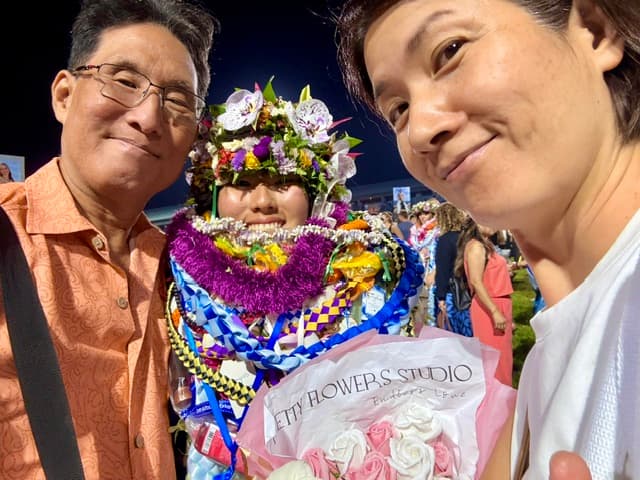
There is something wonderfully human about that.
Over the past decade, Hawai‘i has changed in many ways. The islands have become more global, more connected, and in some places more crowded. Yet lei culture still quietly preserves something deeply local and personal.
You can feel it especially during graduation season on the Big Island. Entire families show up carrying armfuls of leis made with patience and care. Some are elegant. Some are funny. Some are incredibly elaborate. All of them represent time, effort, and affection.
And perhaps that is the real meaning behind a lei.
Not perfection.
Not luxury.
Connection.
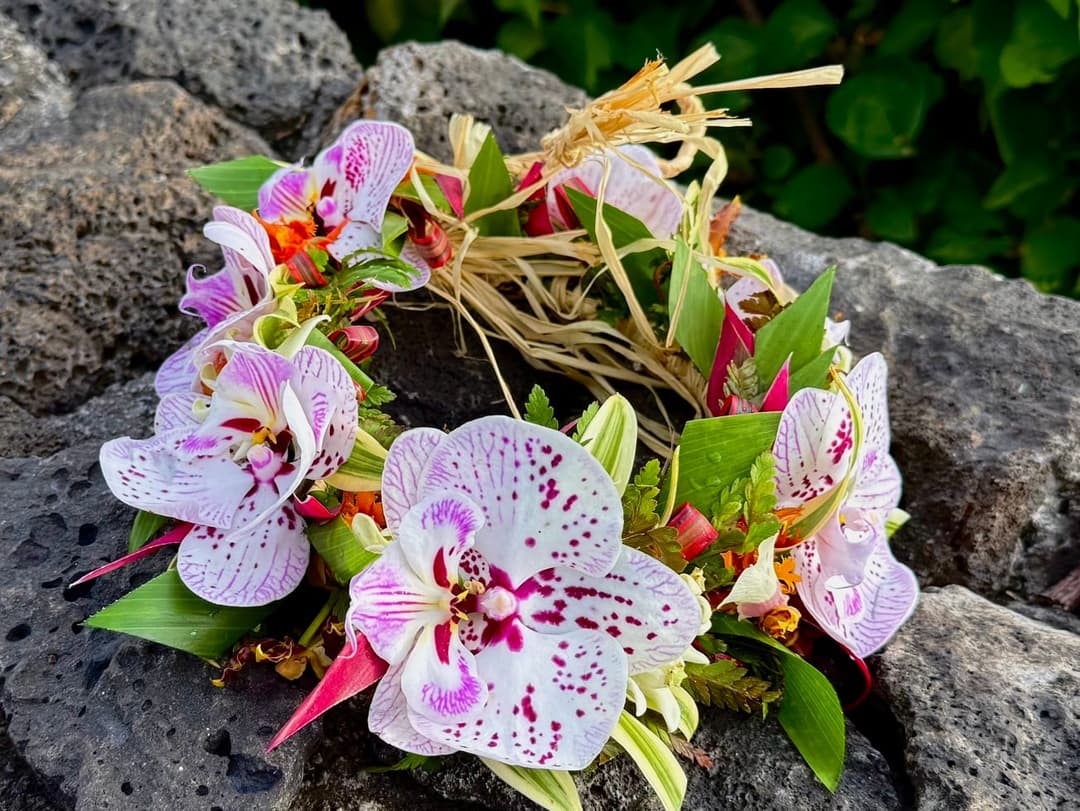
Haku lei
Frequently Asked Questions About Hawaiian Lei Etiquette
What does a lei symbolize in Hawai‘i?
A lei traditionally symbolizes aloha, affection, celebration, respect, gratitude, and connection. Different types of leis may also carry personal, spiritual, or cultural meaning depending on the occasion.
Is it rude to refuse a lei in Hawai‘i?
Traditionally, refusing a lei may be considered impolite because leis are often given as heartfelt gestures of aloha. Most people accept them graciously unless allergies or other serious concerns exist.
Can men wear leis in Hawai‘i?
Yes. Men commonly wear leis for graduations, weddings, ceremonies, birthdays, and celebrations throughout Hawai‘i. Maile leis and kukui nut leis are especially popular among men.
Why are some Hawaiian leis open-ended?
Open-ended leis are sometimes given to pregnant women or used during funerals. In some traditions, the open shape symbolizes safe passage, transition, or openness.
Is it disrespectful to place a lei on the ground?
Many local families consider it disrespectful to place a lei on the ground or step over one because leis often represent love, honor, and emotional connection.
What flowers are commonly used in Hawaiian leis?
Common lei flowers include plumeria, orchid, pikake, puakenikeni, ginger blossom, tuberose, and crown flower. Different flowers are used for different occasions and styles.
Are Hawaiian leis always made from flowers?
No. Leis can also be made from leaves, shells, seeds, nuts, feathers, ribbon, candy, or money, especially during graduation season.
Why are leis important in Hawai‘i culture?
Leis reflect Hawai‘i’s traditions of aloha, hospitality, celebration, and human connection. They are deeply woven into family gatherings, ceremonies, and important life events.
How long do fresh flower leis last?
Most fresh flower leis last one to three days depending on the flowers used, refrigeration, and weather conditions. More delicate flowers may fade quickly in warm weather.
What do visitors often misunderstand about leis?
Many visitors see leis as simple souvenirs or tourist gifts. In Hawai‘i, leis often carry emotional, cultural, and symbolic meaning far beyond decoration.