By Kai Ioh and KE TEAM Hawaii
Kai Ioh is a luxury real estate advisor based in Kona, Hawai‘i, specializing in second home, resort, and ultra-high-net-worth markets across the Big Island.
Key Takeaways
Kona cannot currently be described as one buyer’s market or seller’s market. Conditions depend on the property type and price range.
Single-family home prices appear to be stabilizing, while inventory is tightening and pending sales are improving.
Homes priced below approximately $1.25 million remain competitive because available inventory is limited.
Luxury homes above $2.5 million are moving more slowly and face greater price sensitivity.
Kona’s condominium market is firmly buyer-friendly, with higher inventory, weaker demand, and increasing pressure from AOAO fees.
The Kona real estate market update for August 2026 shows two very different conditions within the same part of the Big Island of Hawai‘i. Single-family homes are showing resilience, particularly below $1.25 million. Condominiums are facing higher inventory, weaker demand, and greater pricing pressure.
The overall market is not moving in one direction. In Kona, it is increasingly important to look beyond broad statistics and examine the specific property type, neighborhood, and price range.
Kona Real Estate Market Update: The Overall Picture
The honest answer to whether Kona is a buyer’s market or seller’s market is that it depends on what is being bought or sold.
The single-family home market is close to balanced overall, with stronger seller-friendly conditions in the lower price ranges. The condominium market is firmly in buyer’s territory. The upper end of the single-family market is also moving more slowly than the entry and middle segments.
One market label may be convenient, but it does not explain what is actually happening.
In the context of Hawai‘i, this distinction matters because buyers often compare properties with very different land characteristics, ownership costs, building conditions, elevations, and community structures.
Kona Single-Family Home Prices Are Stabilizing
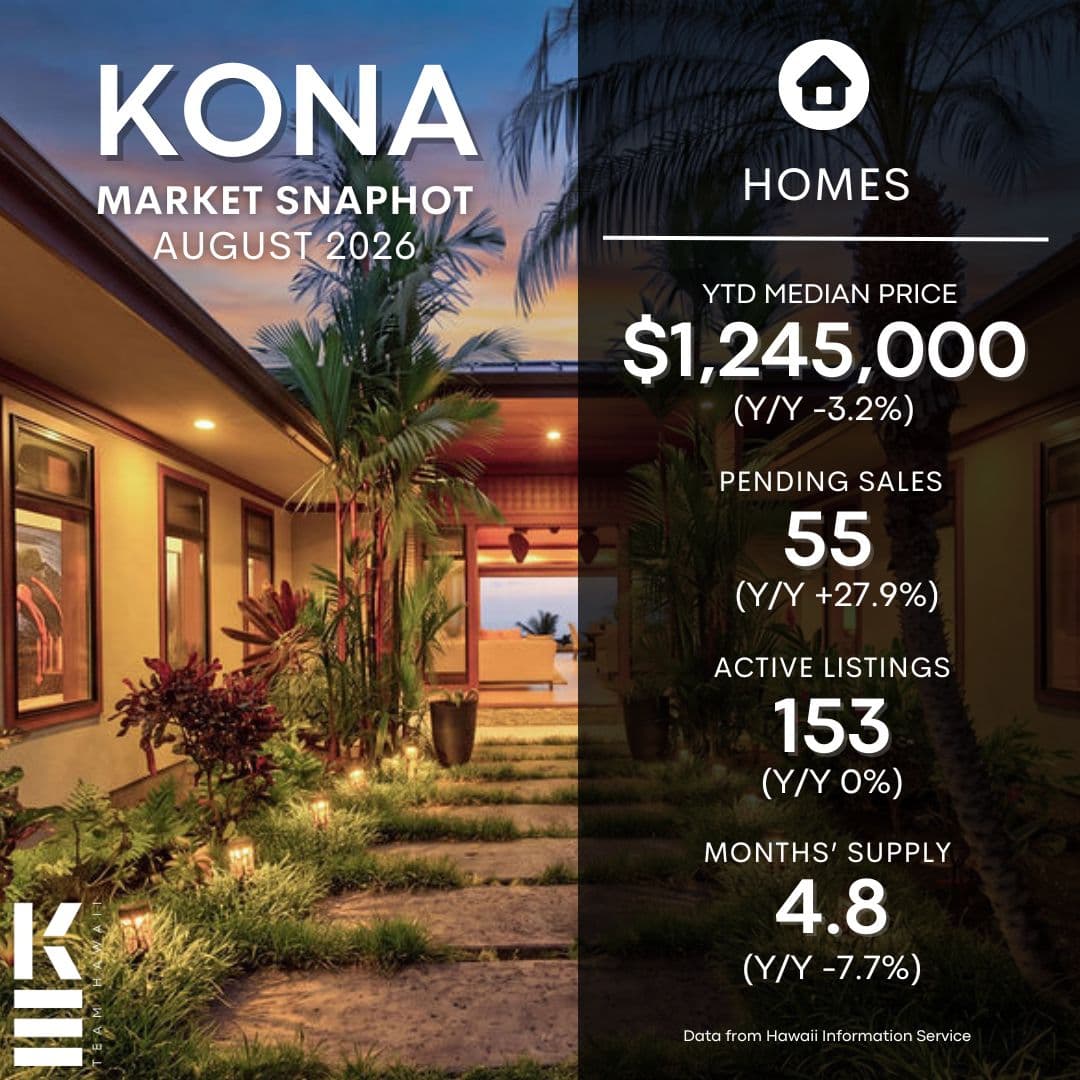
The median price for a Kona single-family home is down 3.2% compared with the same period last year.
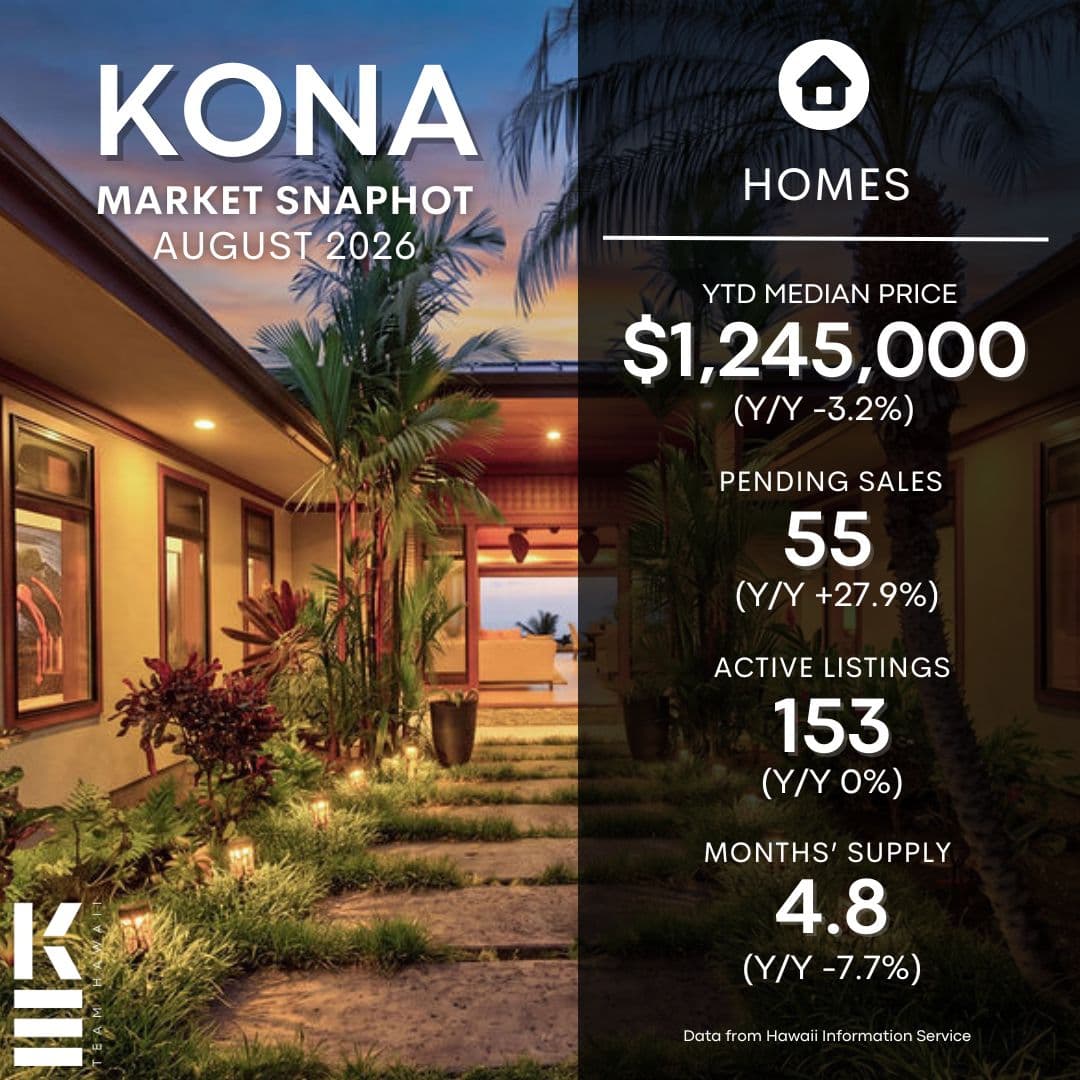
At first glance, that sounds negative. However, prices remain essentially unchanged from the levels recorded at the end of 2025. This suggests that much of the correction may have already taken place and that prices are beginning to stabilize.
The median sold price per square foot is approximately $680, down 6.7% year-over-year. There is still some pricing pressure, but values have remained relatively resilient considering mortgage rates near 6.7% to 6.8%.
The headline is a year-over-year price decline. The more useful observation is that the rate of decline appears to be moderating.
Pricing Remains Important for Sellers
Buyers are paying close attention to value.
A well-presented home that enters the market at a supportable price can still attract strong interest. A home priced too far above recent comparable sales may remain available longer and eventually require an adjustment.
In Kona, buyers also consider factors that may not appear clearly in general market statistics. Elevation, airflow, ocean views, road access, construction quality, solar PV systems, roof condition, and exterior maintenance can all influence perceived value.
Pricing must reflect the individual home, not only the overall market.
Single-Family Home Inventory Is Tightening
Active single-family home inventory declined 7% from the previous month. The number of available listings has returned to levels last seen in late 2025.
Months of inventory also fell to 4.8 months.
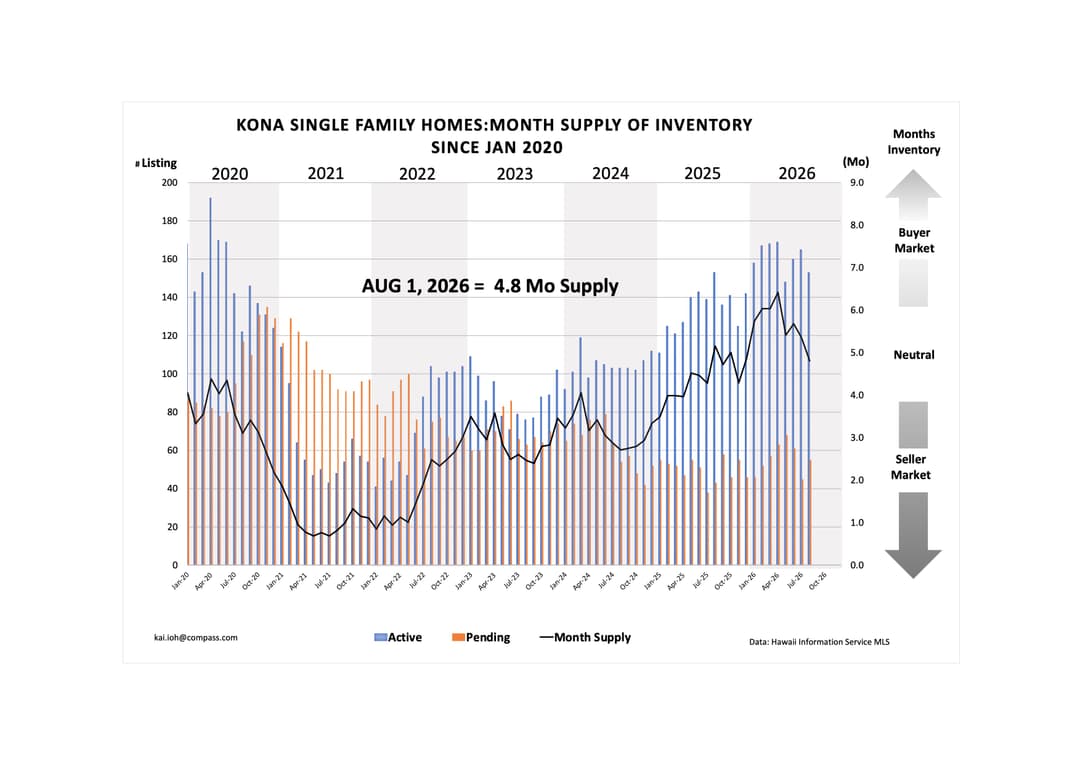
Four to six months of inventory is generally considered a balanced market. At 4.8 months, Kona is moving slightly toward seller-friendly conditions overall. However, conditions vary considerably by price range.
A home priced below $1.25 million is competing in a very different environment from a luxury property priced above $4 million.
This is why I hesitate to describe the entire Kona market with one label.
Buyer Demand Remains Healthy
Pending single-family home sales increased by more than 20% from the previous month and 28% from the same period last year.
Pending activity has also moved above the level recorded at this time in 2024. Closed sales are up 3.2% year-over-year.
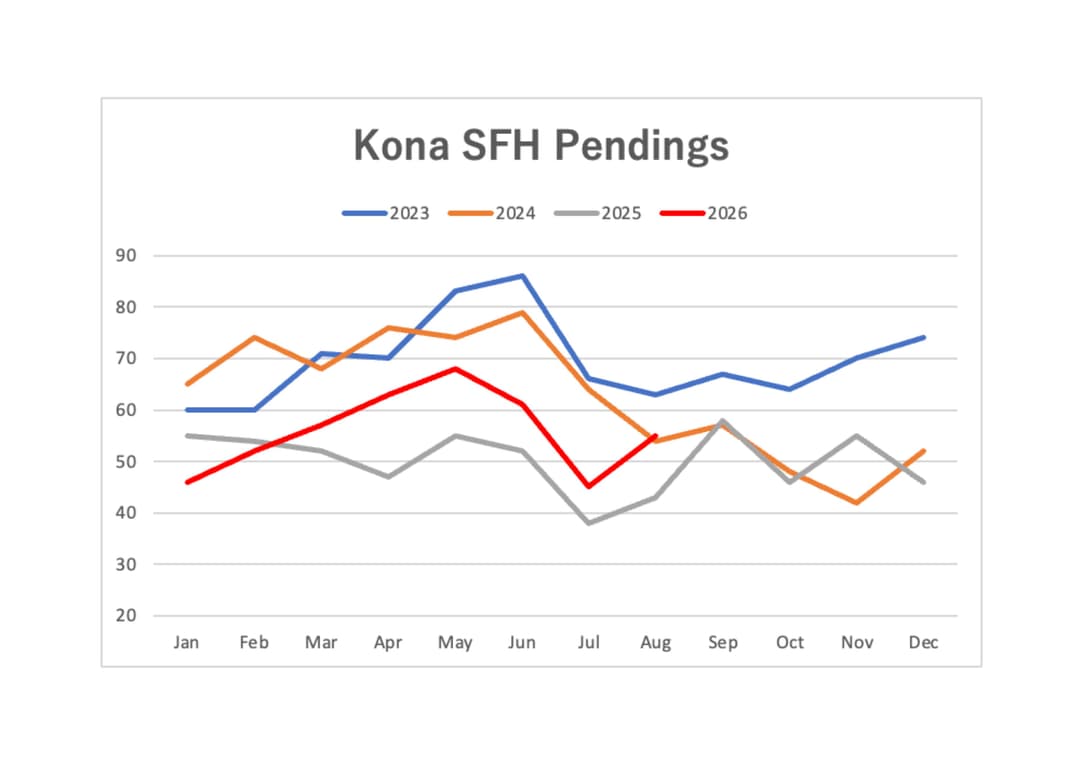
These figures indicate that buyers are still willing to move forward despite elevated borrowing costs. Demand is strongest in Kona’s entry and middle price segments, where the supply of available homes remains limited.
Homes Below $1.25 Million Remain Competitive
Homes priced below approximately $1.25 million currently have about 46 active listings and 39 pending sales.
That is close to a one-to-one active-to-pending ratio and indicates exceptionally strong demand compared with the rest of the market.
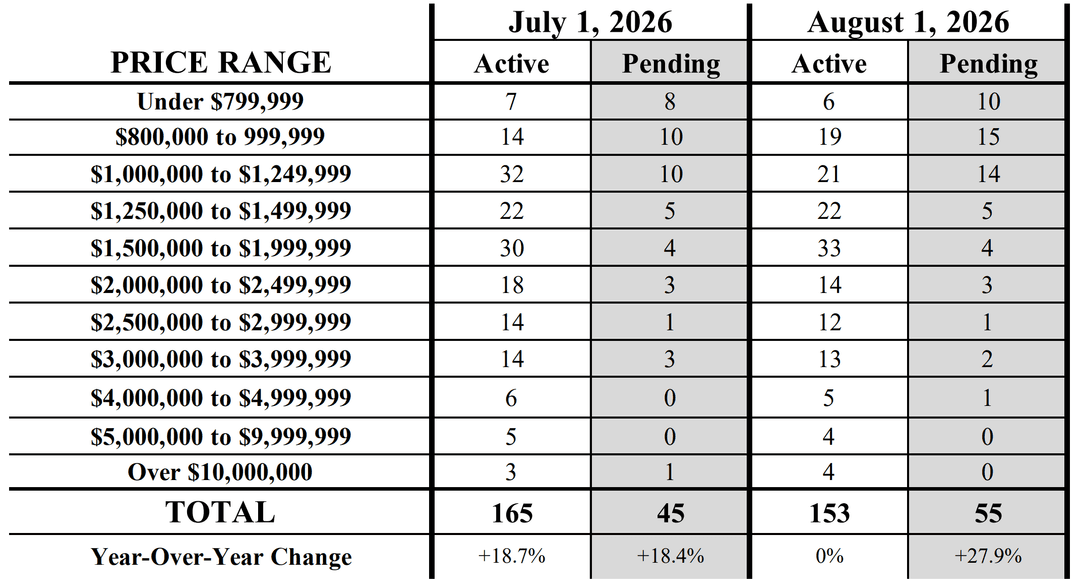
For a well-priced home in this range, buyers may still face competition. A general statement that Kona is a buyer’s market would be misleading for this segment.
Property condition remains important. Buyers may accept fewer cosmetic upgrades when choices are limited, but they still examine insurance eligibility, roofs, permitted improvements, deferred maintenance, and financing requirements.
Kona’s Luxury Market Is Moving More Slowly
The balance changes significantly as prices rise.
Above $2.5 million, there are nearly 10 active listings for every pending sale. Above $4 million, there is currently only one pending sale, essentially unchanged from the previous month.
Luxury buyers remain active, but they are selective. They have more properties to compare, less urgency, and often less dependence on mortgage financing than buyers in lower price ranges.
Many luxury buyers can wait for the right combination of location, privacy, architecture, condition, view, and lifestyle. A property must offer a clear reason to be chosen over competing homes.
Simply being a luxury property is not enough in today’s market.
Luxury Sellers Face a More Deliberate Sales Process
Luxury properties must be positioned accurately within their immediate competitive set.
A home in central Kona, a private residential community, or a resort area should not be valued using broad Big Island averages alone. Properties along the Kohala Coast may also operate under different inventory and ownership patterns.
Condition and presentation matter. Buyers at this level often compare finished homes with renovated properties, new construction, resort residences, and vacant land opportunities.
Across the entire Kona single-family market, the active-to-pending ratio is approximately 2.8 to 1. Opportunities exist for both buyers and sellers, but leverage depends heavily on the individual segment.
The Kona Condo Market Is a Buyer’s Market
The condominium market tells a very different story.
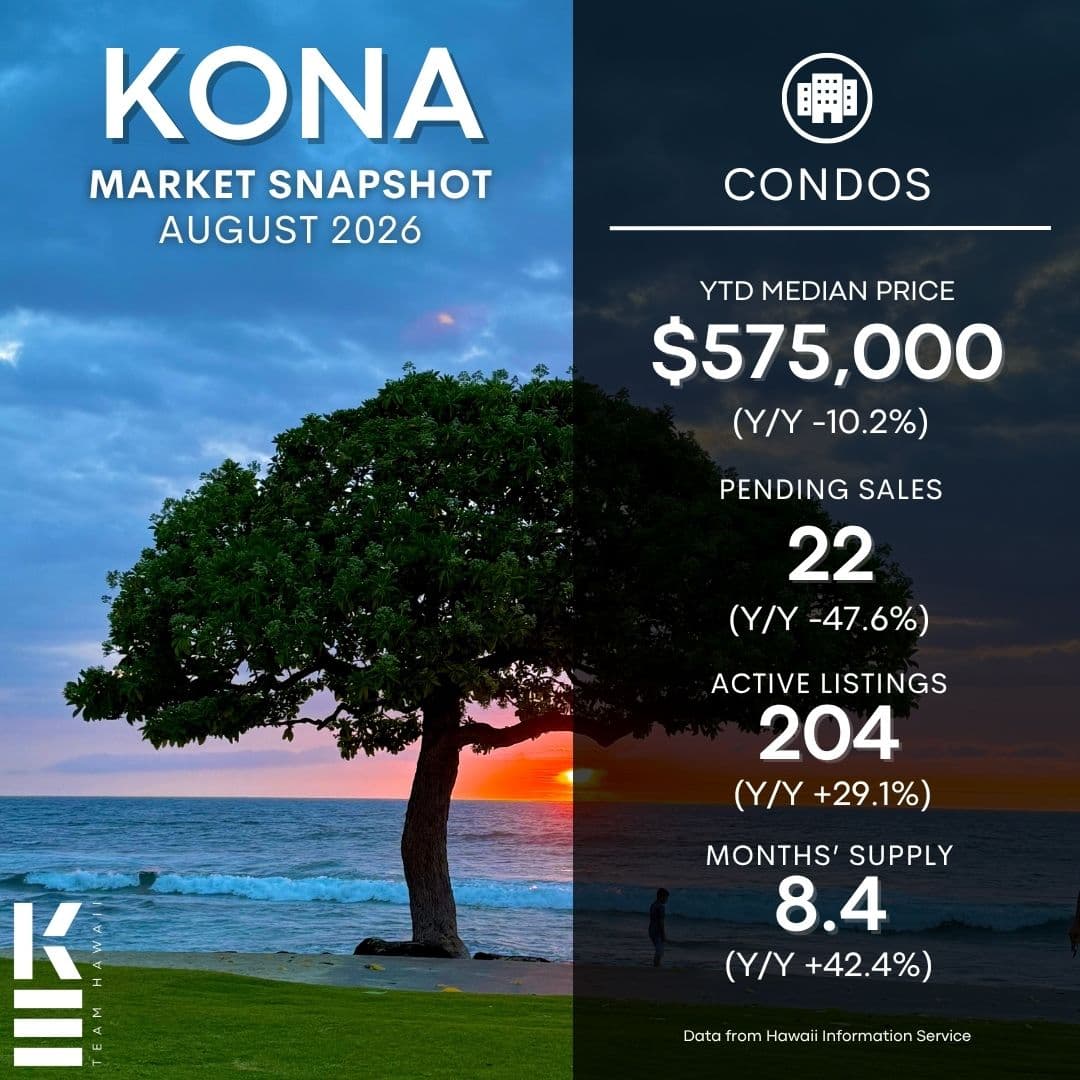
The median condo price is down 10.2% year-over-year, although it increased modestly from the previous month. The median sold price per square foot declined to $630, down 5.5% from last year.
Inventory is the larger issue.
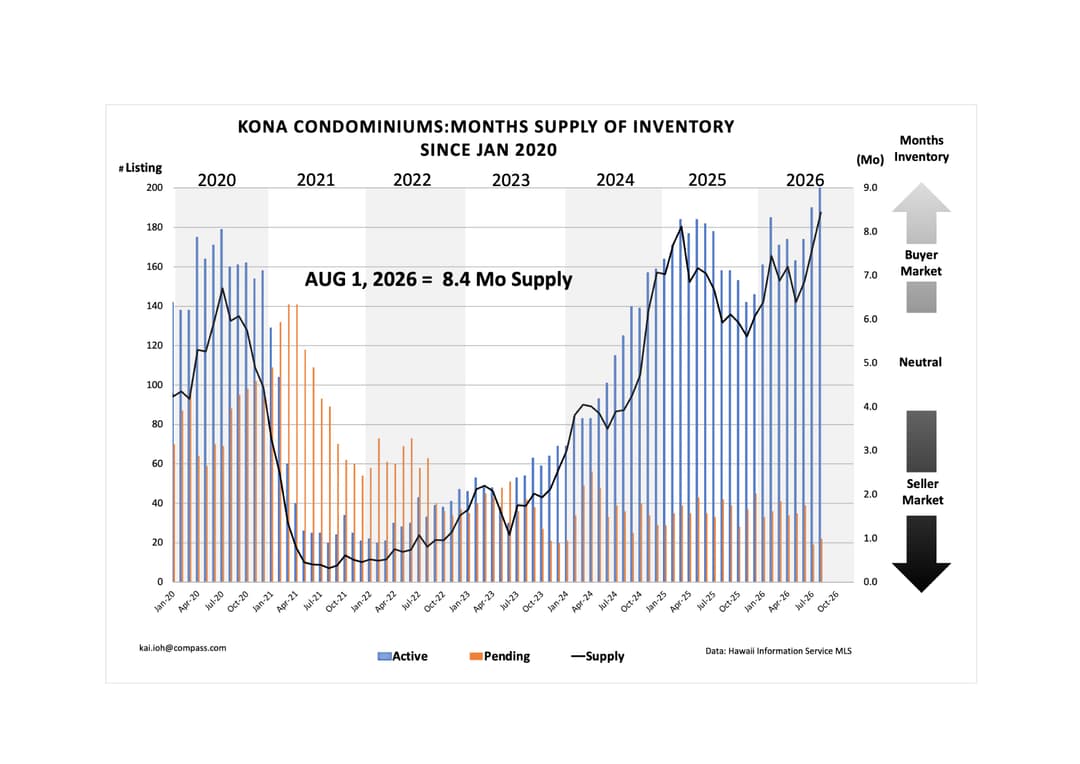
Active condo listings increased 29% year-over-year and 7% from the previous month. Inventory is now at its highest level in approximately six years, returning to levels last seen around 2018 to 2019.
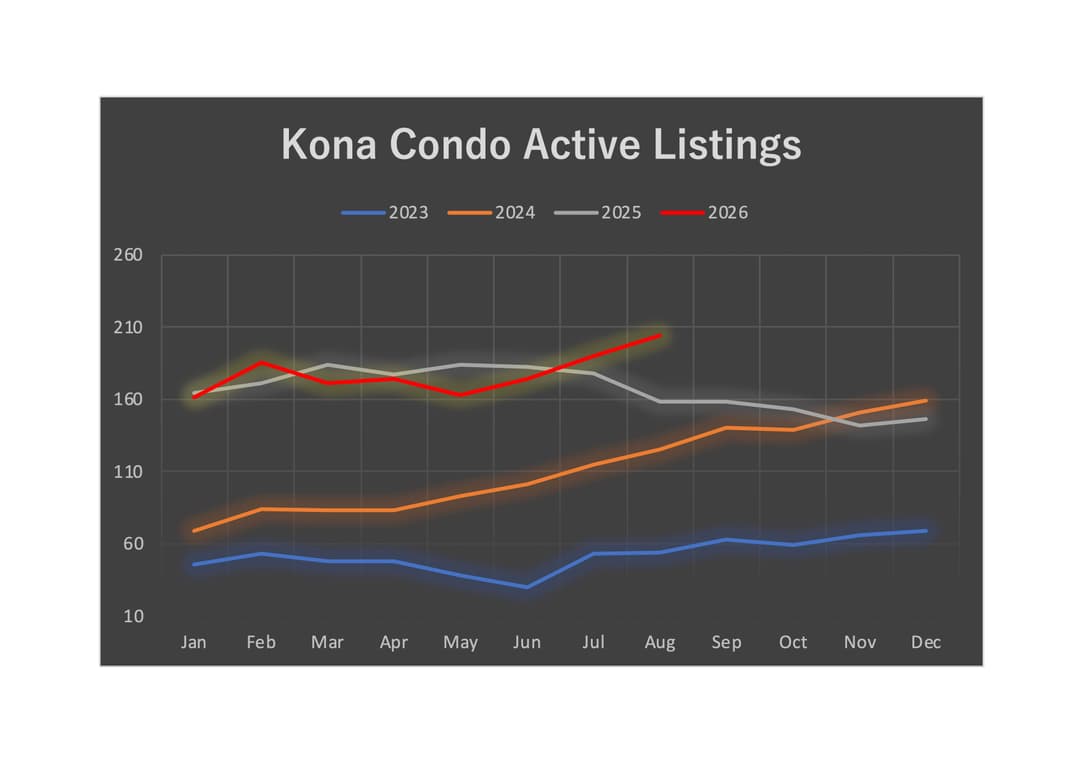
Months of supply climbed to 8.4 months. This firmly places the condo market in buyer’s territory.
Condo Demand Has Weakened
Pending condo sales declined 47% compared with last year.
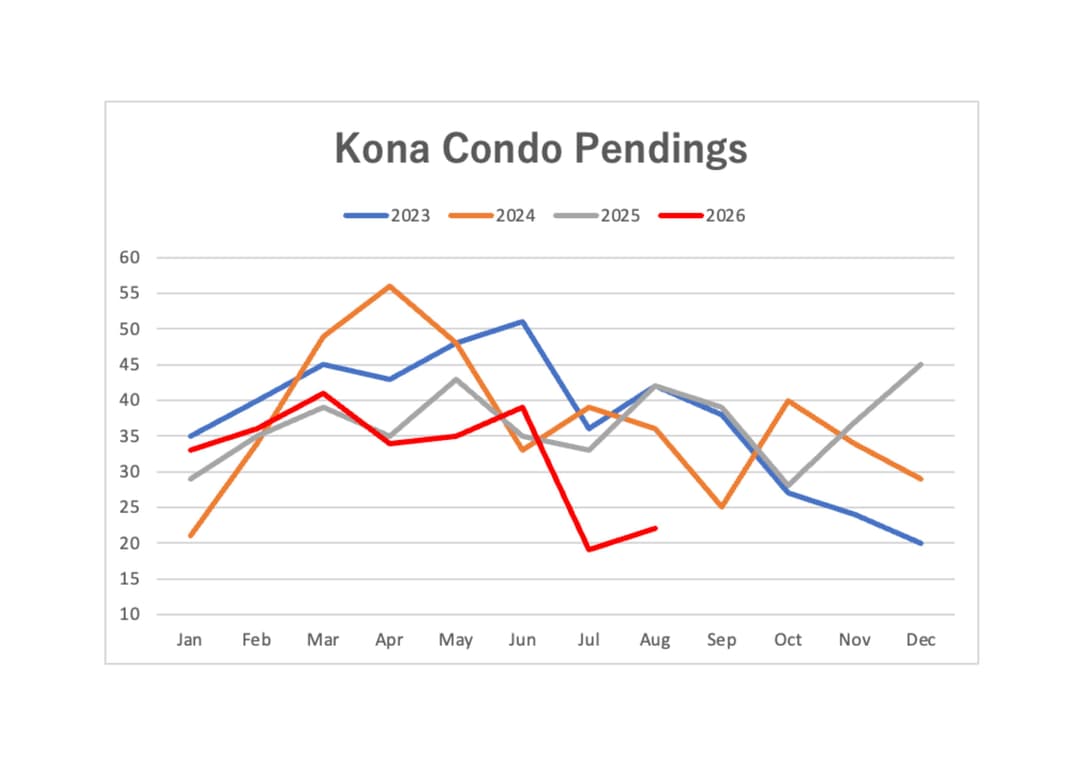
This represents one of the weakest demand environments recorded during the past five years. The active-to-pending ratio is now above 9 to 1.
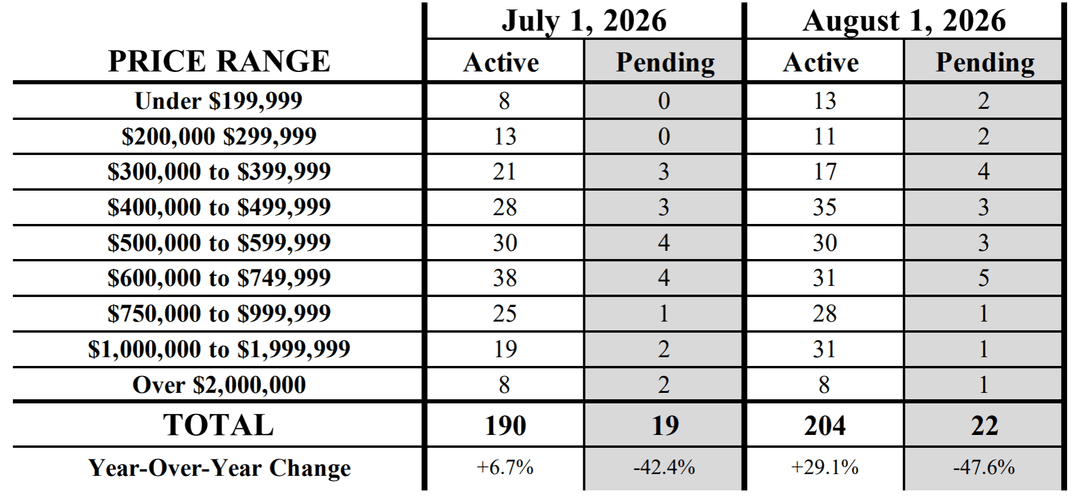
Buyers have more choices, more time to compare units, and considerably more negotiating power. Sellers should expect detailed questions about both the unit and the financial condition of the condominium association.
Unlike lower-inventory periods, buyers do not need to overlook major concerns simply to secure a property.
AOAO Fees Are Affecting Affordability
Rising Association of Apartment Owners, or AOAO, maintenance fees continue to influence condo purchasing decisions.
As a general example, an additional $300 per month in maintenance fees is roughly equivalent to the monthly payment on about $50,000 of mortgage debt in today's interest.
The exact effect depends on the buyer’s loan terms, interest rate, down payment, and financial position. However, the broader point remains the same: higher monthly fees reduce purchasing power.
A buyer is not evaluating only the listing price. The calculation may also include:
Mortgage principal and interest
AOAO maintenance fees
Property taxes
Special assessments
Future capital projects
Utilities included or excluded from the monthly fee
Practical Considerations for Kona Buyers
Buyers should first identify the market segment that applies to them.
Below approximately $1.25 million, limited inventory may require quicker decisions when a suitable single-family home becomes available. Financing, insurance questions, and property priorities should be organized in advance.
At higher price levels, buyers generally have more time and negotiating leverage. However, the strongest properties can still attract attention when they offer a rare view, high-quality construction, privacy, or a well-designed indoor-outdoor lifestyle.
Broad market averages provide context. They do not replace a property-specific comparison.
Additional Due Diligence for Condo Buyers
The current condo market gives buyers greater negotiating power, but careful review remains essential.
Important areas include:
Current AOAO fees
Recent fee increases
Reserve studies
Association budgets
Insurance coverage
Meeting minutes
Pending litigation
Planned repairs or capital projects
Existing or possible special assessments
Rental rules and minimum rental periods
A unit may appear attractively priced while carrying higher long-term ownership costs. Another unit with a higher purchase price may be located in a financially stronger building with fewer expected capital needs.
The full ownership picture matters more than the listing price alone.
Practical Considerations for Kona Sellers
Single-Family Home Sellers
Single-family sellers in lower price ranges may benefit from limited competition, but pricing discipline still matters. Buyers are active, not careless.
Homes that are clean, properly maintained, easy to insure, and supported by recent comparable sales are more likely to receive serious attention.
Low inventory does not automatically compensate for aggressive pricing.
Luxury Home and Condo Sellers
Luxury homeowners and condo sellers should prepare for longer marketing periods and more comparison shopping.
In these segments, realistic pricing and thoughtful preparation matter more than ever. Buyers may negotiate not only the price, but also furnishings, repairs, credits, closing costs, and assessment-related concerns.
A property that stands out clearly can still sell. A property that appears interchangeable with several competing listings will face greater pressure.
One Market, Several Different Conditions
The most common misconception is that Kona is either entirely a buyer’s market or entirely a seller’s market.
It is neither.
Lower-priced single-family homes remain competitive. The overall single-family market is near balance. Luxury homes are moving more slowly. The ultra-luxury market is still very strong as it is scarcity-driven. Condominiums offer buyers substantially more choice and leverage.
Another misconception is that a declining median price means every property has lost the same amount of value. Median figures do not measure the exact value change of an individual home.
The Big Island lifestyle remains highly desirable. The market has not stopped. It has simply become more selective.
Understanding the specific neighborhood, property type, ownership costs, and price range is now more important than relying on a general headline.
Please access our August 2026 KE TEAM Market Update Flipbook for the detailed market data
Frequently Asked Questions
Is Kona a buyer’s market or a seller’s market in August 2026?
Kona is not one uniform market. Single-family homes are close to balanced overall, with stronger demand below approximately $1.25 million. Luxury homes are moving more slowly. Condominiums are firmly in buyer’s territory because inventory is high and pending sales have declined.
Are Kona single-family home prices still falling?
The median single-family home price is down 3.2% year-over-year, but it remains close to the level recorded at the end of 2025. This suggests that prices may be stabilizing after an earlier correction, although conditions vary by neighborhood and price range.
Why are Kona homes below $1.25 million competitive?
There are approximately 46 active listings and 39 pending sales below $1.25 million. That near one-to-one ratio indicates strong demand relative to supply. Well-priced homes in good condition may still attract multiple interested buyers.
What is happening in Kona’s luxury market?
The luxury market is moving more slowly. Above $2.5 million, there are nearly 10 active listings for every pending sale. Buyers have more choices and are carefully comparing location, architecture, condition, views, privacy, and pricing.
Is the Kona condo market a buyer’s market?
Yes. Condo inventory has increased, months of supply has reached 8.4 months, and pending sales are down 47% year-over-year. The active-to-pending ratio is above 9 to 1, giving buyers more choices and negotiating leverage.
Why are AOAO fees affecting Kona condo prices?
Higher AOAO fees increase the total monthly ownership cost and reduce purchasing power. As a general example, an additional $300 per month may have a payment effect similar to approximately $50,000 of mortgage debt, depending on the buyer’s financing terms.
What should buyers review before purchasing a Kona condo?
Buyers should review AOAO fees, budgets, reserves, insurance coverage, meeting minutes, planned repairs, special assessments, litigation, and rental restrictions. The financial condition of the association can be as important as the condition of the individual unit.
What should Kona sellers do in the current market?
Sellers should price according to their specific property type, neighborhood, condition, and price range. Lower-priced single-family homes may benefit from limited inventory, while luxury and condo sellers should prepare for longer marketing periods and more price-sensitive negotiations.