
By Kai Ioh and KE TEAM Hawaii
Kai Ioh is a luxury real estate advisor based in Kona, Hawai‘i, specializing in second home, resort, and ultra-high-net-worth markets across the Big Island.
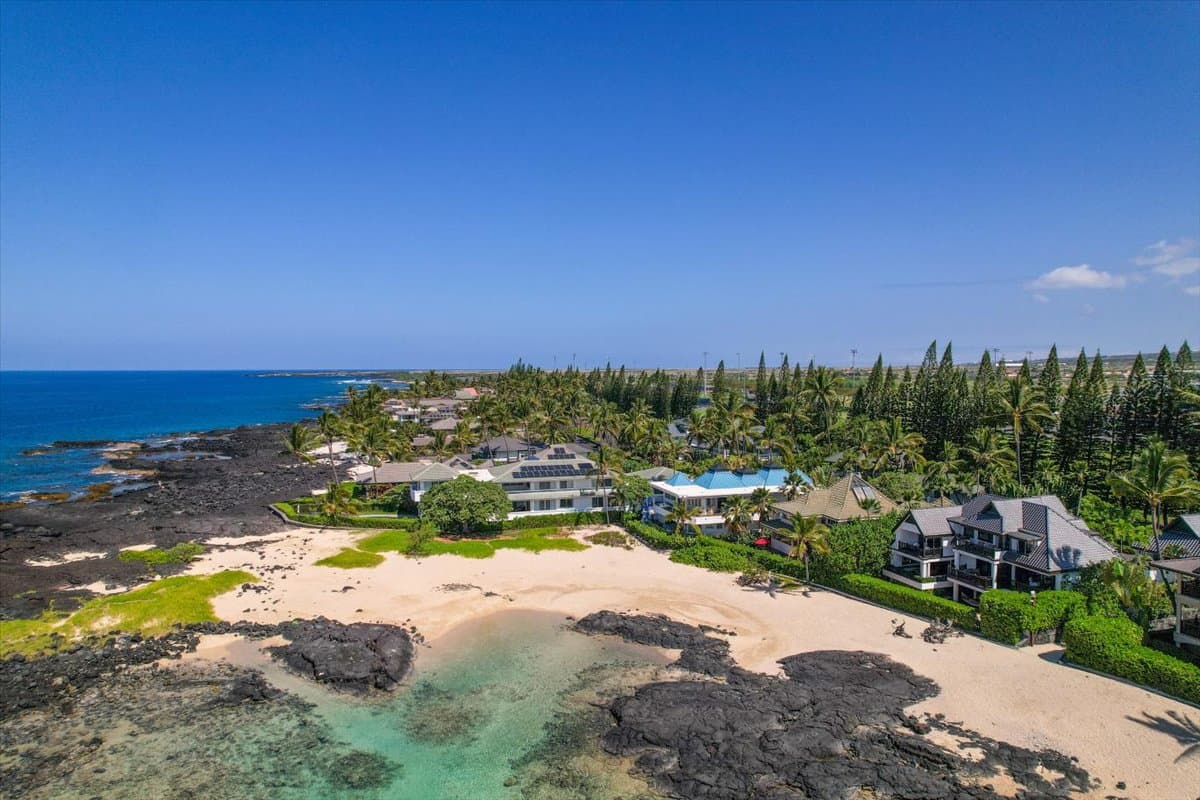
Our latest listing in Kona Bay Estates is now shown within a Resort-designated area. It is a notable change in Hawaiʻi County’s General Plan 2045 land-use designation. The new designation may affect short-term vacation-rental eligibility for some properties in this oceanfront Kailua-Kona neighborhood, but it does not rezone individual parcels or automatically authorize vacation rentals.
Key Takeaways
Hawaiʻi County’s General Plan 2045 now places Kona Bay Estates within a Resort-designated area.
The previous General Plan generally identified the neighborhood as Open.
A General Plan designation is different from County zoning. Kona Bay Estates remains primarily residential and is generally zoned RS-15.
The new designation may create a pathway for some owners to seek short-term vacation-rental approval.
Eligibility must still be confirmed for the individual property, including zoning, permits, private restrictions, taxes, insurance, and County requirements.
A Quiet but Potentially Important Map Change
Most real estate changes arrive with considerable attention. Tax laws, interest-rate announcements, and major development proposals tend to make headlines.
Other changes are quietly placed on a government map.
Hawaiʻi County adopted its General Plan 2045 through Ordinance No. 26-46, effective June 26, 2026. While reviewing the updated maps, I noticed that our latest listing in Kona Bay Estates is now shown within a Resort-designated area. We checked with the County, and it also confirmed this.

Land-use maps may not sound particularly exciting unless you enjoy this type of research. Admittedly, that is a fairly small club. However, the change may have practical implications for owners, buyers, and real estate professionals evaluating short-term vacation-rental use.
The important word is eligibility. The map change does not automatically approve vacation rentals.
Hawaiʻi County General Plan 2045
The General Plan provides long-term policy direction for land use, housing, infrastructure, transportation, environmental stewardship, cultural resources, economic development, and climate resilience across the Big Island.
It functions as the County’s broad development roadmap. It identifies where different forms of growth and activity may be appropriate over time.
The General Plan does not function in the same way as parcel zoning. Its designations establish long-range policy, while zoning provides more detailed rules for individual properties.
That distinction is particularly important in Kona Bay Estates.
Kona Bay Estates Changed From Open to Resort
Under the previous 2005 General Plan, Kona Bay Estates was generally identified as Open on the County’s Land Use Pattern Allocation Guide map.
A 2025 Hawaiʻi County Planning Department report for a shoreline parcel in the neighborhood described the property as:
State Land Use District: Urban
General Plan designation: Open
County zoning: RS-15 Single-Family Residential
The report also described Kona Bay Estates as an established residential subdivision with public shoreline access and connections to County water and sewer infrastructure.
Under the adopted General Plan 2045 map, Kona Bay Estates is now included within the Resort node designation.
The plan describes Resort node as locations that may include visitor accommodations, single-family and multifamily residences, recreational facilities, commercial services, and other uses that support a resort environment.
This changes the County’s long-range land-use map. It does not necessarily change the neighborhood’s physical character, but it may affect how certain property uses are evaluated.
Resort Node Designation and Resort Zoning Are Different
A General Plan Resort Node designation is not the same as County Resort zoning.
The General Plan establishes broad policy and future land-use direction. County zoning establishes specific rules for matters such as:
Permitted uses
Setbacks
Density
Building height
Minimum lot size
Kona Bay Estates has not become a hotel district. The neighborhood remains primarily residential and is generally zoned RS-15.
The adoption of General Plan 2045 does not, by itself:
Rezone individual properties
Approve a short-term vacation rental
Change HOA rules or private covenants
Eliminate County registration requirements
Correct building-permit issues
Guarantee that every property qualifies for the same use
The map may open a door, but an owner must still determine whether that door applies to the individual property.
Potential Effects on Short-Term Vacation Rentals
Hawaiʻi County has historically limited where new unhosted short-term vacation rentals, commonly called STVRs, may operate.
Under the County’s existing framework, vacation rentals may be permitted in certain commercial and multifamily zones. Residential properties within General Plan Resort or Resort Node areas may also be eligible, subject to zoning, permitting, registration, and compliance requirements.
For a residentially zoned property, additional land-use approval may be required.
During the County’s review of its original STVR legislation, Planning Department staff explained that changing an area’s General Plan designation to Resort could affect eligibility for residentially zoned properties without requiring those properties to be rezoned as Resort.
Based on that framework, the new designation provides Kona Bay Estates owners with a pathway to apply for STVR use that may not previously have existed.
The most accurate description is straightforward:
The Kona Bay Estates Resort Node designation affects eligibility to apply for short-term vacation-rental use. It does not automatically approve that use.
This distinction is important when purchasing, marketing, financing, insuring, or valuing a home.
Property-Level Review Remains Essential
Vacation-rental eligibility should be reviewed at the individual Tax Map Key, or TMK, level. A neighborhood-wide designation does not guarantee the same result for every parcel.
Resort Boundary Confirmation
The County should confirm that the relevant building site is located within the adopted Resort boundary.
A designation line may approach or cross a property in a way that requires professional interpretation. Written confirmation is preferable to relying only on an online map.
Zoning and Land-Use Approval
Kona Bay Estates is generally zoned RS-15, but the zoning record for the individual property should be verified.
Owners should also confirm which land-use approvals are required under the regulations in effect when an application is filed.
Building and Permit Records
The home and its improvements should have the required permits and final approvals.
The review may include:
Guest quarters
Additional bedrooms
Pools and spas
Accessory buildings
Enclosed lanais
Electrical and plumbing work
Structural additions
Parking
An eligible location does not resolve an unpermitted structure or incomplete building record.
County Registration
A General Plan designation does not replace the County application process.
A property should not be advertised or operated as an approved vacation rental until all required permits, registrations, and identification numbers have been issued.
Private Restrictions
County eligibility does not necessarily override private restrictions.
Owners should review title documents, declarations, bylaws, design guidelines, rules, and recorded covenants. These documents may regulate rental periods, occupancy, parking, noise, or commercial activity.
Taxes, Insurance, and Financing
Vacation-rental use may involve State and County tax obligations, including general excise tax and transient accommodations taxes.
It may also affect real property tax classification, insurance coverage, premiums, mortgage terms, and operating expenses.
A standard residential insurance policy may not provide appropriate coverage for transient use. Some loan documents may also restrict short-term rental activity.
Evolving County Regulation
Hawaiʻi County’s regulation of transient accommodations continues to evolve.
Bill 147 proposes a broader framework for hosted and unhosted vacation rentals. Its provisions address permitted locations, registration, operating standards, enforcement, occupancy, quiet hours, responsible management, and building compliance.
The proposal continues to recognize certain residential districts within General Plan Resort and Resort Node areas as potentially eligible locations for unhosted vacation rentals.
As of July 31, 2026, Bill 147 had not become final law. The Windward and Leeward Planning Commissions had forwarded favorable recommendations with amendments, but further County Council consideration was still required.
The rules in effect when an application is submitted will control the outcome. Owners and buyers should not rely solely on regulations that existed when General Plan 2045 was adopted.

Implications for Kona Bay Estates Real Estate
Kona Bay Estates occupies an unusual position in the Kailua-Kona market.
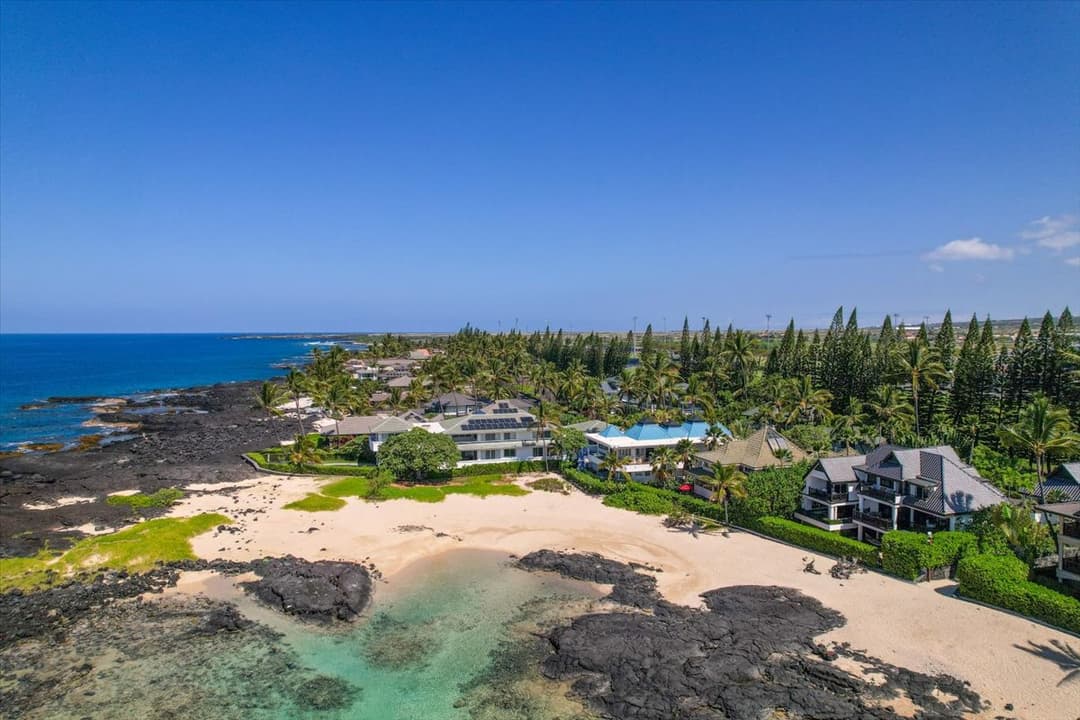
It is a gated oceanfront residential community near Kailua Village, Kailua Pier, Old Kona Airport State Recreation Area, and the shoreline area commonly known as Keiki Ponds.
Unlike the larger master-planned resorts along the Kohala Coast, Kona Bay Estates combines an established residential environment with direct access to beach and central Kona.
The Resort designation does not change those characteristics. It adds another factor for buyers and sellers to consider.

Potential Flexibility for Second-Home Owners
Potential vacation-rental eligibility may appeal to some second-home buyers.
An owner may wish to use a residence personally during part of the year and rent it during other periods. This can be relevant to owners dividing their time between Hawaiʻi, the mainland United States, and Japan.
However, projected rental income should not be used in a purchasing decision until eligibility and operating requirements have been confirmed.
Residential Character and Community Considerations
Other buyers may place greater value on privacy, consistency, and full-time residential use.
Additional vacation-rental activity could raise questions about traffic, parking, noise, security, and neighborhood character.
Neither perspective is inherently correct. The practical issue is understanding the trade-offs and the rules that apply to the individual property.
Property Value Remains Uncertain but Positive
It is too early to measure whether the new designation will affect property values.
Greater use flexibility may appeal to some buyers. Others may prefer a more strictly residential environment.
Any market impact will depend on final County regulations, the number of qualifying properties, the cost of obtaining approval, operational limitations, and actual buyer demand.
The designation should be treated as a due-diligence issue, not as a guaranteed increase in value. Still, many people regard an additional vacation rental option as a positive factor.
Why Land-Use Details Matter in Kona Real Estate
Most buyers begin with familiar property information: price, square footage, bedrooms, views, condition, and comparable sales.
Important details are not always visible in the MLS.
General Plan maps, zoning records, shoreline regulations, building permits, private covenants, insurance requirements, and pending legislation can all influence how a property may be used and valued.
In the context of Hawaiʻi luxury real estate, these less visible layers are particularly important. Oceanfront properties and second homes often involve overlapping County, State, tax, insurance, financing, and community-association requirements.
For Kona Bay Estates owners and buyers, the appropriate response is not to assume that vacation-rental use is approved. Sometimes the fine print is where the interesting part begins.
Here is our Kona Bay Listing Information.
Important note: This article provides general real estate information and does not constitute legal, tax, zoning, permitting, insurance, or lending advice. Regulations and interpretations may change, and each property requires independent review.
Frequently Asked Questions
Is Kona Bay Estates now zoned as a resort?
No. Resort is the General Plan designation. Kona Bay Estates remains primarily residential and is generally zoned RS-15, unless the record for an individual parcel shows otherwise.
Does the Resort node designation automatically allow vacation rentals?
No. The designation may affect eligibility, but it does not replace zoning review, required permits, County registration, building compliance, taxes, insurance, or private restrictions.
What is the difference between a Resort Node designation and Resort zoning?
A General Plan Resort designation establishes broad, long-term land-use policy. Resort zoning establishes detailed parcel-level rules. One does not automatically create the other.
Can an HOA restrict vacation rentals even if the County allows them?
County eligibility does not necessarily override enforceable private covenants, declarations, bylaws, or community rules.
Will the Resort designation increase property values?
That cannot yet be determined. Greater use flexibility may appeal to some buyers, while others may place greater value on residential character. Any effect will depend on final regulations and buyer demand. Generally, having the STVR option is better for many owners.
Where should an owner confirm eligibility?
Owners should seek written, property-specific guidance from the Hawaiʻi County Planning Department and review zoning, permits, title documents, HOA rules, taxes, insurance, and financing with qualified professionals.