By Kai Ioh and KE TEAM Hawaii
Kai Ioh is a luxury real estate advisor based in Kona, Hawai‘i, specializing in second home, resort, and ultra-high-net-worth markets across the Big Island.
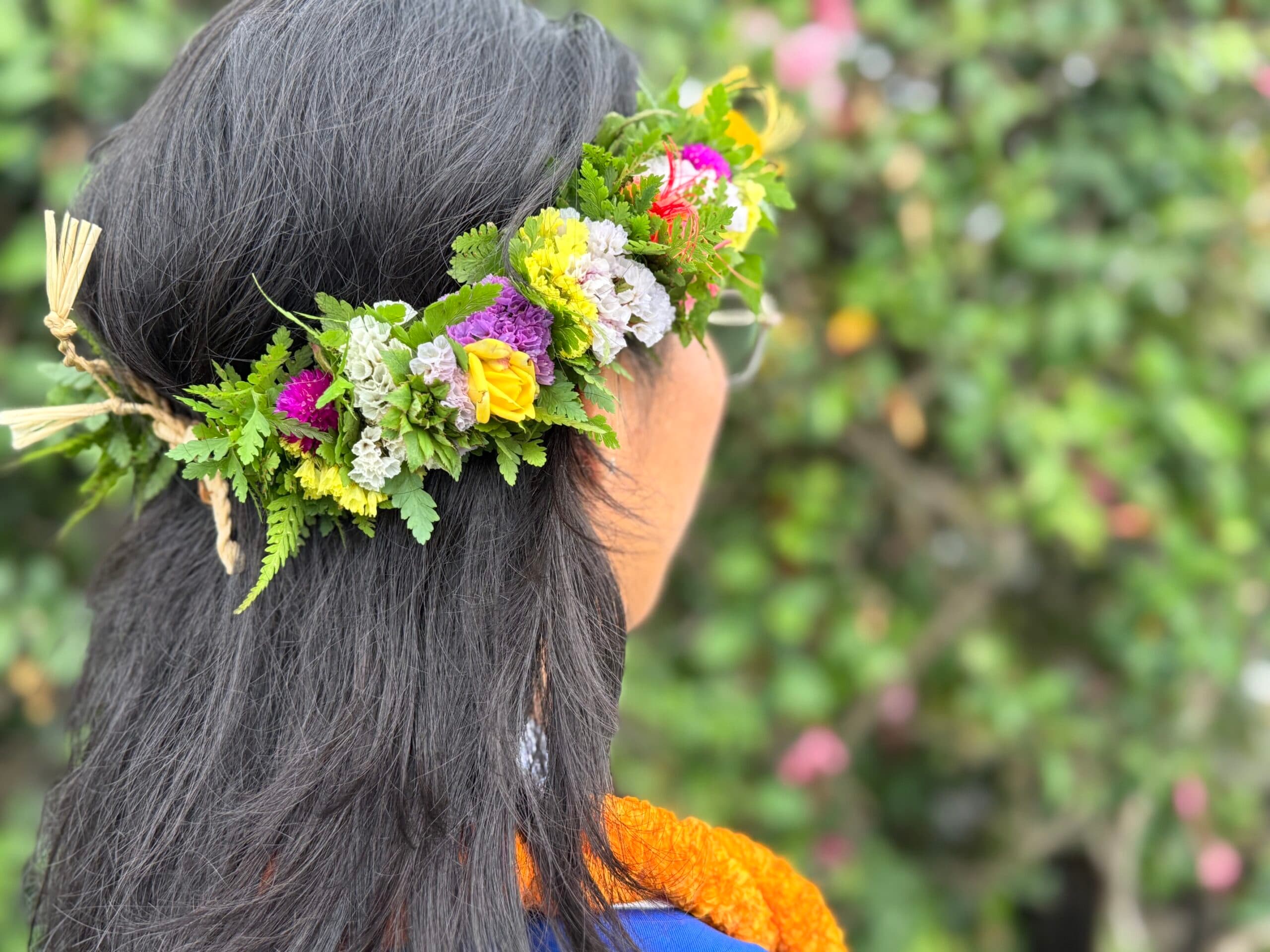
In Hawai‘i, graduation season does not simply mean caps and gowns. It means leis.
Every May, flowers quietly disappear from stores across the islands. Plumeria becomes harder to find. Orchid prices rise. Even wildflowers seem mysteriously scarce. Experienced lei makers suddenly become very busy people, and everyone seems to know someone with a “secret spot” for picking flowers.
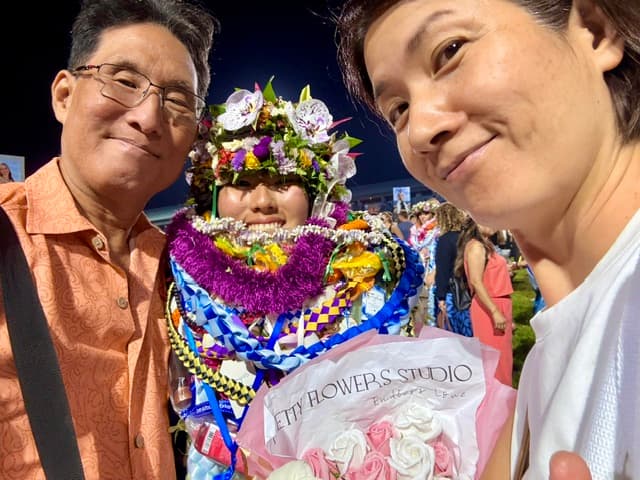
For mainland visitors, Hawaiian graduations can feel almost unbelievable at first sight. Graduates become completely buried in layers of flowers, ti leaves, ribbons, candy, money leis, kukui nut leis, and hugs from family and friends.
But after living in Hawai‘i for 25 years, I’ve learned that leis are not simply decorations. They are one of the purest expressions of aloha.
And honestly, we are still learning ourselves.
This year, our younger daughter Momo graduated from high school, and making leis for her reminded me just how deep this tradition really goes.
Our First Hawaiian Graduation
Seven years ago, when our older daughter graduated from Kealakehe High School in Kona, it was our first real experience with Hawai‘i graduation culture.
As a family originally from Japan, we understood leis only loosely at the time. We knew they were important. We knew they were beautiful. But we did not fully understand the heart behind them yet.
Back then, we made simple plumeria leis ourselves. We thought we did fairly well.
Looking back now… not quite.
This year was very different because our friend Barb helped guide us through the process. Barb is apprenticing under a respected lei-making kumu (master), and her passion for lei making completely changed how we viewed the experience.
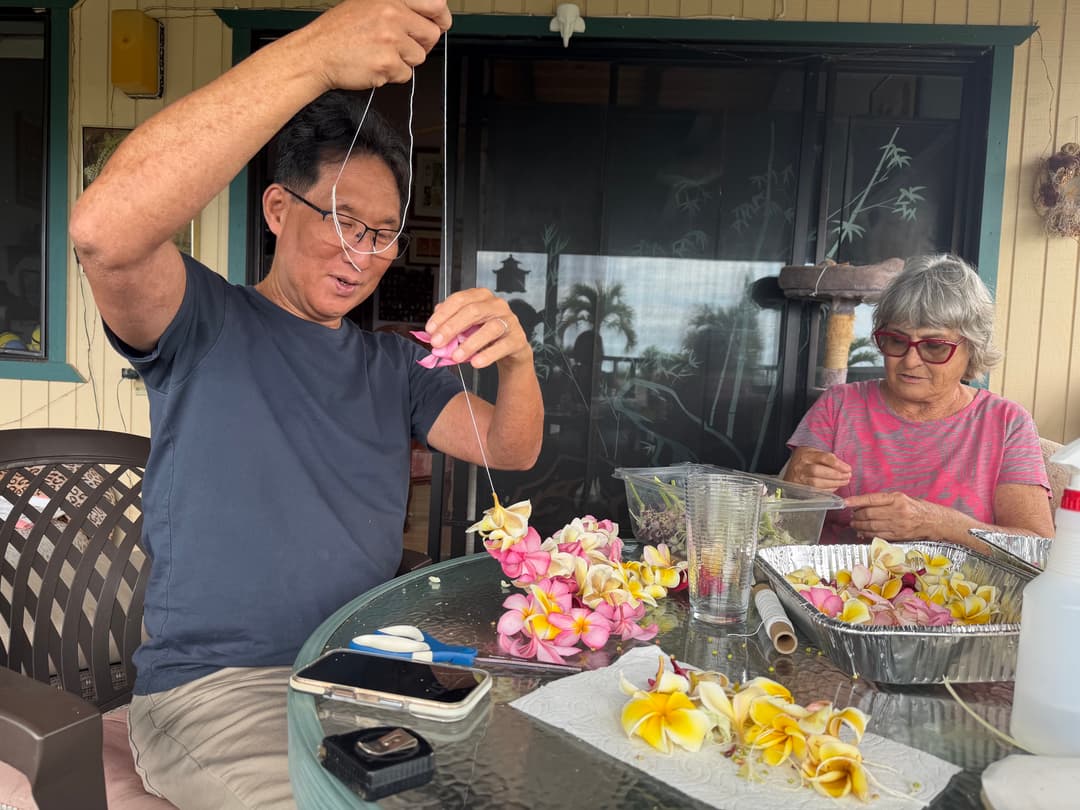
Lei making is not just stringing flowers together.
There are techniques. Timing. Preparation. Tradition. And many small details you would never think about unless someone teaches you properly.
For example, I learned something important this year: never be stingy with flowers.
A typical lei is around 36 inches long, and it uses far more flowers than most people realize. As flowers naturally shrink over time, gaps begin to appear. If too few flowers are used, eventually you start seeing the string underneath. We learned this lesson the hard way seven years ago.
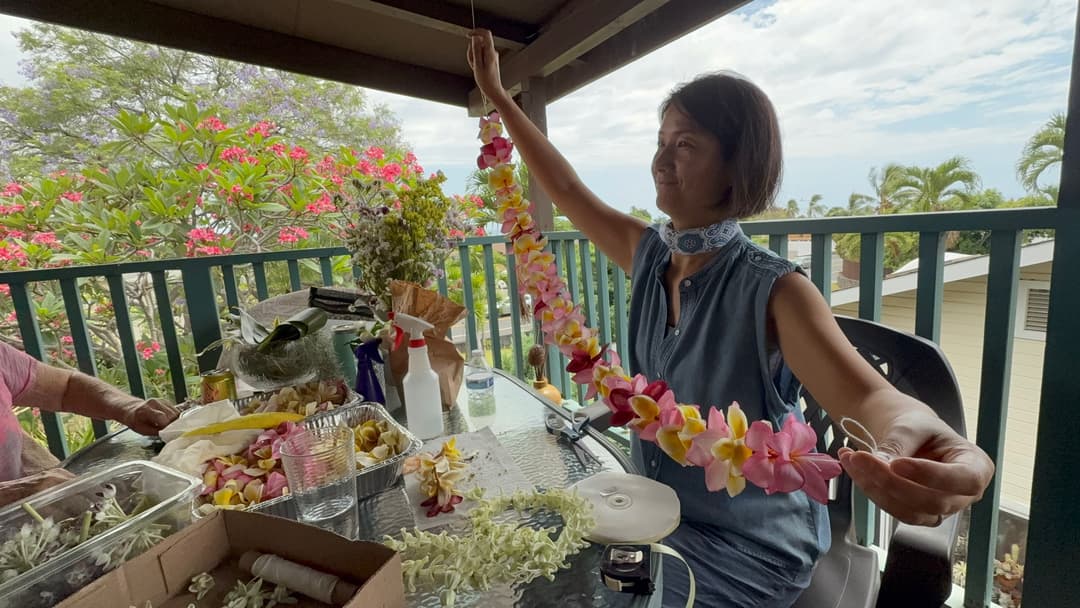
Good leis are full. Generous. Alive.
And suddenly, I understood why truly beautiful handmade leis can cost $50 to $80 or more in Hawai‘i.
The Hidden Art of Lei Making
One thing that surprised me most this year was how much preparation happens before a single flower is ever strung.
Picking flowers itself is hard work. Flowers must be gathered fresh so they do not brown or wilt too quickly in Hawai‘i’s climate. Sometimes the flowers simply do not bloom at the right time.
Experienced lei makers notice flowers the rest of us completely overlook. They know where to find them, when to pick them, and how to prepare them. Some even protect their flower-picking locations almost like secret fishing spots.
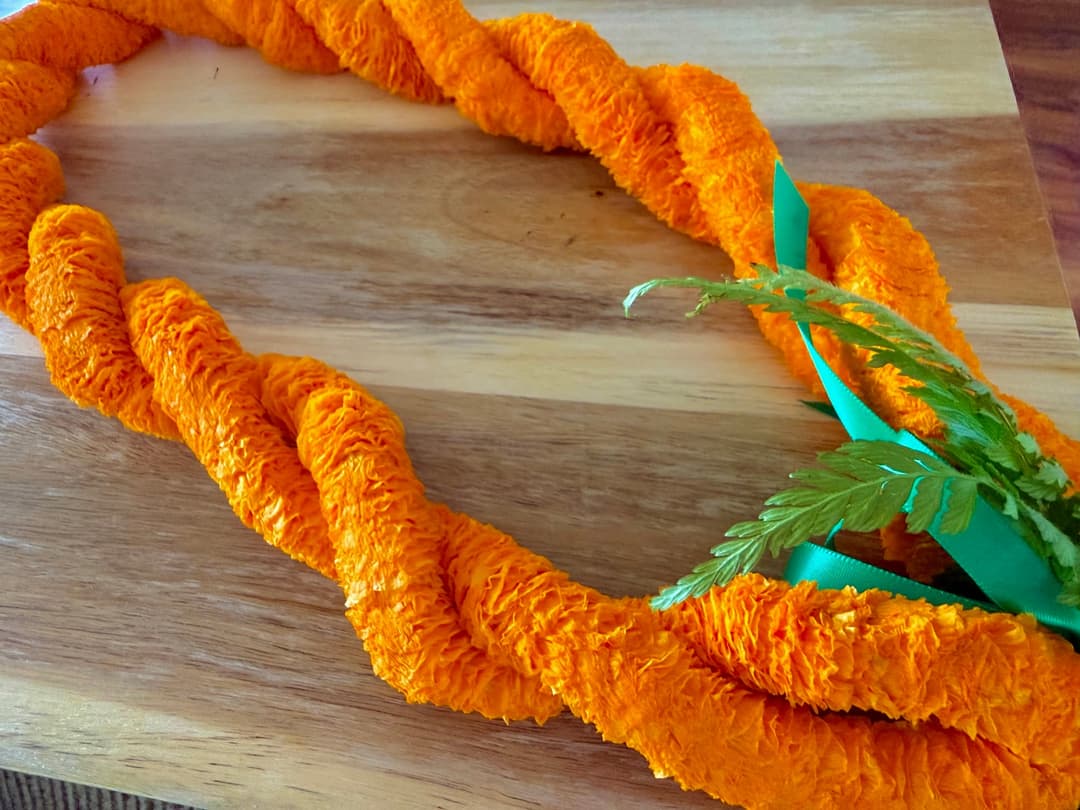
Handmade ilima flower lei by Kumu. It uses 1000 Ilima flower petals!
Then comes cleaning the flowers.
Until this year, I had never heard of washing flowers before making leis. Barb carefully washed many of the blossoms to remove dirt, pollen, sap, and residue while helping hydrate the petals at the same time.
And honestly? It made a huge difference.
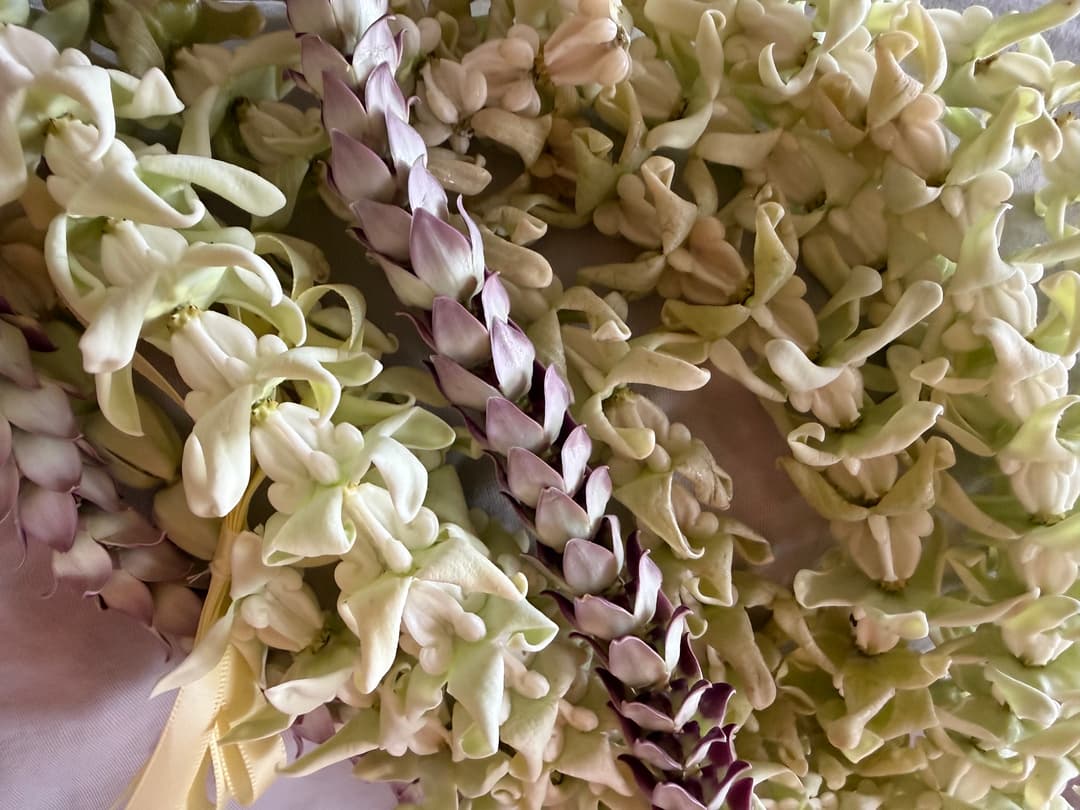
The crown flower (pua kalaunu) was Queen Liliʻuokalani’s favorite flower
The flowers looked fresher, cleaner, and somehow more vibrant. It reminded me of how people wash bananas to slow browning. Maybe it is a similar enzyme reaction. I still do not fully understand the science behind it, but I could absolutely see the result.
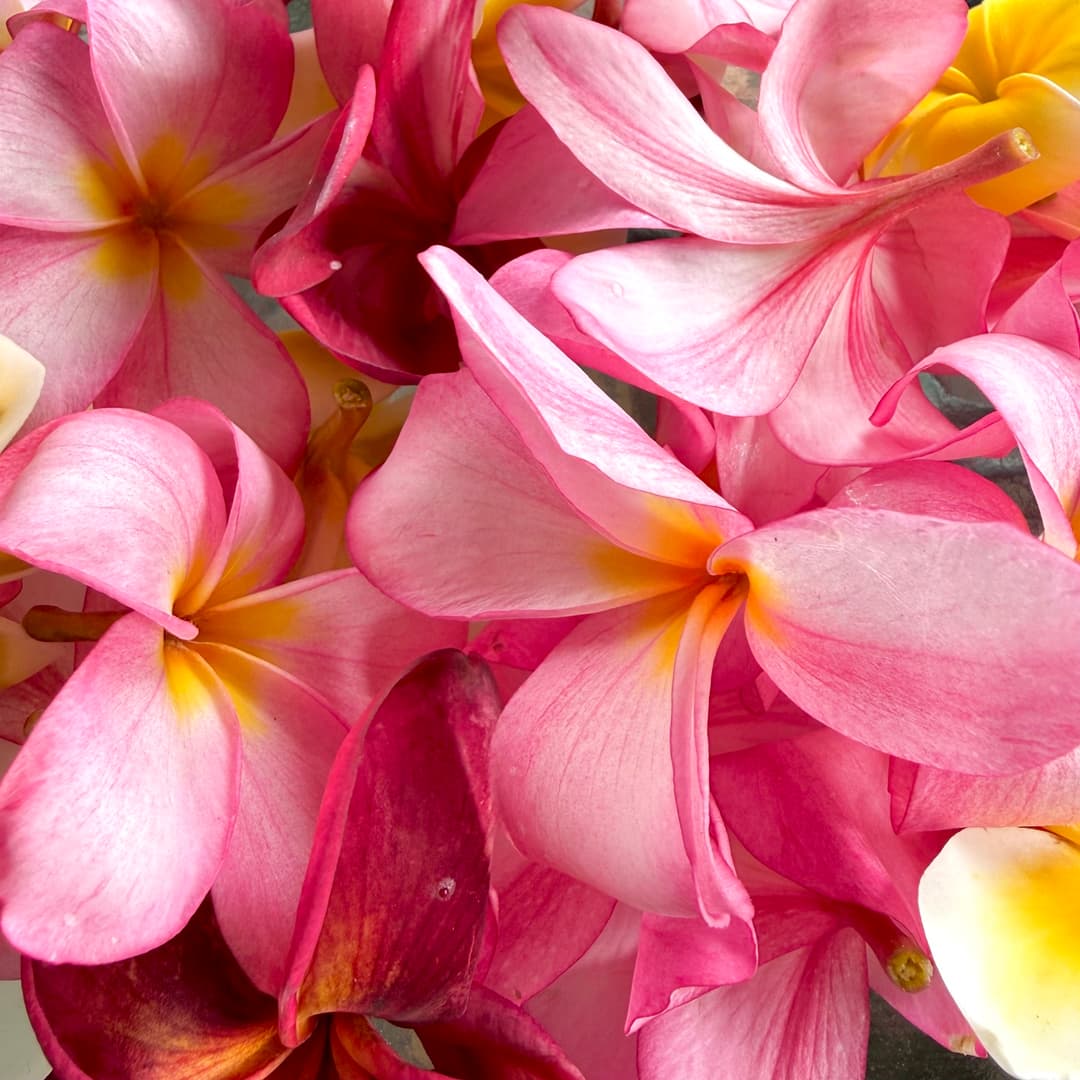
Washed Plumeria lasts longer
We also learned that not all lei needles are created equal.
You can buy lei needles at local stores, but Barb showed us much better ones used by experienced lei makers. Like almost everything in life, there are always small expert tricks that make a big difference.
The flowers also needed refrigeration because they spoil quickly here. And when you are making 30 or 40 leis for graduation, timing becomes critical.
This is not something you casually spread out over a week. Most of the work happens right before graduation day.
It becomes a family event. A late-night project. A small act of love repeated flower by flower.
Candy Leis, Ribbon Leis, and Hawai‘i Graduation Culture
One of my favorite parts this year was watching Momo make ribbon leis and candy leis in her school colors for friends.
For younger students, candy leis are sometimes even more popular than flower leis. Honestly, I understand completely. If I were in high school, I probably would have chosen candy over flowers too.
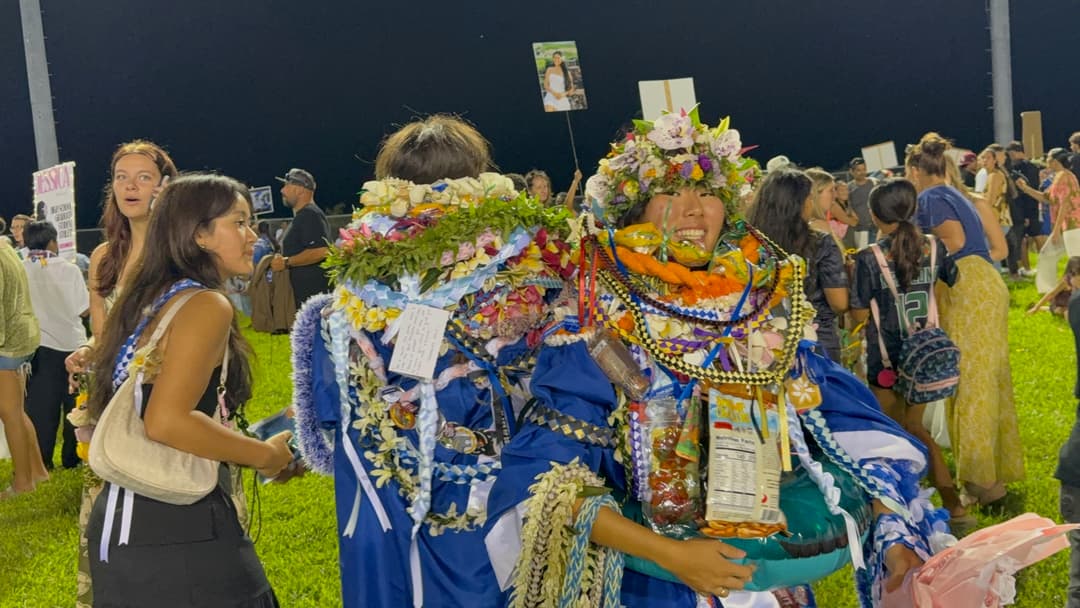
Can you spot different types of leis?
And that is part of what makes Hawai‘i graduations so special.
There is room for everything:
- handmade flower leis
- elaborate ribbon creations
- candy necklaces
- kukui nut leis
- orchid leis from Costco
- carefully crafted heirloom-style leis
- funny homemade creations from friends
It is not about perfection.
It is about showing up with aloha.
The best local high school graduations on the Big Island feel less like formal ceremonies and more like giant community celebrations. Families gather carrying armfuls of leis. Friends search through crowds. Grandparents cry. Cameras flash everywhere.
Eventually, graduates become almost invisible beneath layers of flowers and hugs.
It is joyful chaos.
And honestly, it may be one of the most local experiences you can witness in Hawai‘i.
A Lei Is a Gift of the Moment
This year helped me understand something deeper about leis.
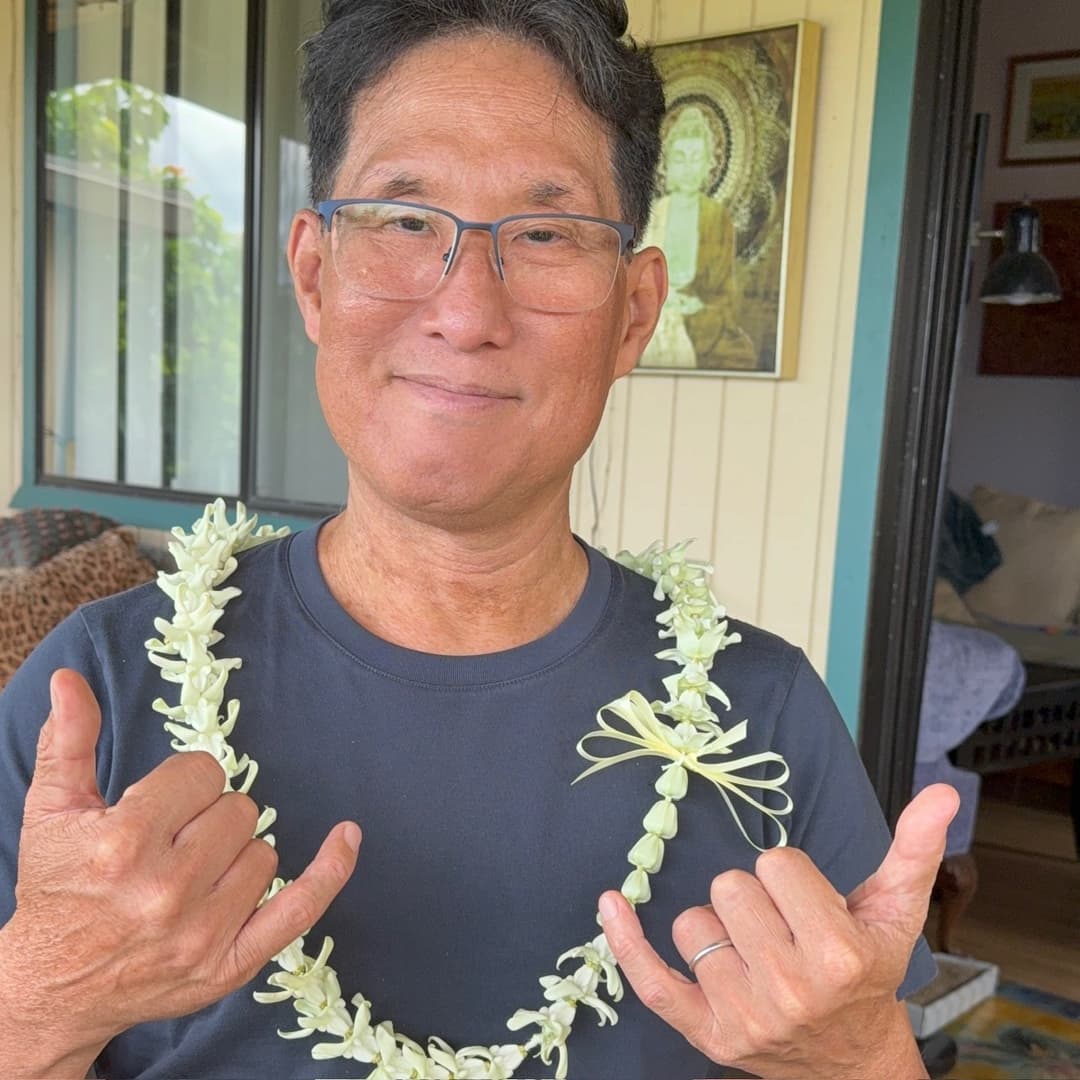
A crown flower lei. Made by Kai!
A lei is temporary by nature.
The flowers fade quickly. The fragrance disappears. The petals brown. By the next day, much of that beauty is already gone.
But maybe that is exactly why leis matter so much.
They are not permanent objects meant to sit on shelves forever. They exist to honor a specific moment in time.
Graduation. Arrival. Celebration. Love. Farewell.
You make the lei. You give the lei. You receive the lei. And for a brief moment, everyone shares something together.
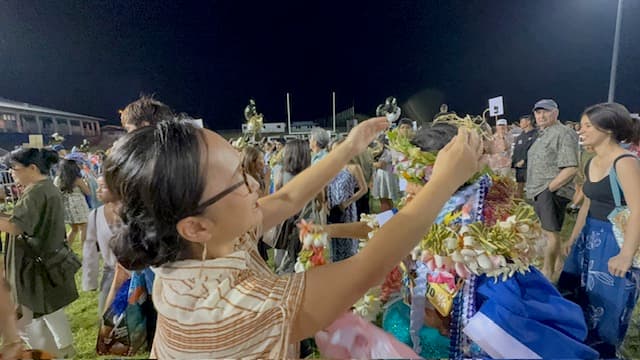
I think that feeling is very different from giving a traditional gift.
A lei feels more personal. More emotional. Almost like sharing appreciation itself.
The older I get, the more I appreciate that idea.
Maybe that is why leis remain such an important part of Hawai‘i culture even today. They represent aloha in its simplest form: care, effort, presence, and human connection.
And after spending hours making leis this year with family and friends, I understand more clearly why local people cherish them so deeply.
They are not just flowers strung together.
Not even close.
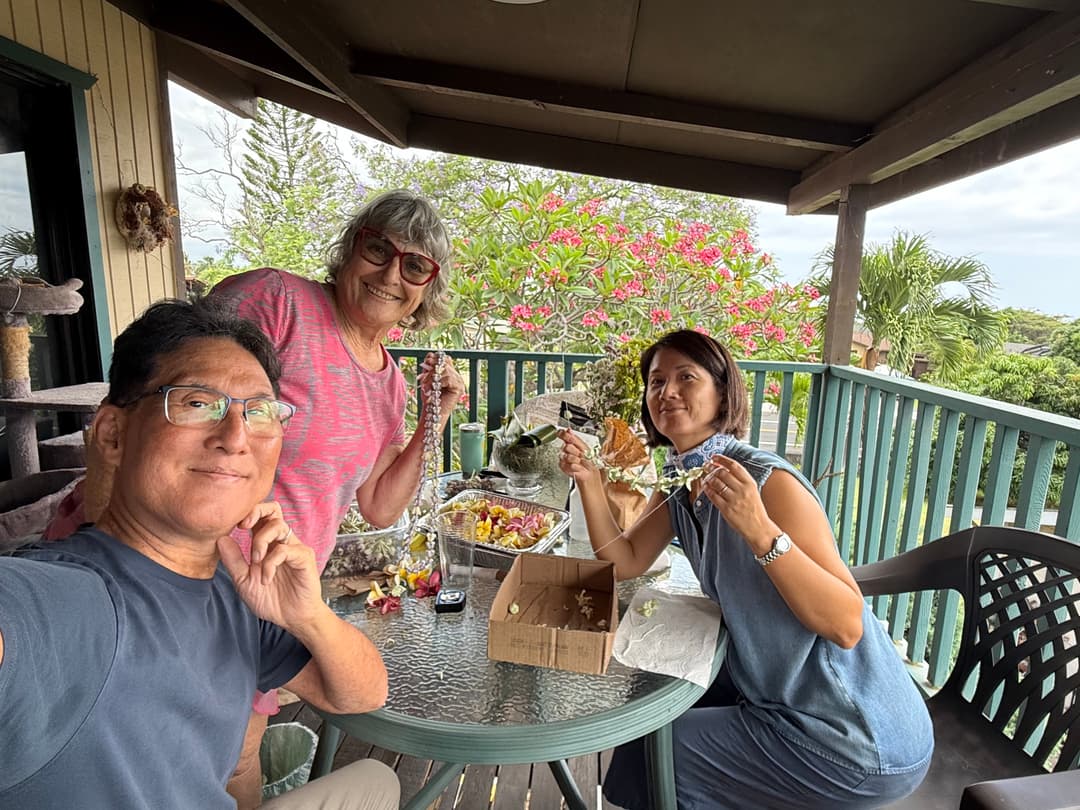
Mahalo, Barb, for teaching us how to make leis!!