What Hawaii’s geology quietly tells us about luxury real estate, architecture, and the age of the islands
By Kai Ioh and KE TEAM Hawaii
Kai Ioh is a luxury real estate advisor based in Kona, Hawai‘i, specializing in second home, resort, and ultra-high-net-worth markets across the Big Island.
Last week, I was on Oahu rooting for my daughter to compete in the Hawaii State High School Tennis Tournament. Like many local families, the trip became a mix of sports, island hopping, good food, and a reminder of how remarkably different each Hawaiian island feels.
And every time I travel to Oahu or Kauai, one thing immediately stands out to me.
The soil.
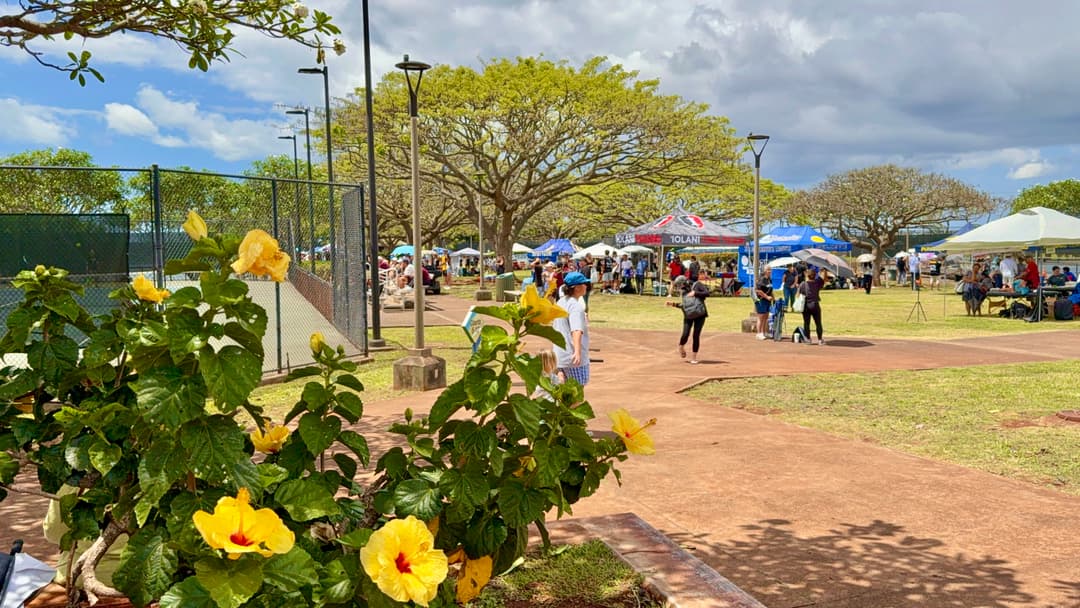
Especially on Kauai, the earth carries this deep red color that feels entirely different from what we see here along the Kona and Kohala Coast. The red dirt is everywhere. They even dye T-shirts with it.
It stains your shoes. It splashes onto exterior walls after rain. And for those of us who live on the west side of the Hawaii Island, it almost feels foreign because we rarely encounter it here.
Then another thing starts to stand out.
Where are all the lava rock walls?
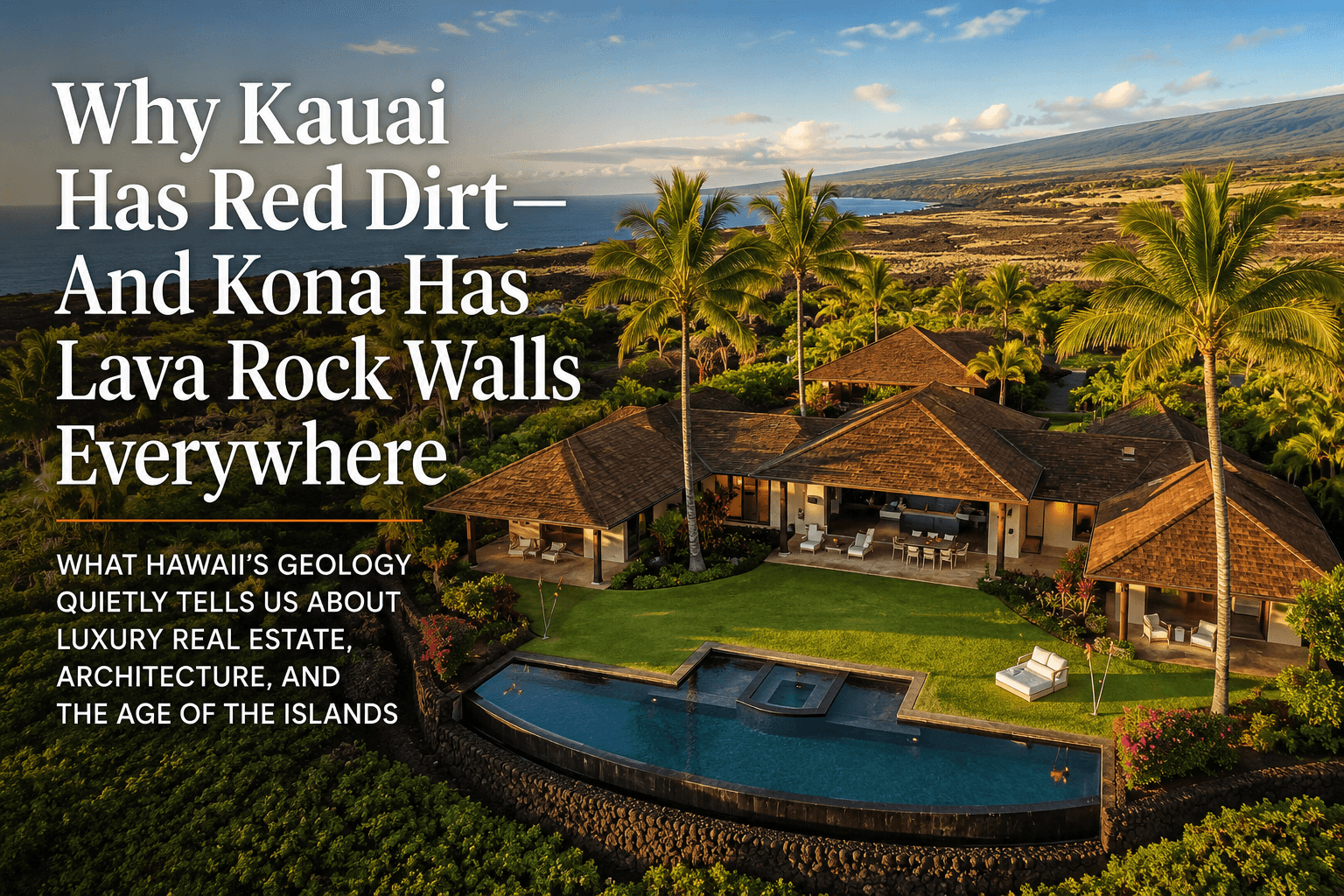
On the Big Island, especially in places like Kukio, Hualalai, Kohanaiki, Mauna Lani, and luxury neighborhoods throughout Kona and the Kohala Coast, lava rock walls are everywhere. In fact, we sometimes joke that you can almost estimate the value of a home by how much rock wall it has.
And honestly? When I searched Kauai luxury listings above $2M, I noticed something surprising: lava rock walls were virtually nonexistent.
For someone accustomed to Big Island luxury architecture, it almost makes a property feel incomplete. Not worse. Just fundamentally different.
But the reason has very little to do with architectural trends.
It has everything to do with time.
And geology.
Hawaii Is Still Moving
One of the most fascinating things about Hawaii is that the islands are literally moving.
The Hawaiian Islands were formed by a volcanic hotspot deep beneath the Pacific Ocean, east of Kilauea. As the Pacific Plate slowly moves northwest, new islands form over the hotspot while older islands drift away. It is literally moving 3-4 inches a year towards Japan.
As a former Kilauea volcano guide, I get a kick out of this fact even after 25 years living on the island.
That means the islands are essentially arranged by age.
- The Big Island is the youngest and still actively forming
- Maui is roughly 1 million years old
- Oahu is around 3 to 4 million years old
- Kauai is approximately 5 million years old
So when we island-hop across Hawaii, we are almost traveling through geological time.
The Big Island is still raw. Still volcanic. Still black in many places.
Kauai, meanwhile, is ancient by Hawaiian standards. Millions of years of rain, erosion, oxidation, and plant life have transformed it into something completely different.
In some ways, when I walk around Kauai and Oahu, I imagine what the Big Island may eventually become another three to five million years from now.
That perspective makes inter-island travel more fascinating.
Why Kauai and Oahu Have Red Soil
The famous red dirt of Kauai is essentially volcanic rock that has weathered and oxidized over millions of years.
Hawaiian lava rock contains iron.
Over extremely long periods, heavy rainfall and oxygen interact with the rock through oxidation. The iron slowly transforms into iron oxide, essentially natural rust.
That creates the deep red and burnt-orange soil seen across Kauai and parts of Oahu.
Kauai also receives enormous rainfall. Mount Waialeale is considered one of the wettest places on Earth. Over millions of years, that rainfall washes away many minerals while leaving concentrated iron-rich clay behind. This process is called laterization.
The result is beautiful, fertile, intensely red soil.
But personally? I have mixed feelings.
The lush greenery is stunning. The dramatic mountains are breathtaking. But I will admit, the red dirt staining exterior walls and driveways bothered me a little during the trip. Kona’s darker lava landscape feels cleaner and more architectural to my eye.
That is probably just my Big Island bias speaking….
Why Big Island Luxury Homes Use Lava Rock Everywhere
Now we arrive at one of my favorite topics: Big Island architecture.
The younger geology of Kona and the Kohala Coast created an entirely different relationship between land and construction.
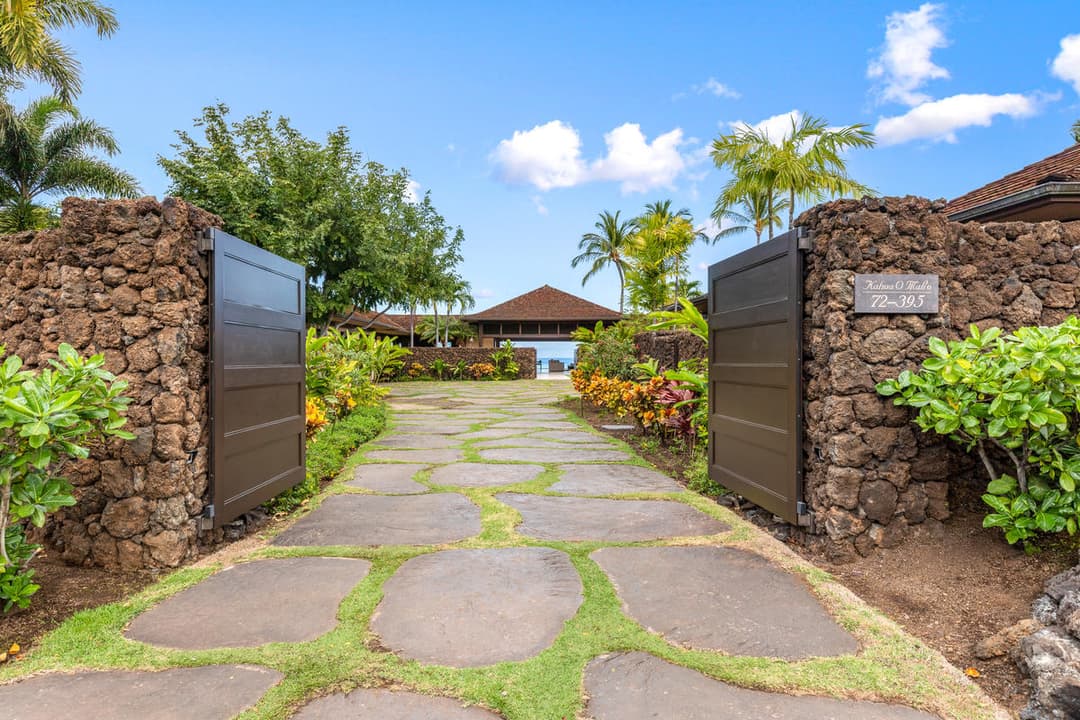
Here, lava is everywhere.
When developers build homes in places like Kukio, Hualalai, Kohanaiki, and along the Kohala Coast, they excavate enormous amounts of lava rock directly from the land itself.
Instead of removing it entirely, the stone often becomes part of the architecture.
That is why lava rock walls feel so natural on the Big Island. They are not decorative afterthoughts. They are literally connected to the land the home sits on.
The walls help anchor large homes visually into the volcanic terrain. Without them, many luxury homes would almost feel disconnected from the environment around them.
In Kona luxury architecture, lava rock creates texture, permanence, and a sense of place.
And because the Big Island is geologically young, there is simply much more usable lava rock available.
The Big Island Feels Younger Because It Is Younger
You can feel the age difference almost immediately between islands.
The Big Island often feels sharper, darker, and more rugged.
Kauai feels softer. Greener. More weathered.
Neither is better. They are simply different phases of the same geological story.
Over the past decade, I have noticed that many luxury buyers visiting multiple islands instinctively respond differently to each landscape.
Some people fall in love with Kauai’s lush, cinematic beauty.
Others become captivated by Kona’s cleaner lines, lava fields, dry climate, and dramatic contrast between black rock and blue ocean.
The emotional feeling of a property often traces back to the age of the island itself.
That is part of what makes real estate in Hawaii so different from mainland markets. On the mainland, subdivisions can often feel interchangeable. In Hawaii, the land itself shapes the identity of entire communities.
And on the Big Island, especially, the relationship between volcanic land and luxury architecture is impossible to separate.
The lava is not just scenery.
It is the foundation of the earth and lifestyle itself.