

By Kai Ioh and KE TEAM Hawaii
Kai Ioh is a luxury real estate advisor based in Kona, Hawai‘i, specializing in second home, resort, and ultra-high-net-worth markets across the Big Island.
Key Takeaways
- Pricing in Kona has become more precise in 2026.
- Roughly 1 in 2 sellers—across both homes and condos—are adjusting prices before selling.
- Overpricing often leads to significantly longer time on market, especially in the condo and luxury segments.
- In the Big Island context, buyers are selective and react quickly to pricing misalignment.
- The market today rewards alignment, not optimism.
Kona Pricing Strategy in 2026: What Has Become Clear
Last February, I wrote about The Price of Time and how overpricing quietly costs sellers both time and money.
By October, we were already seeing price reductions rise across the Big Island. Not as a sign of weakness, but as a sign of normalization.
Now, in 2026, the picture feels clearer.
The market has simply become more precise.
A Market That Rewards Accuracy
Let’s look at what the current Kona data is actually showing.
Single-Family Homes
- Active Listings: 166
- Active Listings with Price Reductions: 74
- Reduction Rate:44.6%
- Sold Listings( last 6 months): 174
- Sold with Price Reduction: 78
- Reduction Rate:44.8%
That alignment between active and sold—both around 45%—is important.
It tells us this is not a temporary condition.
It is how the market is functioning right now.
Condominiums
- Active Listings: 171
- Reduction Rate:43.3%
- Sold (last 6 months): 149
- Reduced before selling:49.7%
In other words, about 1 in 2 condo sellers needed to adjust the price to get to closing.
Slightly more sensitive than single-family homes.
What Does Waiting Actually Cost?
This is where the story becomes very real.
Across both segments:
- Homes that required price reductions took more than 3x longer to sell
- Condos can take up to 7x longer when mispriced
From earlier Kona tracking:
- Single-family homes: 37 days vs 121 days
- Condos: 23 days vs 157 days
That is not a small gap.
That is a completely different experience.
Time on market changes everything. How buyers perceive value, how negotiations unfold, and how much leverage a seller actually has.
How Much Are Prices Being Adjusted?
This is another area where the data is helpful.
Single-Family Homes
Among homes that reduced:
- Average Reduction: 9.2%
- Median Reduction: 7.2%
That difference matters.
The median (7.2%) reflects what most sellers actually experience.
The average (9.2%) is pulled higher by larger adjustments, typically in the luxury segment.
By Price Range
- Under $1M: 1.3%
- $1M–$2M: 4.2%
- $3M–$5M: 5.9%
- $5M+: 7.5%
There is a very clear pattern:
Higher price points tend to require larger corrections.
Why Does the Luxury Segment Behave Differently?
In Kona, especially along the Kohala Coast and luxury communities, the dynamics shift at the higher end.
The Average days on market for homes above $5M is 113 days.
This reflects three realities:
- Smaller buyer pool
- More deliberate decision-making
- Greater sensitivity to pricing alignment
From experience, this is where precision matters most.

Kailua Kona
Condos: Same Reductions, Bigger Time Penalty
Interestingly, condo reductions look very similar in size:
- Average Reduction: 9.5%
- Median Reduction: 7.2%
So the pricing adjustments themselves are not dramatically different from single-family.
The key difference is timing.
Condos tend to experience a much sharper penalty when mispriced.
Buyers compare units side by side.
Inventory is more transparent.
And decisions tend to happen faster.
That is why we see the “up to 7x longer” effect more clearly in this segment.
What Has Changed Since 2024?
A couple of years ago, many sellers still had room to test pricing.
That margin has narrowed.
Buyers today are:
- Watching inventory closely
- Comparing aggressively
- Moving on quickly when something feels off
This does not feel like a weak market. It feels like an efficient one.
And in an efficient market, pricing mistakes show up faster.
Are Price Reductions a Problem?
Not necessarily.
A price reduction is not a failure. Sometimes it is part of the process.
But timing matters more than most people expect.
When a property starts too high:
- It misses early, motivated buyers
- It loses momentum
- It re-enters the market from a weaker position
By the time the price is adjusted, the opportunity has shifted.
That is the real cost.

73-4887 Manu Mele went into escrow in 14 days
What We Are Seeing on the Ground in 2026
Emil and I are having a strong year.
Not because the market is easy, but because the strategy is clearer.
Several recent listings went into escrow quickly.
Our average days on market remains very low.
Here are examples of how 2026 is going for us. The market has been active for us.
Heavenly Home: 14 days
Ke Alohi Kai: 12 days
Pualani Estates: 6 days
Hinoa Villas: 4 days
Kukio: 0 days
And in each case, pricing was intentional from day one.
We feel the listings do not need to sell in one day, but we also need to understand that if the property sits for 30 days, it is likely to sit longer because the market is not moving up to catch up.
Homes and condos that are positioned correctly are still selling.
Often quickly, and with far less friction.
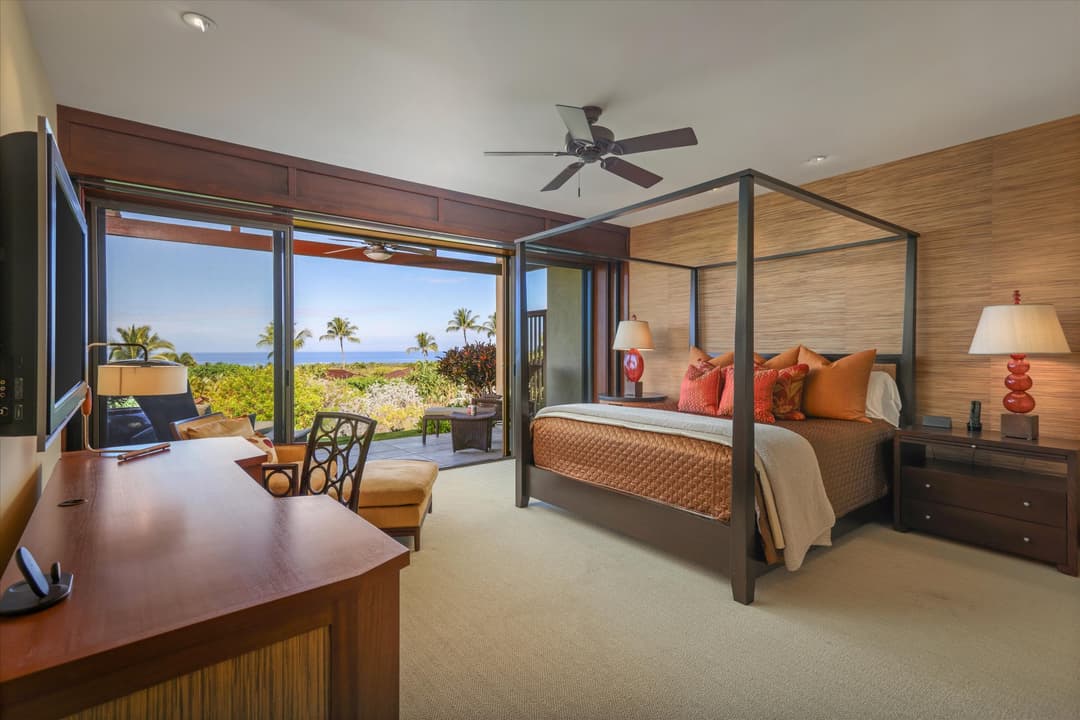
Hainoa Villa #15 in Hualalai Resort sold in 4 days. $3.95M
From Optimism to Precision
The shift is subtle, but important.
This is no longer a market where you can simply “try a number” and adjust later without consequence.
Today, it is about:
- Understanding buyer behavior
- Positioning against the current inventory
- Being honest about where the market actually is
Depending on the segment, we are operating in a neutral-to-buyer-favored environment.
That does not remove opportunity.
It just raises the importance of strategy.
And pricing is a strategy that sellers tend to value most.
Frequently Asked Questions
How common are price reductions in Kona right now?
Roughly 45% of single-family homes and about 50% of condos require price reductions before selling.
Do price reductions mean the market is weak?
Not necessarily. It reflects a more efficient market where buyers are responding quickly to pricing misalignment.
How much longer do mispriced homes take to sell?
Homes can take over 3x longer, while condos can take up to 7x longer when initially overpriced.
How large are typical price reductions?
Most reductions fall around 5% to 8%, with a median around 7.2%. Larger adjustments tend to occur in higher price ranges.
Are luxury homes affected differently?
Yes. Homes above $5M tend to take longer to sell and require larger pricing adjustments due to a smaller buyer pool.
Why are condos more sensitive to pricing?
Condo buyers compare units directly and quickly, making pricing misalignment more visible and impactful.
Are well-priced homes still selling quickly?
Yes. Homes priced correctly are still moving efficiently, often with less negotiation friction.
What is the biggest mistake sellers make today?
Assuming they can price high and adjust later without losing momentum. In today’s market, the first few weeks are critical.