
By Kai Ioh and KE TEAM Hawaii
Kai Ioh is a luxury real estate advisor based in Kona, Hawai‘i, specializing in second home, resort, and ultra-high-net-worth markets across the Big Island.
The September 2026 Kailua-Kona real estate market is increasingly divided between two very different property types. Single-family homes remain relatively resilient, with controlled inventory and year-to-date sales ahead of last year. Condos are showing a much clearer buyer-market pattern, with higher supply and substantially weaker demand. For buyers and sellers in Kona, the Big Island, and the nearby Kohala Coast, understanding this difference is more useful than looking at the market as one broad category.
Key Takeaways
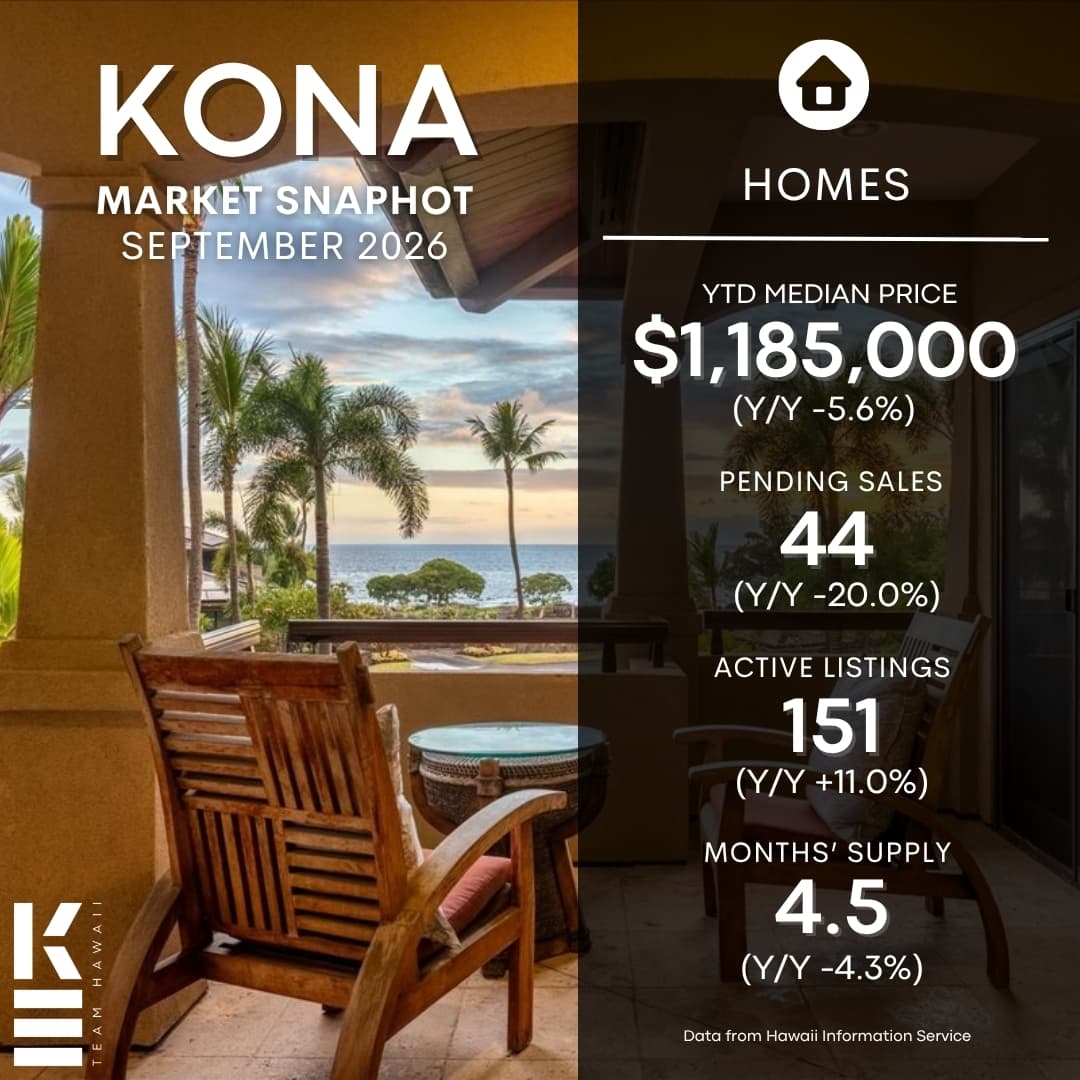
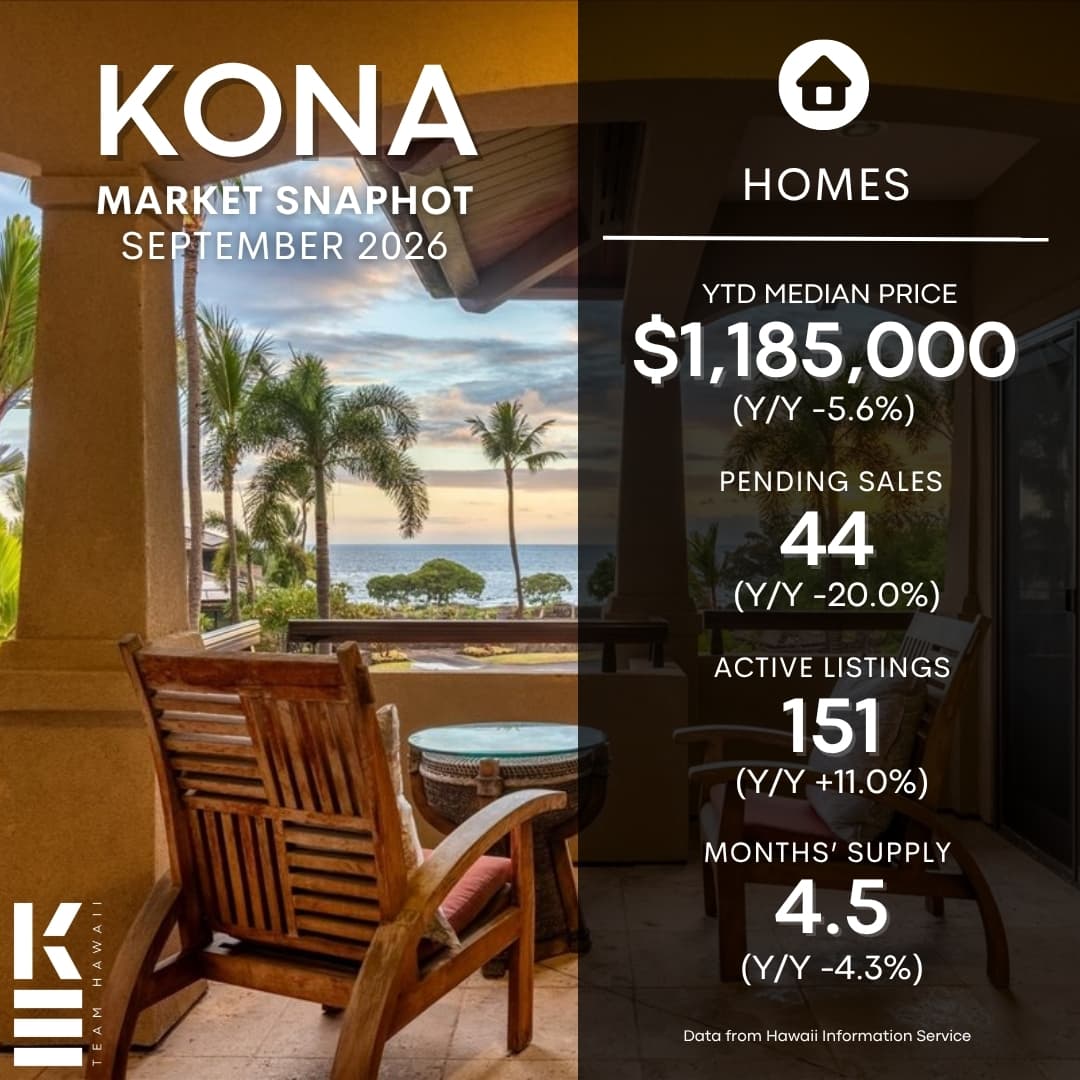
Kailua-Kona single-family homes remain relatively resilient. The YTD median price is $1,185,000, down 5.6% year-over-year, while closed sales are up 8.6%.
Single-family sold price per square foot is down 8.8% year-over-year, suggesting more underlying price adjustment than the median price alone indicates.
Kona condo inventory has moved clearly in buyers' favor, with 8.8 months of supply and active listings 24.7% above last year.
The $1 million to $2 million condo segment is particularly challenging, with 30 active listings and only one pending sale.
Buyers generally have more time and negotiating leverage than during the post-COVID years, but conditions vary significantly by property type and price range.
September 2026 Kailua-Kona Real Estate Market Overview
The clearest theme in Kona right now is divergence.
Single-family homes and condos are moving in different directions. Both are experiencing some price adjustment, but the supply-demand conditions behind those changes are not the same.
Single-family inventory remains relatively tight, and year-to-date transaction volume is ahead of 2025 levels. The condo market is facing a more challenging combination of higher inventory and weaker demand. This may be stemming from increasing carrying costs and tightening of lending standards by traditional conventional financing.
Kona Single-Family Homes Remain Relatively Resilient
The Kailua-Kona single-family YTD median sales price is $1,185,000, down 5.6% year-over-year.
Based on the historical context provided, this brings pricing closer to 2023 levels. Even after that adjustment, current values remain substantially higher than the pre-COVID market, when the 2019 median was approximately $650,000.
The more interesting part of the story is the transaction volume.
264 single-family homes have closed year-to-date, up 8.6% from 2025.
That is an important contrast with the condo market. Prices are adjusting, and buyers have not disappeared. The market looks more like a normalization from unusually strong post-COVID conditions than a dramatic breakdown in demand.
Price Per Square Foot Shows Additional Softening
One number I am watching carefully is the sold price per square foot.
The YTD median sold price per square foot for Kona single-family homes has declined 8.8% year-over-year to $678. That decline is larger than the 5.6% decrease in median sales price.
Median sales price can shift depending on the mix of properties sold during a given period. Price per square foot gives us another way to look at underlying pricing conditions.
In this case, it suggests that pricing has softened somewhat more than the headline median alone might indicate.
It does not necessarily tell us where prices will go next, but it is a useful forward indicator to watch.
Near-Term Home Demand Has Slowed
Year-to-date demand remains relatively healthy, but near-term momentum weakened in August.
Pending single-family sales declined from 55 to 44 month-over-month, a 20% decrease.
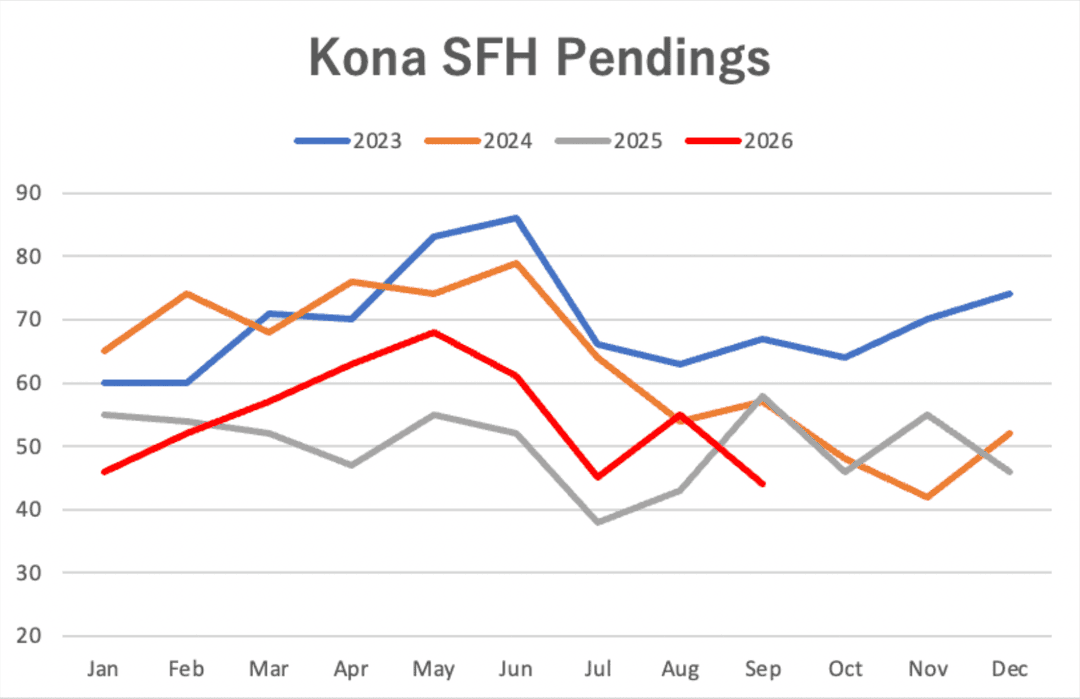
Some seasonal cooling is normal. September and October are traditionally slower periods in Kona, when visitor and snowbird activity remains lighter.
The next few months should help clarify whether the current slowdown is primarily seasonal or part of a broader moderation in demand.
Single-Family Inventory Remains Balanced
Inventory remains one of the more supportive factors for Kona single-family homes.
Active listings declined slightly from 153 to 151 month-over-month. While it is highest in four five years, the number has stablized.
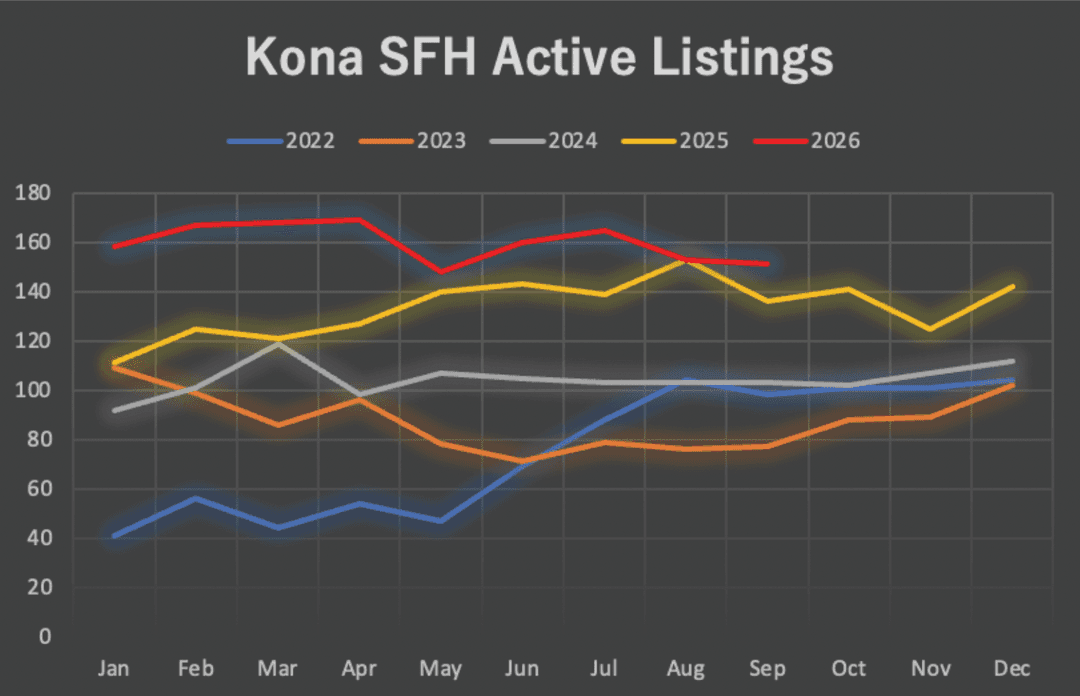
Months supply stands at 4.5 months, down 4.3% year-over-year. We would characterize this as a relatively balanced market.
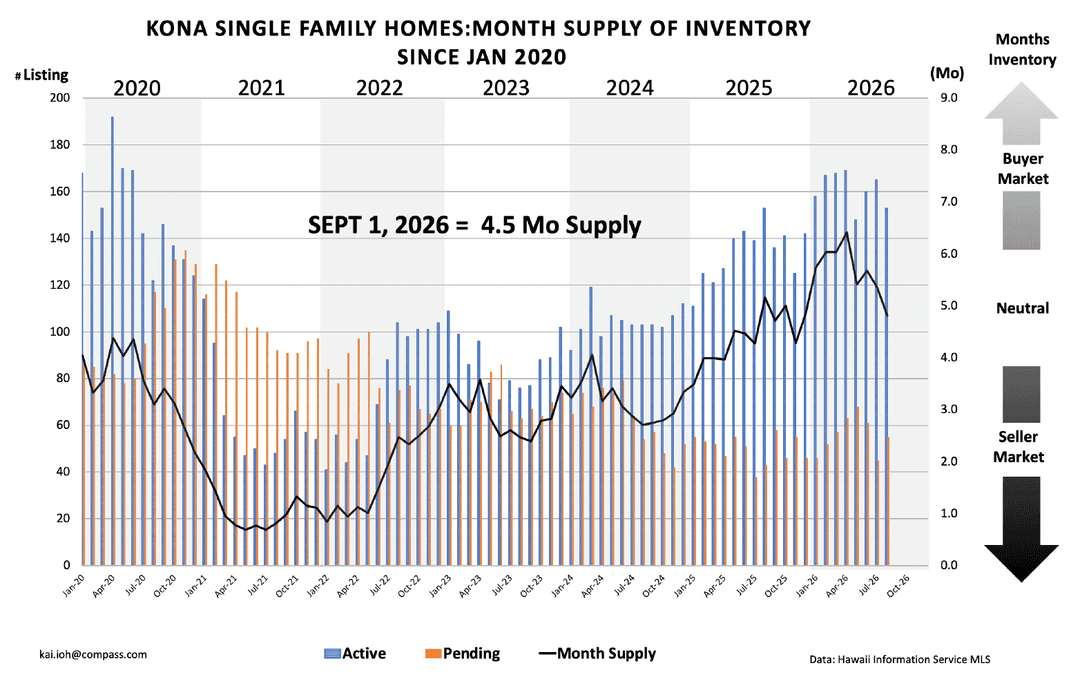
That is a significant difference from the condo market, where supply has climbed to 8.8 months. Single-family buyers have more options than during the highly competitive post-COVID period, but inventory has not reached a level that suggests a major supply-demand imbalance.
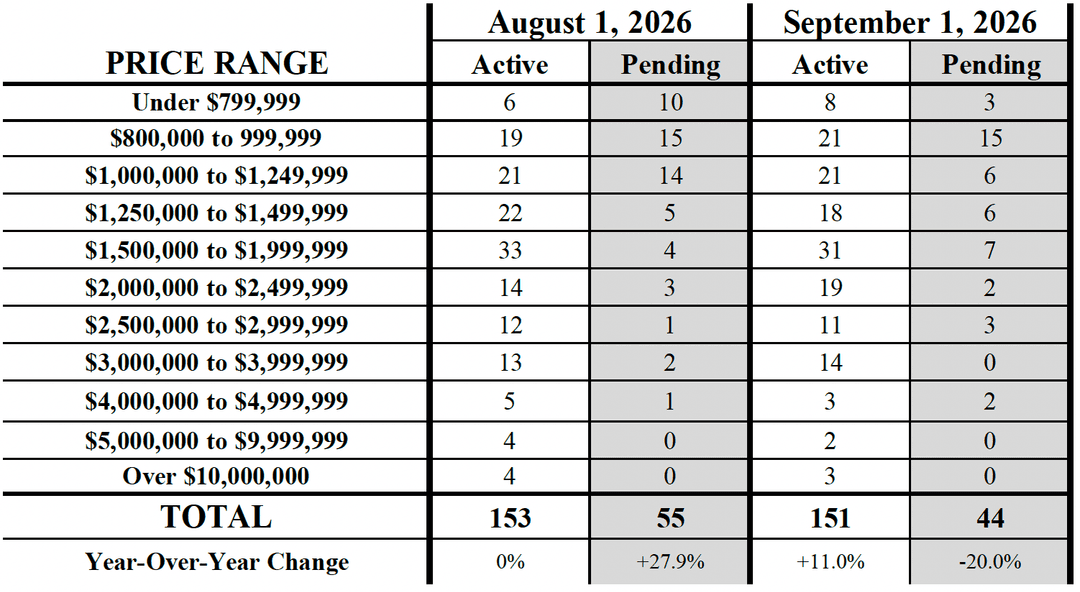
Buyers Have More Time and Negotiating Leverage
YTD median days on market has increased 46.2% year-over-year to 38 days.
For buyers, that generally means more time to evaluate a property, compare alternatives, conduct due diligence, and negotiate.
For sellers, however, longer marketing times do not necessarily mean the market has weakened. With only 4.5 months of supply, the single-family segment remains considerably healthier than the condo market.
Well-positioned properties can still perform effectively.
Kona Condo Supply Has Shifted Clearly in Buyers' Favor
The Kailua-Kona condo market is telling a different story.
Months supply has climbed to 8.8 months, up 44.3% year-over-year.
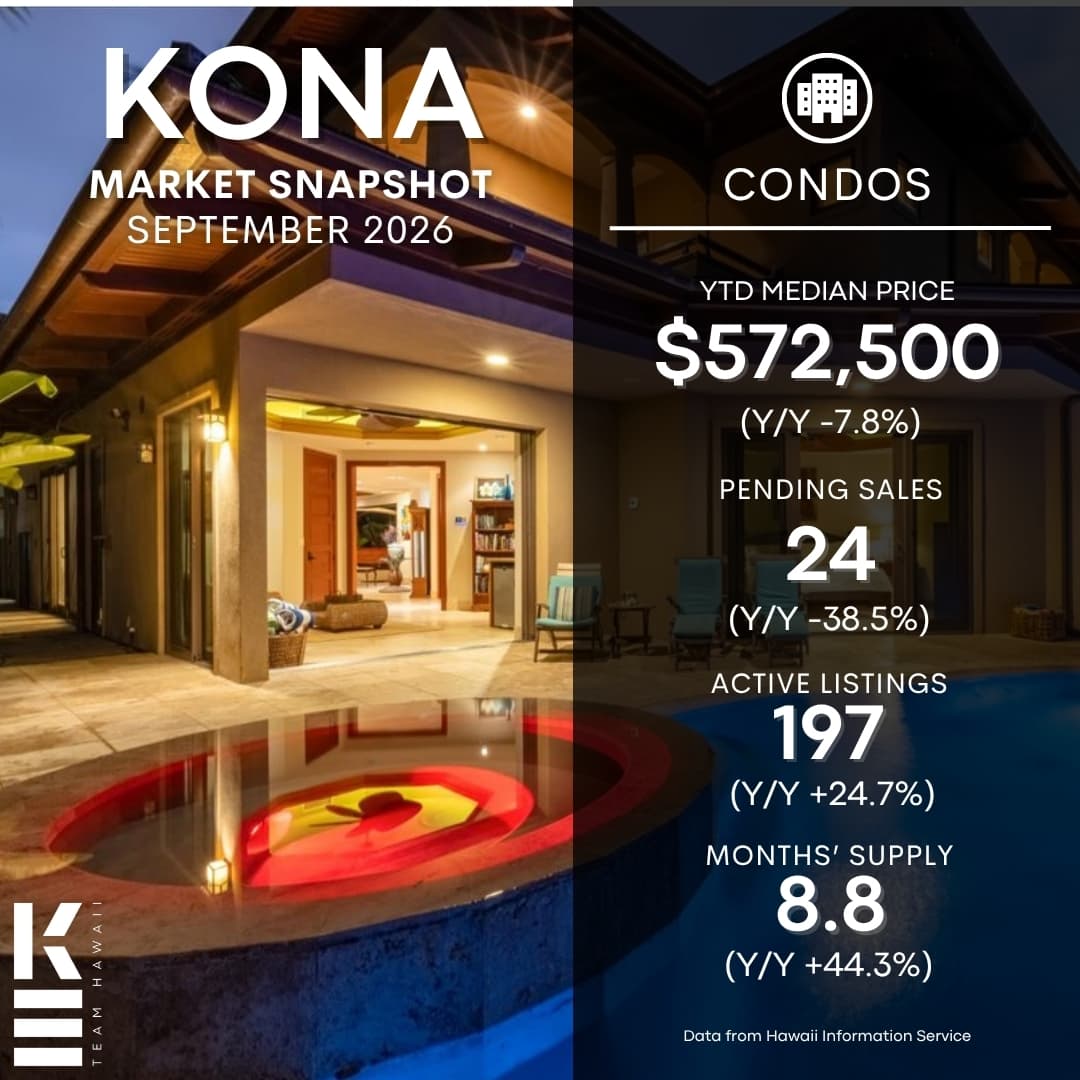
That exceeds the 8.1 months recorded in March 2025 and represents the highest level in the historical period being tracked.
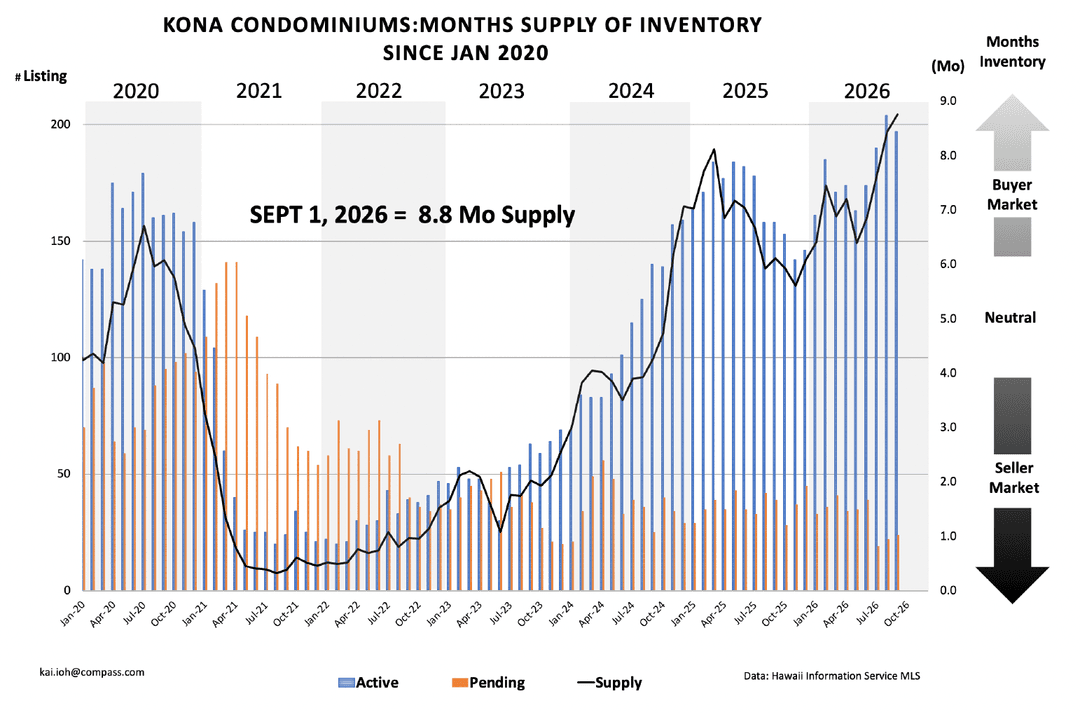
At this level of supply, buyers have considerably more choice. The imbalance is driven by two forces occurring simultaneously: higher inventory and weaker demand.
Unlike the single-family market, the condo segment is now clearly operating in a buyer-favorable environment.
Condo Inventory Remains Elevated
There were 197 active Kailua-Kona condo listings on September 1.
That is down modestly from 204 in August, but inventory remains 24.7% above last year. The small month-over-month reduction does not materially change the broader picture.
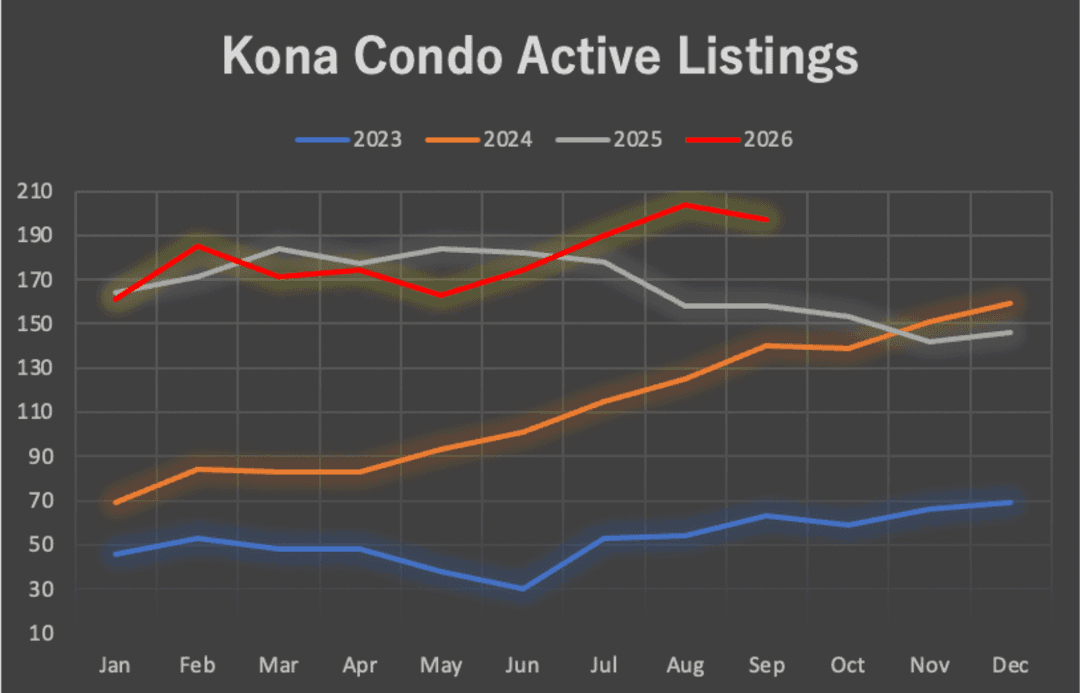
Pending sales increased slightly from 22 to 24 month-over-month, but remained 38.5% below last year.
This is the key issue in the condo market.
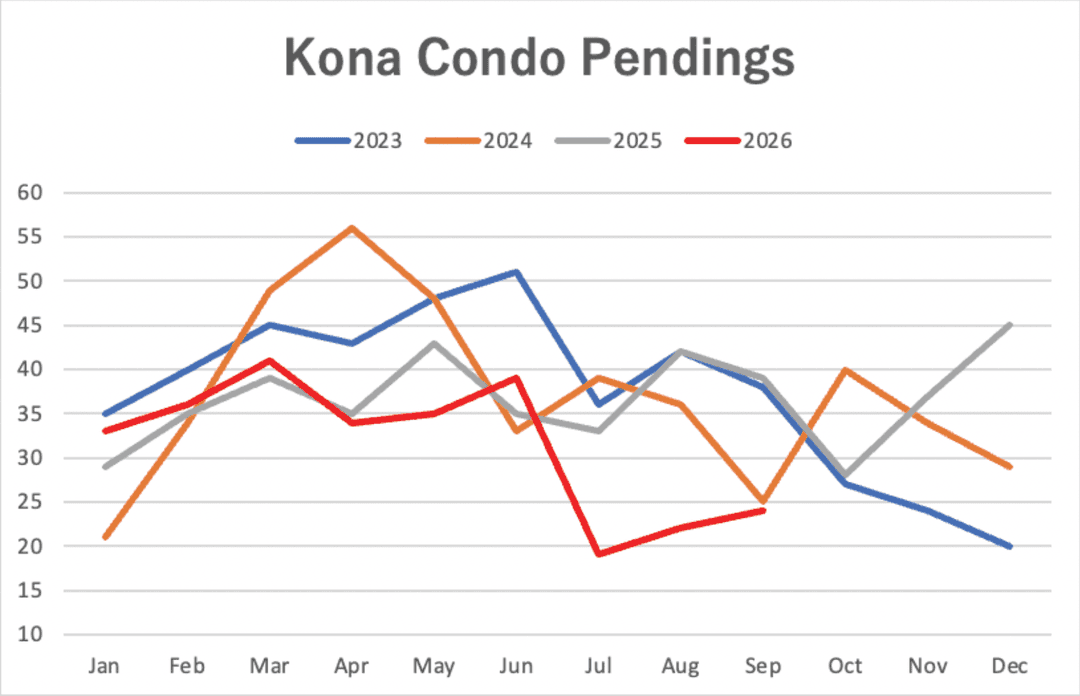
Inventory is elevated, but buyer demand has not increased enough to absorb that supply.
The result is 8.8 months of inventory and substantially more negotiating leverage for buyers.
The $1 Million to $2 Million Condo Segment Faces Heavy Competition
Conditions become even more pronounced when we look at individual price segments.
The $1 million to $2 million condo market currently has 30 active listings and only one pending sale.
That represents a 30-to-1 active-to-pending ratio.
This is one of the clearest examples of why broad market statistics need context.
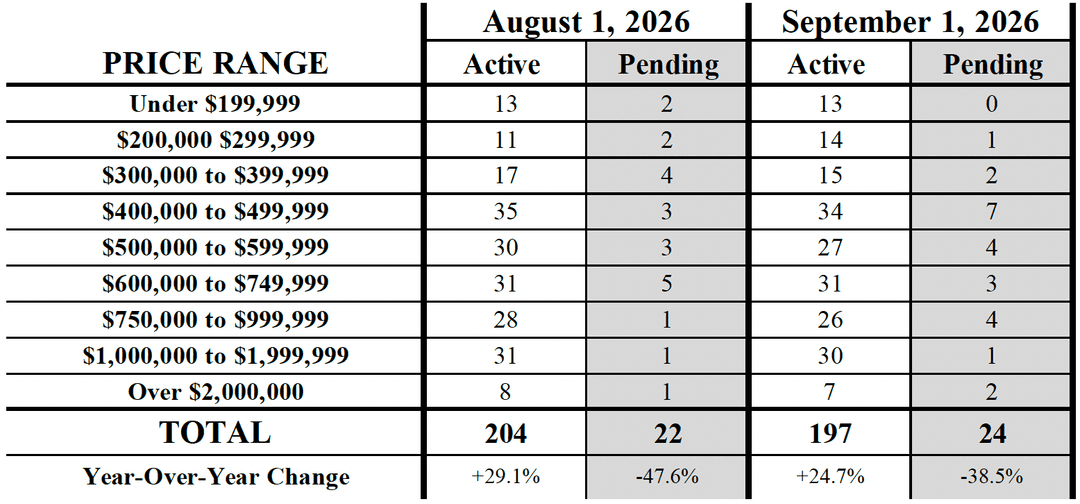
Kona real estate can behave very differently by price range, development, location, condition, view, and property type.
Condo Prices Are Beginning to Reflect Weaker Demand
The YTD median condo sales price is $572,500, down 7.8% year-over-year. Based on the historical comparison provided, that places pricing roughly back around 2023 levels.
YTD median sold price per square foot has declined 5.1% to $628. As with single-family homes, the longer-term context is worth keeping in mind.
The pre-COVID median cited in the historical comparison was approximately $350,000. Current condo pricing therefore remains considerably above 2019 levels despite the recent correction.
Condo Sales Volume Shows a Clearer Slowdown
Only 182 condos have closed year-to-date, down 13.7% year-over-year.
Based on the monthly historical context provided, August recorded just 12 condo sales, approaching the lowest August level since 2019. August 2024 recorded 11 sales.
This is a much weaker demand pattern than we are seeing in single-family homes.
Interestingly, YTD median days on market stands at 50 days, down 5.7% year-over-year.
Inventory, pending activity, closed sales, and months supply all point toward weaker condo demand even though median days on market has declined slightly.
Condo Prices Remain Relatively Sticky
One of the more interesting features of the current condo market is that prices have not fallen as dramatically as the imbalance in supply and demand might suggest.
Inventory has returned to pre-COVID levels, while demand is substantially lower.
Yet sellers have not universally adjusted prices to the new demand environment. That creates what can be described as "downward stickiness."
Many sellers do not have to sell and the gap between seller expectations and current buyer demand is likely to remain one of the most important factors to watch.
Mortgage Rates Remain an Affordability Constraint
Bankrate's national average 30-year fixed mortgage rate was 6.75% on September 2, up 0.04 percentage points from the previous week.
Its weekly lender survey similarly reported 6.76%, compared with 6.68% the prior week.
Higher borrowing costs affect monthly payments and can make buyers more price-sensitive.
This also influences the home-versus-condo comparison. A buyer evaluating a lower-priced condo with a substantial maintenance fee may find that the total monthly expense is closer to the cost of a single-family home than the purchase prices initially suggest.
Financing is not the only factor in Kona's second-home and luxury markets, but the cost of capital still matters.
The Fed has recently sounded more “hawkish,” signaling it’s not convinced inflation is on a smooth path back to 2%. That’s kept Treasury yields and mortgage rates near the high end of their recent range. Geopolitical tension and higher oil prices are also adding some upward pressure.
This year's midterm election is something we need to keep an eye on. Congress doesn’t set mortgage rates, but midterms can affect markets’ expectations for government spending and deficits. That can create extra volatility in longer‑term bonds and mortgage rates.
We will keep you informed.
Kai and Emil - KE TEAM
Frequently Asked Questions
Is the Kailua-Kona real estate market declining in September 2026?
Parts of the market are adjusting, but conditions vary significantly by property type. Single-family median prices are down 5.6% year-over-year while YTD sales are up 8.6%. Condos are weaker, with median prices down 7.8%, closed sales down 13.7%, and months supply rising to 8.8 months.
Is Kailua-Kona currently a buyer's market?
It depends on the property type. Single-family homes have 4.5 months of supply, which we would characterize as relatively balanced. Condos have 8.8 months of supply, giving buyers considerably more selection and negotiating leverage.
What is the median home price in Kailua-Kona in September 2026?
The year-to-date median sales price for Kailua-Kona single-family homes is $1,185,000, down 5.6% year-over-year. The YTD median condo sales price is $572,500, down 7.8%.
Are Kona single-family home prices falling?
Yes. The YTD median single-family sales price is down 5.6%, while median sold price per square foot has declined 8.8% to $678. However, closed sales are up 8.6% year-over-year and inventory remains relatively controlled.
Why is the Kona condo market weaker than the single-family market?
The condo market is experiencing both higher inventory and weaker demand. Active condo listings are 24.7% above last year, pending sales are 38.5% lower, and months supply has reached 8.8 months. Single-family homes have only 4.5 months of supply and YTD sales remain ahead of last year.
Do Kona condo buyers have more negotiating leverage now?
Yes. With 8.8 months of condo supply and pending sales substantially below last year, buyers generally have more properties to compare and greater negotiating leverage. Conditions still vary significantly by price range, development, and individual property.
Why haven't Kona condo prices fallen more despite higher inventory?
Prices appear relatively sticky. Inventory has increased toward pre-COVID levels while demand has declined substantially, but sellers have not universally adjusted asking prices to reflect that weaker demand. Closed prices are declining, but more gradually than the supply-demand imbalance might suggest.
Should buyers compare condo fees with mortgage costs?
Yes. Total monthly carrying cost can be more useful than purchase price alone. A condo maintenance fee approaching $600 per month can represent roughly $100,000 of mortgage purchasing power, depending on financing terms. That can materially change the comparison between a condo and a single-family home.
What should Kona sellers pay attention to in the current market?
Pricing, property condition, positioning, and direct competition are increasingly important. This is particularly true for condos, where inventory is elevated. Single-family sellers face a more balanced environment, but buyers generally have more time to compare alternatives than during the post-COVID years.
What are the most important Kona market indicators to watch next?
For single-family homes, pending sales and sold price per square foot will be important indicators. For condos, months supply, pending sales, inventory, and seller price adjustments will help show whether the current imbalance begins moving back toward a more balanced market.