
By Kai Ioh and KE TEAM Hawaii
Kai Ioh is a luxury real estate advisor based in Kona, Hawai‘i, specializing in resort and ultra-high-net-worth markets across the Big Island.
Kona Is Stabilizing, But Precision Matters
The Big Island real estate market is not moving in one straight line.
That may be the most important point for May 2026.
Nationally, the housing market showed a small but meaningful bounce in pending sales after a soft spring start. According to Compass Chief Analyst Mike Simonsen, newly pending sales recently moved above last year’s pace, while inventory growth has slowed sharply. Compass had originally forecast a more balanced 2026, with modest sales growth, flat pricing, and mortgage rates averaging around 6.4%.
But this rebound is fragile.
The Federal Reserve decided not to lower rates, inflation pressure remains sticky, and geopolitical uncertainty around the Iran war continues to affect oil prices, mortgage rates, and buyer confidence. Some analysts now expect no Fed rate cuts in 2026, especially if energy prices keep inflation elevated.
Here in Kona, we are seeing a similar theme, but with our own Big Island personality.
Buyers are active, but selective. Sellers can still succeed, but only with very thoughtful pricing, which remains high.
Kona Single-Family Homes: Stabilizing, Not Declining
The Kona single-family home market is showing measured price stabilization.
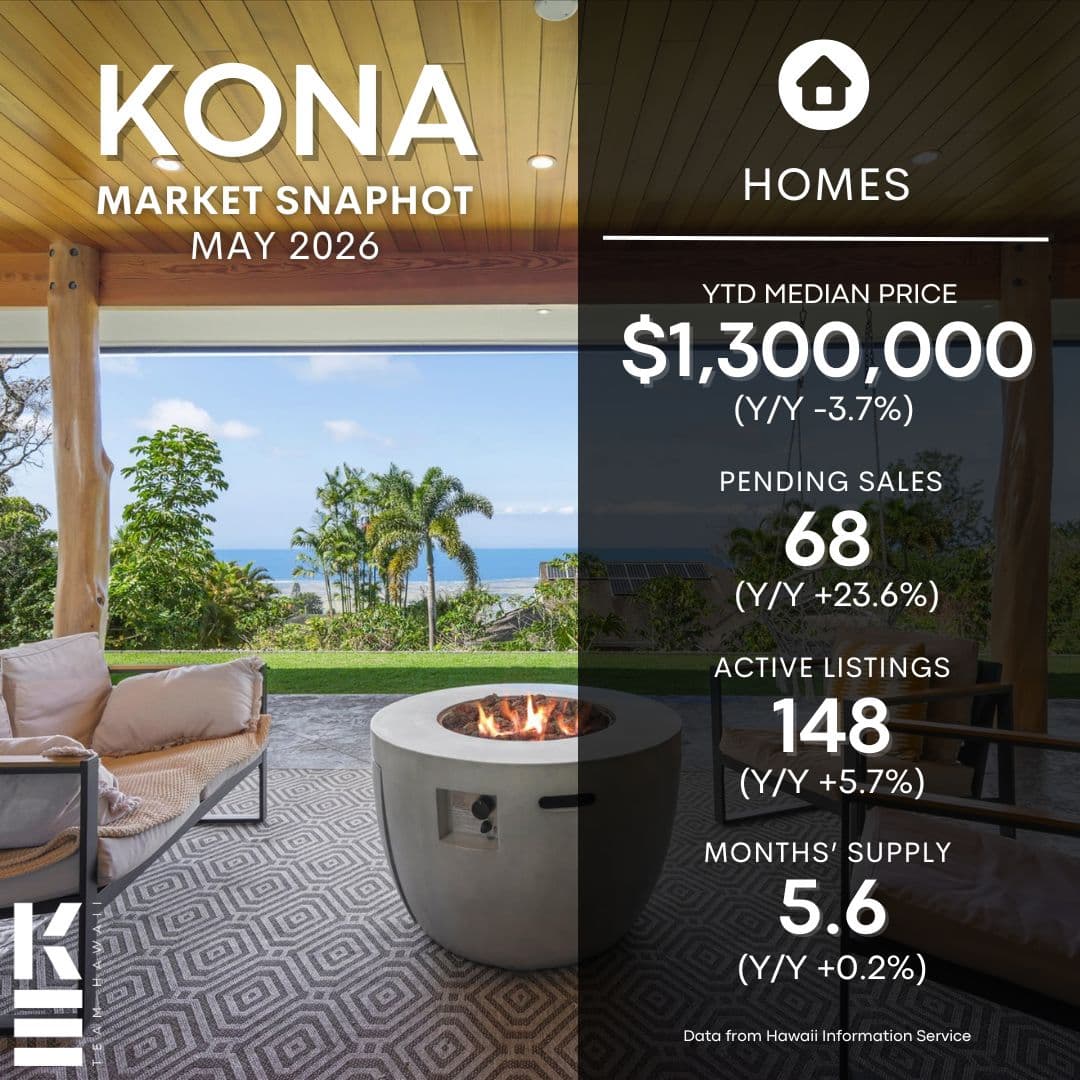
The median price is now around $1.3M, down 3.7% year-over-year. That is softer than the early-year highs near $1.4M, but still above late-2025 levels. To me, this does not look like a declining market. It looks more like a market flattening after several strong years.
The median price per square foot has adjusted more noticeably to about $701, down 7.2% year-over-year. That tells us buyers are becoming more price-sensitive.
Inventory tightened 12% month-over-month, even though it remains slightly higher than last year. At 5.6 months of supply, Kona single-family homes are in a neutral range, but trending slightly buyer-leaning.
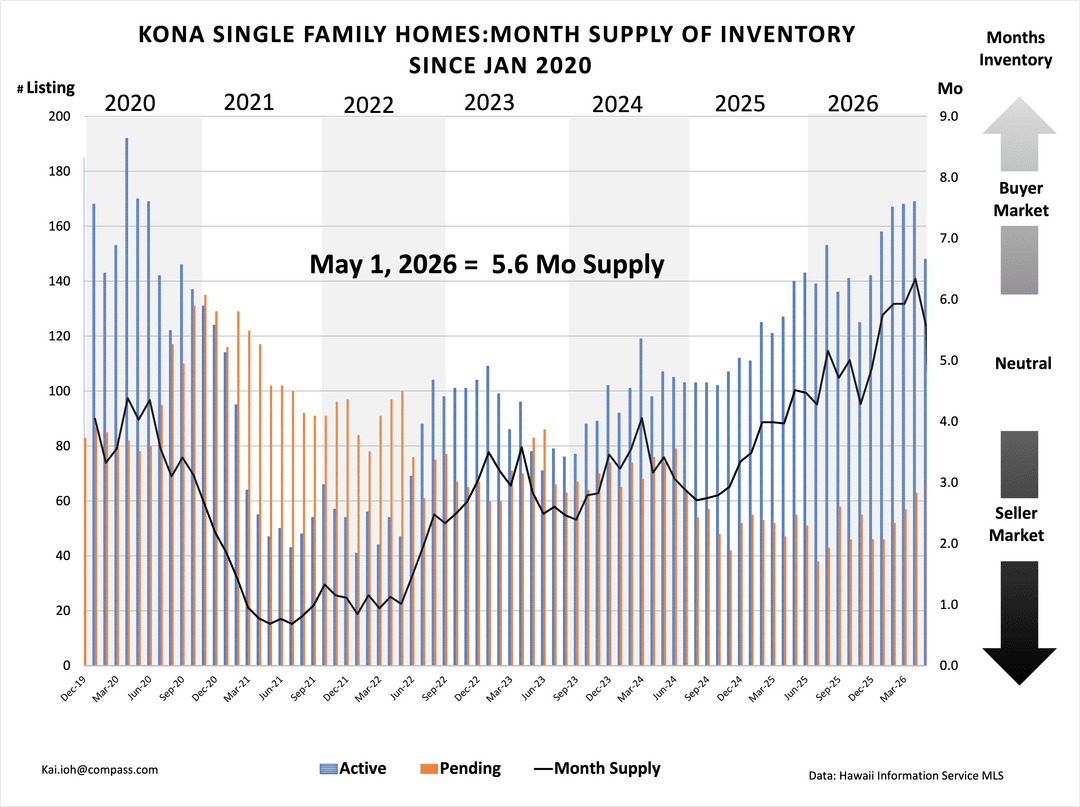
The most encouraging signal is demand.
Pending sales surged 24% this month, helped by earlier easing in mortgage rates and buyers returning after sitting on the sidelines. Luxury activity has also strengthened, with 7 pending sales above $2.5M, compared with only 2 at the same time last year, when President Trump announced the Tariffs.
That is meaningful.
Even with global uncertainty, higher-end buyers are still moving when the property is right. This reflects the K-shaped economy we are living in. Inflation hurts affordability for many households, but for asset-rich buyers, inflation can also reinforce the appeal of hard assets like Hawaii real estate.
But Buyers Are Not Chasing the Market
This is where sellers need to be careful.
In the past 30 days:
- 15% of listings were withdrawn
- 28% of listings reduced price
- Expired listings are rising
That tells us mispricing is being penalized quickly.
Median days on market is still only 36 days, which sounds healthy. But the story behind the number matters. Well-priced homes are still moving. Overpriced homes are sitting, reducing, or disappearing from the market.
In today’s Kona market, the right price is not just a number. It is a strategy.
Kona Condos: A Deeper Correction, But Improving Balance
The Kona condo market is going through a more pronounced correction.
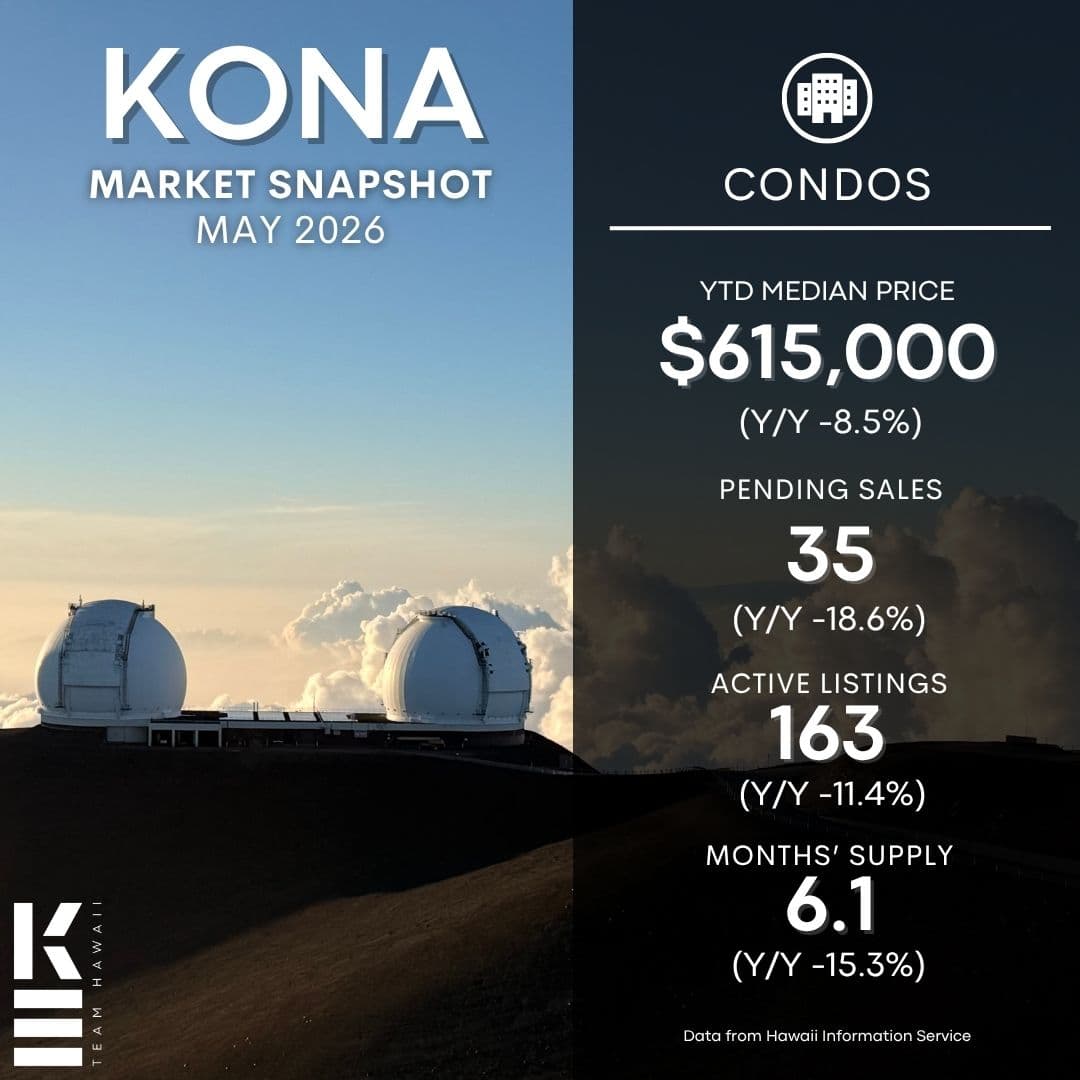
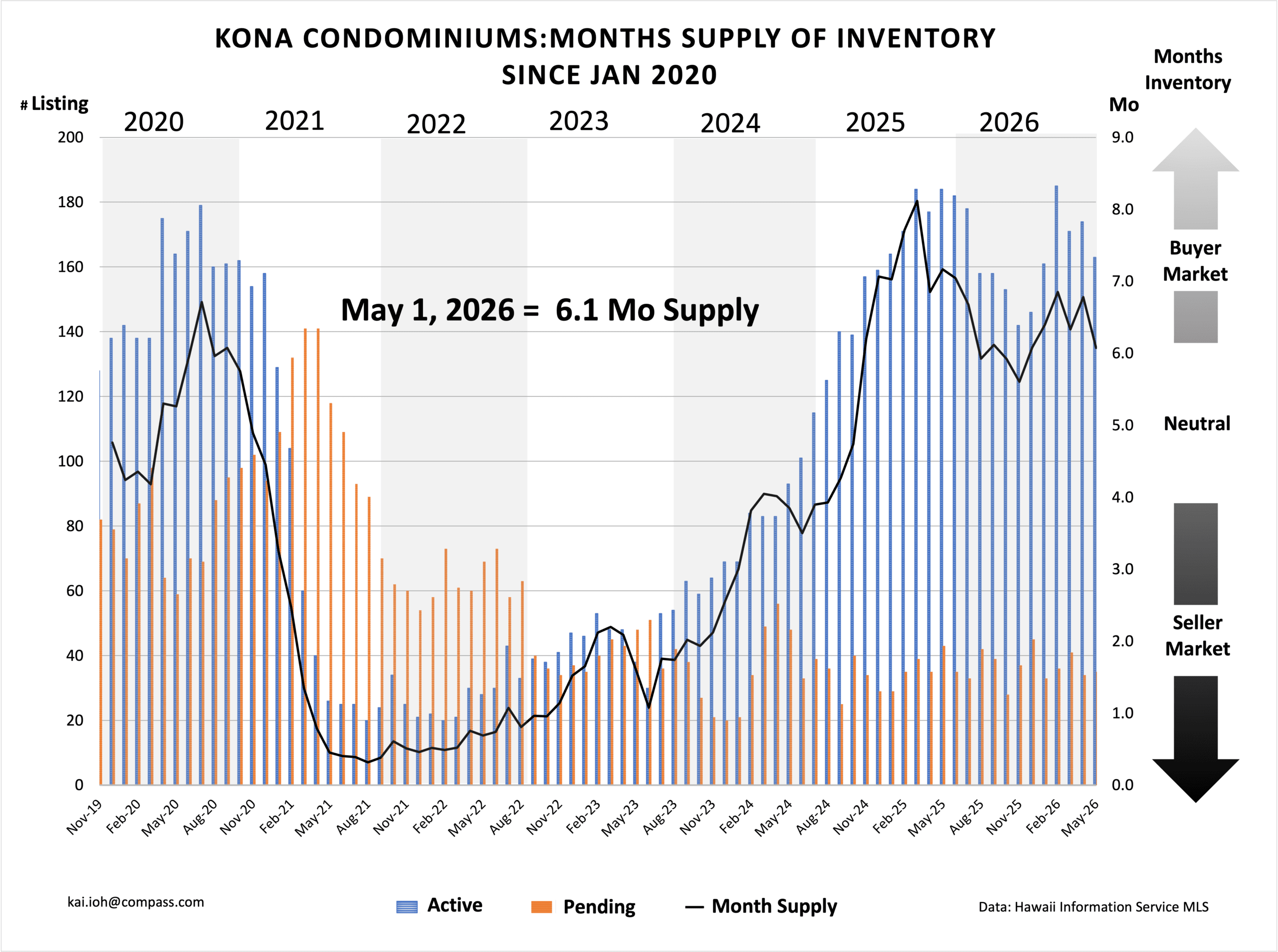
Median condo prices have adjusted into the low $600Ks, down about 8.5% year-over-year. Price per square foot is also down about 5%, showing softer pricing than we see in single-family homes.
The good news is that inventory is improving. Active listings have declined for two consecutive months and are now down year-over-year. Months of supply is around 6.1 months, down 15% year-over-year.
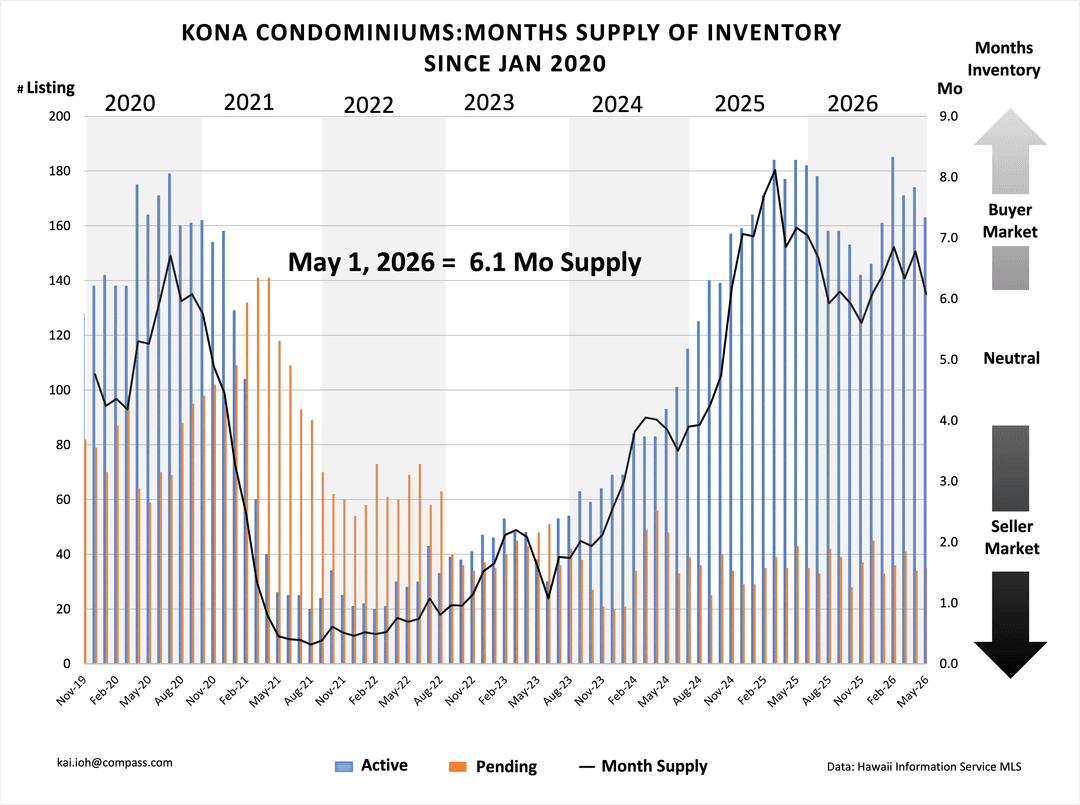
That is still slightly above a neutral market, but it is much healthier than last year’s softer conditions.
Demand remains more constrained:
- Pending sales are down 18% year-over-year
- Withdrawn listings remain around 10% or more each month
- About 25% of sellers reduced price in the past 30 days
Condos are more sensitive to interest rates, insurance costs, AOAO financials, and investor math. Buyers are studying monthly costs very carefully.
This is especially true for vacation rental and investor-driven units. The question is no longer just, “What is the purchase price?” It is also, “What is the total monthly ownership cost, and does the building have long-term financial strength?”
Resort Market: Rebalancing, With Luxury Still Leading
The Big Island resort market is also showing early signs of rebalancing.
Across Kohala Coast resort condos, inventory declined from 108 active listings in April to 96 in May. That is an important shift after reaching the highest supply level since fall 2020.
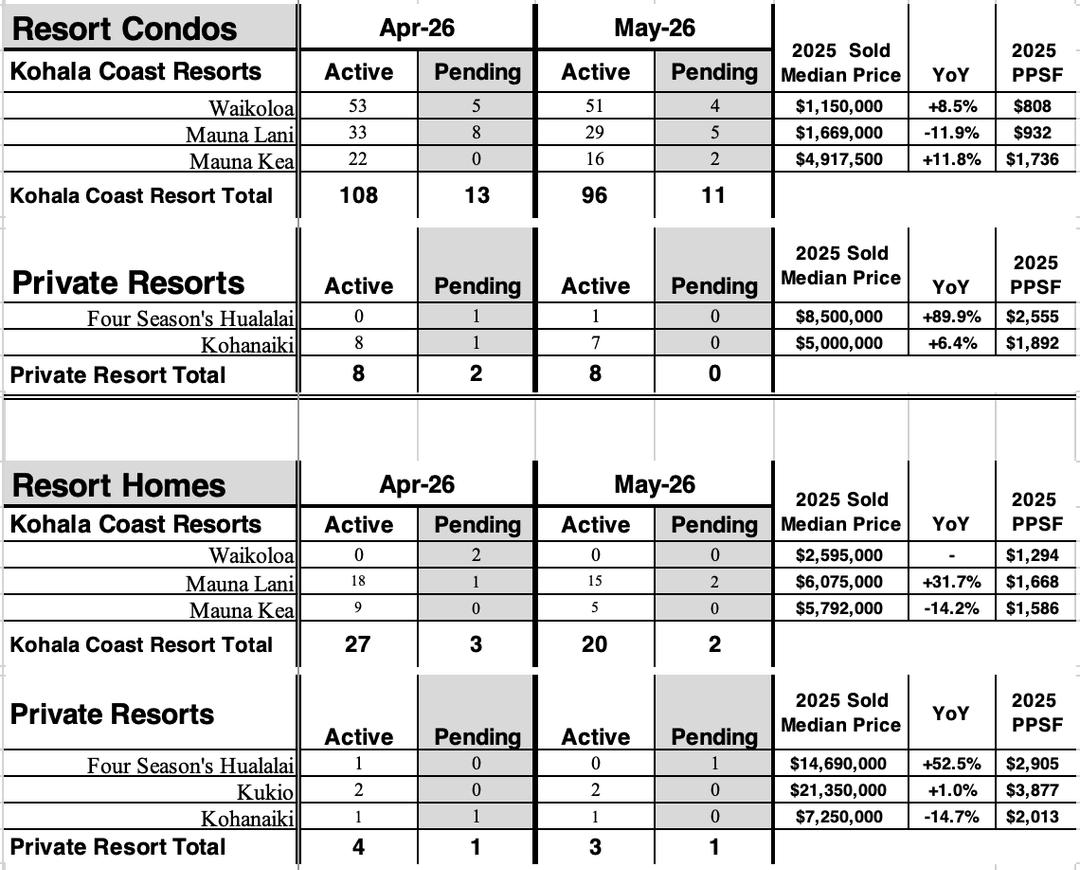
Within the resort condo segment, performance varies by community.
Mauna Lani appears mostly flat, with little movement in median price or price per square foot since late last year. Waikoloa Beach Resort is slightly down, but also largely stable. Mauna Kea Resort is harder to read because of low sales volume. In smaller resort markets, one or two sales can distort the headline numbers.
The private club market is a different story.
Kukio continues to stand apart, with long-term appreciation supported by membership scarcity and very limited inventory. Four Seasons Hualālai also remains extremely supply-constrained, with pricing strength supported by scarcity, lifestyle, and global wealth demand.
This is why we cannot talk about the “Big Island resort market” as one market. Resort condos, luxury homes, and private club communities are moving differently.
National Market vs. Kona: Same Theme, Different Strength
Nationally, inventory growth has slowed, pending sales have improved, and prices remain under pressure because of the inventory build from 2024 and 2025. Mike Simonsen’s key point is important: if inventory starts shrinking in 2026, that could influence the 2027 pricing story.
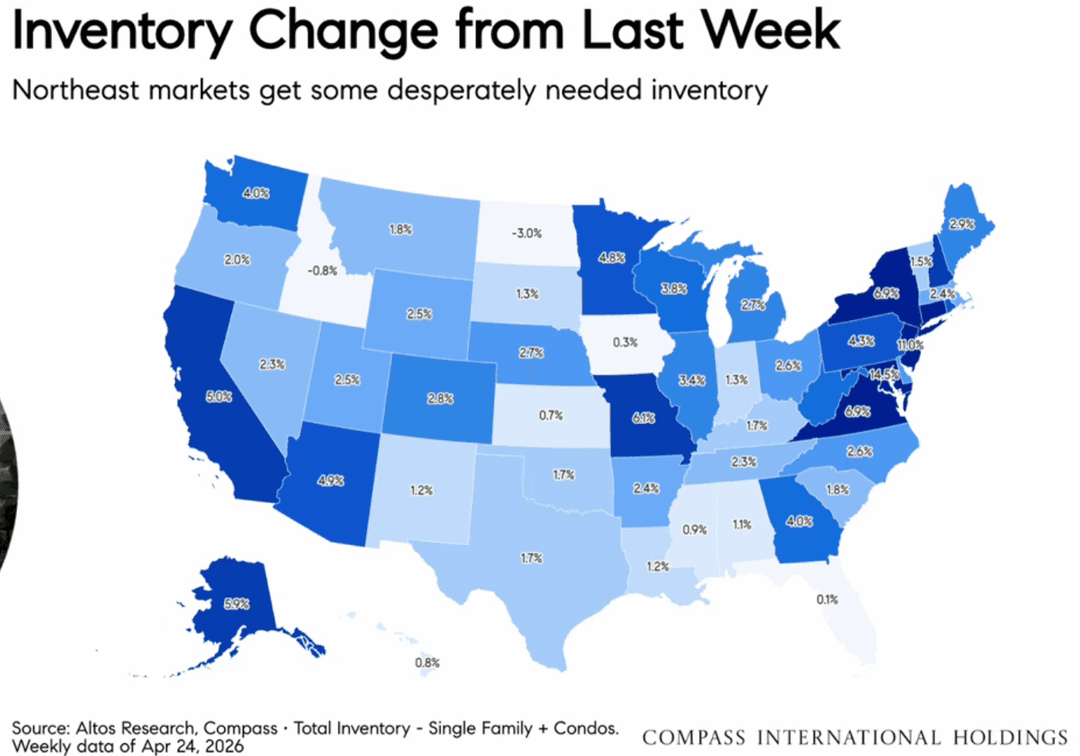
Kona may already be showing a version of that.
Single-family inventory tightened in May. Resort condo inventory also declined. Demand is returning selectively. But this is not a market where everything sells easily.
It is a market that rewards precision.
Final Thoughts
The Fed is not rushing to lower rates. Inflation is not disappearing. The Iran war adds uncertainty to energy prices, financial markets, and buyer psychology. Mortgage rates remain elevated compared with the ultra-low-rate years, and many buyers are still cautious.
At the same time, the Big Island remains fundamentally strong.
Kona single-family homes are stabilizing. Condos are correcting but improving in balance. Resort markets are absorbing inventory. Ultra-luxury private club communities continue to operate in their own scarcity-driven tier.
For sellers, this is not the time to test the market casually.
For buyers, this may be the time to watch carefully, negotiate thoughtfully, and move when the right property appears.
The market is not weak. It is selective.
And in Kona, that makes local knowledge more important than ever.
For more detailed market data and analysis, please access our latest monthly data flipbook here.
Frequently Asked Questions
Is the Kona real estate market declining?
No. It is stabilizing after several strong years, with modest price adjustments depending on the segment.
Are buyers still active on the Big Island?
Yes, but they are much more selective and focused on value.
Why are some homes not selling?
In most cases, it comes down to pricing. Buyers are no longer chasing the market.
Is the luxury market slowing?
Not significantly. High-end buyers remain active when the property is positioned correctly.
Why are condos more affected than houses?
They are more sensitive to interest rates, insurance costs, and association financials.
What is the current days on market in Kona?
Around 36 days on average, but it varies significantly depending on pricing.
Is this a good time to sell?
It can be, but success depends heavily on pricing and positioning.
How is Kona different from mainland markets?
Kona is more influenced by lifestyle demand and second-home buyers, which leads to more gradual market shifts.