


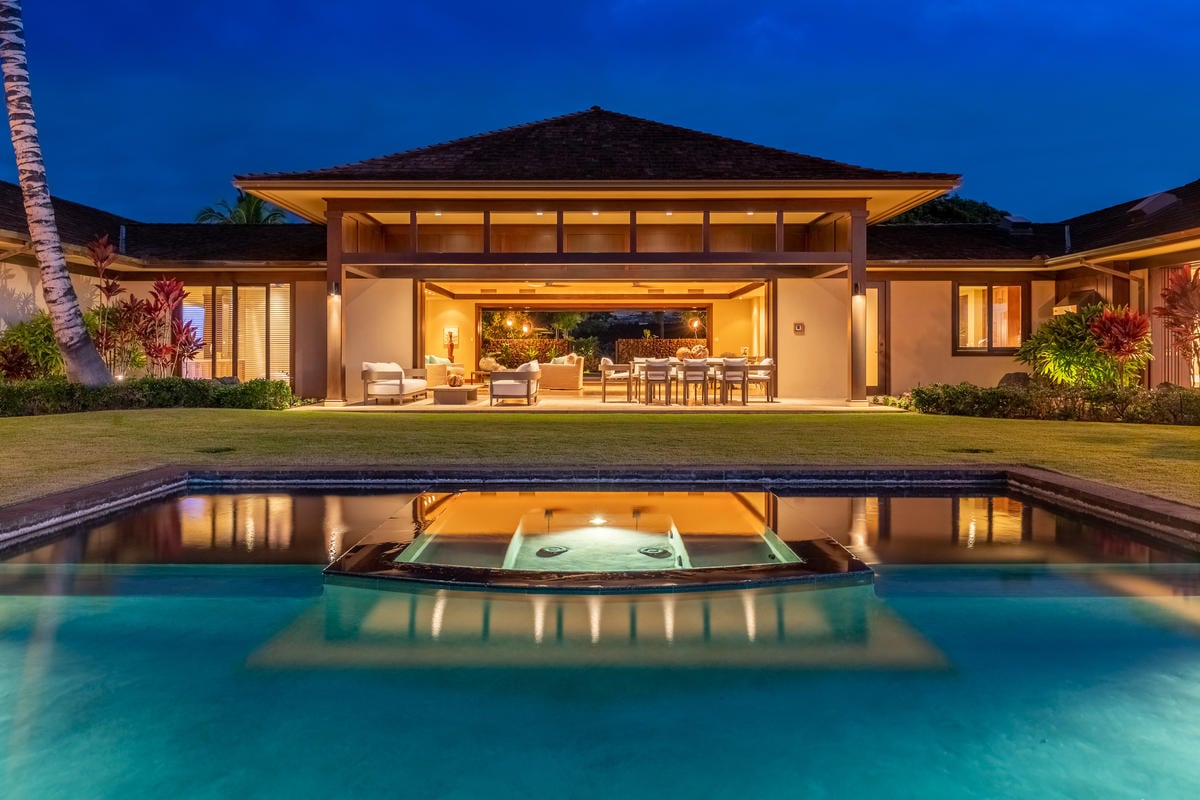

Hualalai Resort Sold by KE TEAM
Hawaii is one of the most desirable real estate markets in the world — and one of the most complicated to navigate if you are coming from the mainland. Land tenure works differently here. Tax withholding rules catch buyers off guard. Insurance requirements vary by lava zone. County zoning on each island follows its own logic. And the cultural norms around transactions — from escrow timelines to termite inspections — have no mainland equivalent.
This is the definitive 2026 guide to buying property in Hawaii. Whether you are a mainland relocator, a second-home buyer, an investor running a 1031 exchange, or a retiree finally pulling the trigger, this pillar guide covers everything: leasehold vs fee simple, HARPTA withholding, island-by-island pricing, property types, financing, closing process, insurance, and how the KE Team helps buyers close with confidence across the Big Island and beyond.
Key Takeaways
- Hawaii uses two ownership structures: fee simple (you own the land) and leasehold (you own the building, lease the land). Always confirm what you are buying.
- HARPTA withholding requires buyers to hold back 7.25% of the purchase price if the seller is a non-resident of Hawaii. There will be a federal FIRPTA (15%) for non-US residents. This is non-negotiable.
- Each island has its own market. Big Island is the best value at $500K–$50M. However, there is a significant price difference between the East and West sides; Oahu is the most liquid; West Maui commands premiums; Kauai is the scarcest.
- Closing takes 30–45 days with mandatory termite inspection, title insurance through a Hawaii title company, and escrow handled by a neutral third party.
- Home Owner, Hurricane, flood, and Earthquake insurance are separate policies — and some are hard to get depending on zone.
- Work with a Hawaii-specialist agent. Mainland agents cannot navigate leasehold math, county zoning, or disclosure requirements here.
Why Buying in Hawaii Is Different
Leasehold vs Fee Simple
This is the single most important concept for any mainland buyer to understand. In most of the US, when you buy a property, you buy the land under it. In Hawaii, that is called fee simple ownership and it is the standard — but not the only — way to hold title.
Leasehold means you own the structure (the house, the condo unit) but you lease the land from a landowner — often a trust, estate, or Hawaiian homelands entity. Leasehold properties are cheaper upfront, sometimes 30–50% less than fee simple equivalents, but you pay an annual ground rent that escalates over time, and the lease eventually expires (typically 55-year terms). When the lease expires, the land and improvements revert to the landowner unless renegotiated.
Leasehold is most common on Oahu (many Waikiki condos, Hawaii Kai properties) and parts of the Big Island. It is rare on Maui and Kauai. Always confirm ownership type before making an offer. Your agent should flag this in the first conversation about any listing.
Bottom line: Fee simple is almost always the better long-term investment. Leasehold can make sense for a vacation condo you plan to use for 10–15 years, but financing is harder, resale is slower, and appreciation is unpredictable.
HARPTA and FIRPTA Withholding
Hawaii has its own withholding tax on real estate transactions involving non-resident sellers, called HARPTA (Hawaii Real Property Tax Act). If the seller does not live in Hawaii, the buyer must withhold 7.25% of the gross sale price and remit it to the Hawaii Department of Taxation at closing. This is on top of the federal FIRPTA (Foreign Investment in Real Property Tax Act) withholding of 15% for foreign sellers.
These withholdings are not additional taxes — they are prepayments against the seller’s eventual tax liability. But they affect deal structure, especially for investors doing 1031 exchanges or buying from mainland-based sellers. Your escrow officer and CPA must coordinate this. It is not optional.
Flood Zones, Lava Zones, and Natural Hazard Disclosure
Hawaii sits on active volcanoes, in a hurricane corridor, and in a tsunami-exposure zone. The disclosure requirements reflect this reality:
- Lava Flow Hazard Zones range from 1 (highest risk, active vent) to 9 (lowest risk). Most of the Kona Coast luxury market sits in Zones 4–9. Zone 1 and 2 properties (lower Puna, parts of Ka’u) are extremely difficult to insure and finance.
- Flood Zones follow FEMA designations. Oceanfront and low-elevation coastal properties often fall in Zone AE or VE, requiring federal flood insurance.
- Tsunami Evacuation Zones are mapped by Civil Defense. Properties in evacuation zones must disclose this to buyers.
- Hurricane exposure is state-wide. Every property in Hawaii needs hurricane coverage, which is a separate policy from homeowners insurance.
County Zoning — Each Island Is Its Own World
Hawaii has four counties, each with its own zoning code, permitting process, and development rules:
- Hawaii County (Big Island) — The most land, the most diverse zoning. Agricultural zoning (Ag-20, Ag-5, Ag-1) dominates rural areas. The county allows farm dwellings on ag-zoned land, which is how many luxury estates exist on 5–20 acre parcels.
- Maui County (Maui, Molokai, Lanai) — Strict short-term rental ordinances. SMA (Special Management Area) permits required for most coastal development. The 2023 Lahaina wildfire has triggered major rebuilding and zoning changes.
- City & County of Honolulu (Oahu) — Most urbanized, most complex permitting. Condo development dominates. ADU (accessory dwelling unit) rules have loosened recently.
- Kauai County — Most restrictive development regulations in the state. Building height limits, vacation rental caps, and agricultural preservation rules are aggressive.
Island-by-Island Overview
Big Island (Hawaii Island)
| Metric | Data |
|——–|——|
| Price Range | $500K–$40M+ |
| Median SFR Price (2026) | ~$680K island-wide; $1.35M+ on Kona Coast |
| Best For | Luxury resort living, ag estates, second homes, retirees |
| Key Markets | Kailua-Kona, Kohala Coast, Waikoloa, Hilo |
| Unique Factor | Most land, most diversity, best value per square foot in the state |
The Big Island is the size of all the other Hawaiian islands combined. The west side (Kona/Kohala) is dry, sunny, and home to the state’s premier luxury resort communities — Kukio, Hualalai, and Kohanaiki. The east side (Hilo) is lush, rainy, and significantly more affordable. Entry-level condos start around $500K on the Kona side; oceanfront estates in the resort communities run $8M–$20M+.
The Big Island is where the KE Team operates, and it is our strong conviction that this island offers the best risk-adjusted value in the Hawaiian chain for 2026 buyers.
Maui
| Metric | Data |
|——–|——|
| Price Range | $800K–$15M+ |
| Median SFR Price (2026) | ~$1.1M |
| Best For | Beach lifestyle, resort condos, vacation homes |
| Key Markets | Wailea, Ka’anapali, Kapalua, Kihei, Haiku |
| Unique Factor | Post-Lahaina rebuilding reshaping west side market |
Maui has historically commanded the highest per-square-foot prices outside of Oahu’s urban core. Wailea and Kapalua are the luxury anchors. The 2023 Lahaina fire destroyed over 2,000 structures and has created both a humanitarian crisis and a market dislocation — west Maui inventory is constrained, rebuilding costs are elevated, and insurance availability is a serious concern. South Maui (Wailea, Kihei) remains the most stable luxury market on the island.
Oahu
| Metric | Data |
|——–|——|
| Price Range | $700K–$10M+ |
| Median SFR Price (2026) | ~$1.05M |
| Best For | Urban living, condo investors, military families, walkability |
| Key Markets | Honolulu, Kailua, Hawaii Kai, North Shore, Kahala |
| Unique Factor | Most liquid market, highest transaction volume, most financing options |
Oahu is where 70% of Hawaii’s population lives. It has the deepest buyer pool, the most comparable sales data, and the most conventional financing options. Luxury is concentrated in Kahala, Diamond Head, Lanikai, and the Kailua beachside neighborhoods. Waikiki condos are the entry point for most investors. Leasehold is more common here than on any other island.
Kauai
| Metric | Data |
|——–|——|
| Price Range | $900K–$12M+ |
| Median SFR Price (2026) | ~$1.15M |
| Best For | Privacy, nature-first lifestyle, ultra-low density |
| Key Markets | Princeville, Hanalei, Poipu, Koloa, Kilauea |
| Unique Factor | Most restrictive development rules, lowest inventory, highest scarcity premium |
Kauai is the smallest of the four main islands and the most protected from development. Building height limits (no taller than a coconut tree), vacation rental caps, and aggressive agricultural preservation make new inventory nearly impossible. Princeville and Poipu are the two luxury nodes. Hanalei remains one of the most coveted addresses in the Pacific — and one of the hardest to buy into.
Island Comparison Table
| Factor | Big Island | Maui | Oahu | Kauai |
|——–|———–|——|——|——-|
| Entry Price | $500K | $800K | $700K | $900K |
| Luxury Ceiling | $20M+ | $15M+ | $10M+ | $12M+ |
| Median SFR | $680K | $1.1M | $1.05M | $1.15M |
| Inventory | Highest | Low | Moderate | Lowest |
| Leasehold Risk | Low | Rare | High | Rare |
| Lava Zone Risk | Varies (1–9) | None | None | None |
| Hurricane Risk | Moderate | High | High | Highest |
| STR Restrictions | Moderate | Strict | Strict | Very strict |
| Value per Sq Ft | Best | High | Highest | High |
| Best Buyer Profile | Luxury estates, retirees | Beach resort, vacation | Urban, investors | Privacy, nature |
Property Types in Hawaii
Condominiums
Condos are the most common entry point for Hawaii buyers, especially on Oahu and Maui. Hawaii condos range from 1970s walk-ups to ultra-luxury oceanfront towers. Key considerations:
- Fee simple vs leasehold — Always confirm. Many older Waikiki and Hawaii Kai condos are leasehold.
- Warrantable vs non-warrantable — If more than 50% of units are investor-owned, or the HOA has pending litigation, or the building has deferred maintenance, conventional lenders will not finance. This is extremely common in Hawaii resort condos.
- HOA reserves — Hawaii requires condos to have a reserve study. Ask for it. Under-reserved buildings face special assessments that can run $20K+ per unit.
- Vacation rental eligibility — Many condo complexes restrict or prohibit short-term rentals regardless of county zoning. Read the CC&Rs before assuming rental income.
Single-Family Residences (SFR)
Hawaii SFRs span everything from a 1,200-square-foot Hilo bungalow to a 6,000-square-foot Kohala Coast estate on 20 acres. On the Big Island, the SFR market is bifurcated: affordable homes east of the volcano ($350K–$600K) and luxury homes on the Kona/Kohala coast ($1M–$25M+).
Agricultural-Zoned Estates
This is a uniquely Hawaiian property type. Large-lot estates (5–20+ acres) on agriculturally zoned land are where many of Hawaii’s most impressive luxury homes exist. The county allows a farm dwelling and often an agricultural worker’s dwelling on ag-zoned parcels, enabling the construction of substantial residences. Key considerations:
- In some cases, you must maintain a bona fide agricultural use (coffee, macadamia nuts, cattle, tropical flowers are all common).
- Property tax rates are lower for ag-zoned land with active agricultural use.
- Subdivision may be restricted. You typically cannot split ag parcels below the minimum lot size.
- Water access varies — some ag parcels rely on catchment rather than county water.
Oceanfront Properties
True oceanfront in Hawaii is the rarest and most valuable property type. The shoreline is public in Hawaii (all beaches are public to the high-water mark), so oceanfront homes sit just above the public access zone. Key considerations:
- SMA (Special Management Area) permits are required for any development within the coastal zone.
- Erosion and sea-level rise are real concerns. Some oceanfront parcels have lost 10–30 feet of shoreline over the past 50 years.
- Seawall restrictions — Hawaii has largely banned new seawalls, meaning you cannot armor the shoreline to protect your property.
- Insurance — Oceanfront properties face the highest insurance costs, combining hurricane, flood, and wave-action exposure.
Financing Hawaii Real Estate
Jumbo Mortgages
Most Hawaii purchases exceed the conforming loan limit ($766,550 in 2026 for most of the state). That means jumbo mortgages are the norm, not the exception. Jumbo loans typically require:
- 20–30% down payment (some lenders require 25%+ for investment properties)
- 700+ credit score (720+ for best rates)
- 6–12 months of reserves (cash or liquid assets after closing)
- Full documentation of income and assets
Non-Warrantable Condo Financing
A significant percentage of Hawaii condos are classified as non-warrantable by Fannie Mae and Freddie Mac. This means conventional lenders will not touch them. Common reasons:
- More than 50% of units are investor-owned or non-owner-occupied
- HOA has pending or active litigation
- Single entity owns more than 25% of units
- Insufficient reserves or delinquent HOA dues above threshold
- Hotel-condo or condotel classification
For non-warrantable condos, you need a portfolio lender — a bank that holds the loan on its own books rather than selling to the secondary market. Hawaii has several strong portfolio lenders, and the KE Team can connect you with the right one for your situation.
Portfolio Lenders and Local Banks
Hawaii’s local banks — First Hawaiian Bank, Bank of Hawaii, Central Pacific Bank, and American Savings Bank — are experienced with the local market and often offer portfolio products that mainland lenders cannot. They understand leasehold, ag-zoned estates, and non-warrantable condos in ways that Chase or Wells Fargo simply do not.
Cash Purchases
A disproportionate share of Hawaii luxury transactions are all-cash. In the resort communities (Kukio, Hualalai, Kohanaiki), cash purchases represent 60–70% of transactions. Cash offers close faster, have fewer contingencies, and are strongly preferred by sellers in competitive situations.
The Hawaii Closing Process
Closing in Hawaii follows a predictable sequence, but several steps are unique to the state:
1. Offer and Acceptance
Hawaii uses the Hawaii Association of Realtors (HAR) Purchase Contract, which is different from any mainland contract. Key Hawaii-specific provisions include:
- As-is addendum — Very common in Hawaii, especially for older properties
- Seller’s Real Property Disclosure Statement — Mandatory, covers flood zone, lava zone, tsunami zone, noise, environmental hazards
- Buyer’s right to inspect — Standard 15-day inspection period (negotiable)
2. Escrow
Hawaii is an escrow state, not an attorney state. A neutral third-party escrow company holds deposits, coordinates documents, and disburses funds. The buyer and seller each choose or agree on an escrow company. Title insurance and escrow are typically handled by the same company (Title Guaranty and Fidelity National Title are the largest in the state).
3. Inspections
Standard inspections include:
- General home inspection — Same as mainland
- Termite (WDO) inspection — Mandatory in Hawaii. Termites are endemic. The lender will require a Wood-Destroying Organism report, and any active infestation must be treated before closing. It is very important to deal with termites early if listing a property.
- Mold inspection — Not typical, but we have seen instances that required it.
- Septic/cesspool inspection — Many rural Hawaii properties use cesspools, which are being phased out statewide by 2050. Conversion costs can run $20K–$50K+.
4. Title Insurance
Title insurance is standard in Hawaii. Hawaii’s land title history is complex — much of it traces back to the Great Mahele of 1848, when King Kamehameha III divided land among the crown, chiefs, and government. Quiet title actions, boundary disputes, and access easements are more common here than on the mainland.
5. Closing and Recording
Closing typically takes 30–45 days from accepted offer. The deed is recorded with the Bureau of Conveyances (for regular system land) or the Land Court (for Torrens system land — about 40% of Hawaii properties). Closing costs for the buyer typically run 1.5–3% of the purchase price, including escrow fees, title insurance, recording fees, and prorated property taxes.
Insurance in Hawaii
Homeowners Insurance
Standard homeowners insurance in Hawaii covers the typical perils — fire, theft, vandalism, liability. But it does not cover hurricane, flood, or lava. Those are separate policies.
Hurricane Insurance
Hawaii sits in the Central Pacific hurricane basin. Every homeowner needs hurricane coverage. The Hawaii Hurricane Relief Fund (HHRF) was created after Hurricane Iniki (1992) devastated Kauai. Today, most hurricane coverage comes from the private market, but the HHRF remains a backstop. Premiums vary widely — $1,500–$5,000+ annually depending on location, construction type, and proximity to the coast.
Flood Insurance
Properties in FEMA-designated flood zones (AE, VE, AH) are required to carry flood insurance if they have a federally backed mortgage. Even outside designated zones, flood insurance is recommended for coastal and low-elevation properties. The National Flood Insurance Program (NFIP) and private flood insurers both operate in Hawaii.
Lava Insurance
This is unique to the east and south side of the Big Island. Properties in Lava Flow Hazard Zones 1 and 2 are essentially uninsurable through standard carriers. Zone 4–5 properties (including most of the Kona Coast luxury market) do not need coverage. Some specialty carriers offer lava coverage as a rider; others exclude it entirely. Your insurance broker must specialize in Hawaii.
Who Buys Property in Hawaii?
Mainland Relocators
The largest buyer segment. Remote work has accelerated this trend since 2020. Buyers from California, Washington, Oregon, Texas, and the Northeast sell mainland homes and purchase in Hawaii — often on the Big Island or Maui, where the pace of life is slower.
Second-Home Buyers
Classic Hawaii buyer profile: high-income household on the mainland that wants 4–12 weeks per year in the islands. Often purchase condos or resort community homes that are easy to lock-and-leave. The Big Island resort communities (Kukio, Hualalai, Kohanaiki, Mauna Lani) cater specifically to this buyer.
Investors
Hawaii rental yields are moderate (2–5% gross for long-term, higher for permitted short-term rentals), but appreciation has been strong. Investors typically target Oahu condos for cash flow or Big Island/Maui luxury for appreciation. The 1031 exchange is a common vehicle — mainland investors sell commercial or residential assets and exchange into Hawaii real estate to defer capital gains.
Retirees
Hawaii consistently ranks as a top retirement destination. No state income tax on Social Security benefits, mild year-round climate, healthcare (Straub, Queen’s, Kona Community Hospital), and a community-oriented culture make it compelling. The Big Island in particular attracts retirees who want more space, lower density, and a connection to nature.
Frequently Asked Questions
Can a foreigner buy property in Hawaii?
Yes. There are no restrictions on foreign ownership of real estate in Hawaii. However, foreign buyers must comply with FIRPTA (15% withholding on the sale price) and should work with a CPA who understands US tax obligations for non-resident aliens. Many Japanese, Canadian, Australian, and European buyers own property in Hawaii.
What is the property tax rate in Hawaii?
Hawaii has the lowest effective property tax rate in the nation — roughly 0.27% to 0.35% of assessed value for owner-occupied residential. Non-owner-occupied and investment properties are taxed at higher rates (0.5%–1.0%+ depending on county and tier). The Big Island (Hawaii County) uses a tiered system where properties assessed above $2M pay a higher millage rate.
Do I need a Hawaii real estate agent?
Technically no, but practically yes — emphatically. Hawaii’s real estate market has unique ownership structures (leasehold), disclosure requirements (lava zones, flood zones, tsunami zones), county-specific zoning rules, and cultural norms that a mainland agent or a FSBO approach cannot navigate. The KE Team has closed hundreds of transactions across the Big Island and understands every nuance.
How long does it take to close?
Typically 30–45 days from accepted offer. Cash transactions can close in 14–21 days. Delays most commonly arise from termite treatment requirements, title issues (especially on older properties with complex ownership history), or lender appraisal disputes.
Is leasehold a good deal?
It depends on your time horizon and intended use. Leasehold properties are 30–50% cheaper upfront, but ground rent escalates, financing is harder to obtain, and the lease expiration date creates a hard ceiling on value. For a vacation condo you plan to use for 10–15 years, leasehold can work. For a long-term investment or primary residence, fee simple is almost always superior.
What are closing costs in Hawaii?
Buyers typically pay 1.5–3% of the purchase price in closing costs, including escrow fees, title insurance, recording fees, prorated property taxes, and lender fees. On a $2M purchase, expect roughly $30K–$60K in buyer-side closing costs. The seller pays the conveyance tax (0.1%–1.25% depending on sale price) and the real estate commissions.
Can I rent my Hawaii property short-term?
It depends on the county and the specific property. Hawaii County (Big Island) allows short-term vacation rentals in resort-zoned areas and some agricultural zones with proper permits. Maui County has tightened STR rules significantly post-2023. Oahu restricts STRs to resort-zoned areas. Kauai caps vacation rental permits island-wide. Additionally, individual condo CC&Rs may prohibit short-term rentals even if county zoning allows them. Always verify before purchasing.
What is the best island to buy on in 2026?
For value, lifestyle diversity, and long-term appreciation potential, the KE Team believes the Big Island offers the best opportunity in 2026. Entry prices are the lowest of the four main islands, the resort communities are world-class, agricultural estates offer privacy and space unavailable elsewhere, and the west side (Kona/Kohala) delivers the best weather in the state. Oahu is best for liquidity and urban lifestyle. Maui is recovering from Lahaina and presents both risk and opportunity. Kauai is for buyers who prioritize scarcity and privacy above all else.
Ready to Buy in Hawaii? Talk to the KE Team.
Buying property in Hawaii is one of the most rewarding decisions you can make — and one of the most complex. Leasehold math, HARPTA withholding, lava zone insurance, county zoning, non-warrantable condo financing, and cultural considerations all require an agent who lives and breathes this market every day.
The KE Team specializes in Big Island luxury real estate — from Kukio and Hualalai resort estates to Kailua-Kona neighborhoods and oceanfront homes along the Kohala Coast. We guide buyers through every step: property search, offer strategy, financing connections, inspections, escrow, and closing.
Call the KE Team today at (808) 384-5357 to start your Hawaii property search, or visit keteamhawaii.com to explore current listings. Whether you are buying your first island home or adding to a portfolio, we are here to make it happen.