
What Is a Kona Storm/Kona Low in Hawaii?
|KE Team Hawaii
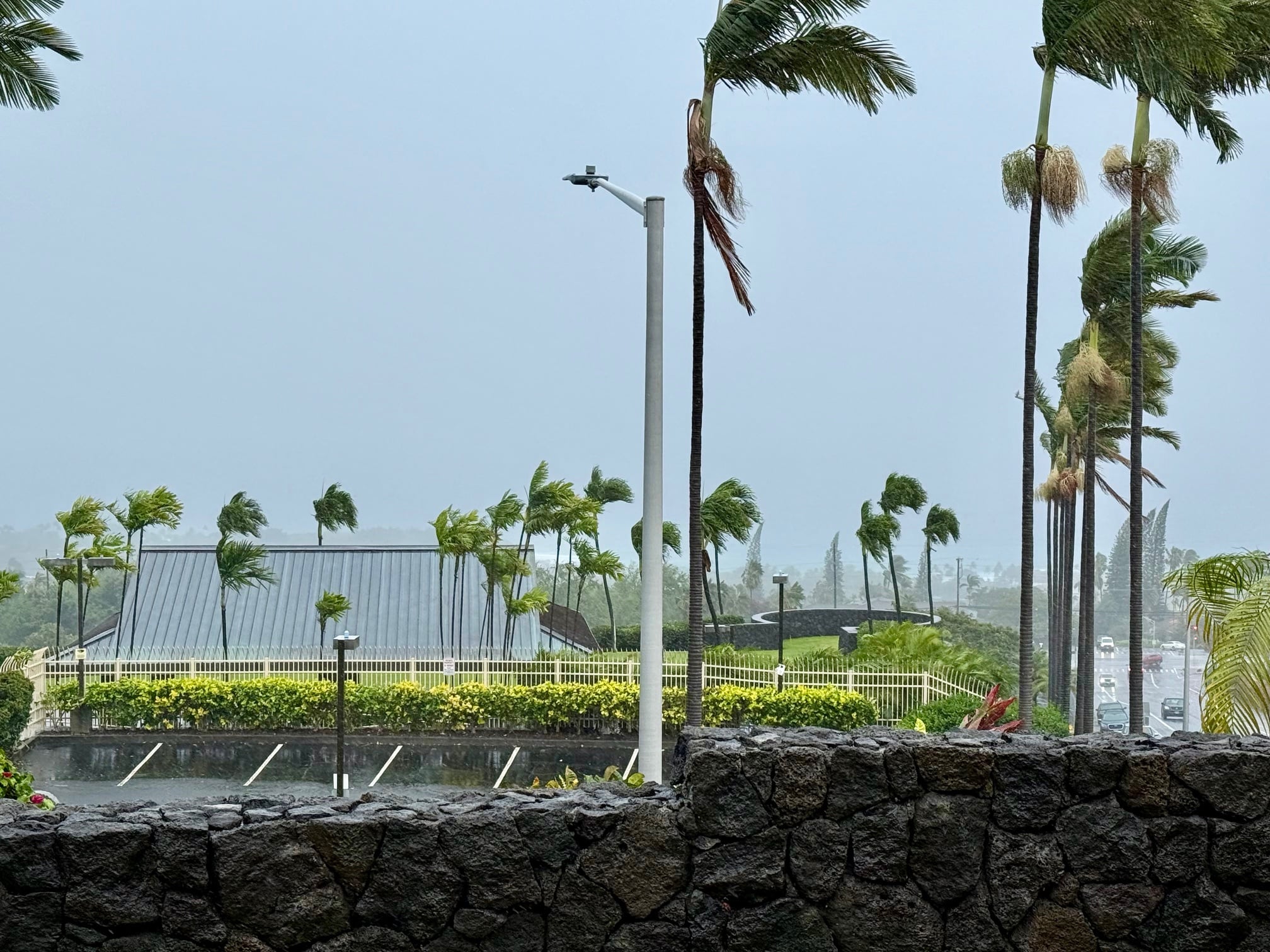
<p>Understanding Kona Low and Hawaii’s Most Misunderstood Weather Pattern</p><p><strong>By Kai Ioh and KE TEAM Hawaii</strong><br />Kai Ioh is a luxury real estate advisor based in Kona, Hawai‘i, specializing in second home, resort, and ultra-high-net-worth markets across the Big Island.</p><hr /><h2>Key Takeaways</h2><ul><li><p>Kona storms, also known as Kona Lows, are winter low-pressure systems that reverse Hawai‘i’s typical trade wind pattern.</p></li><li><p>They bring wind and rain from the southwest, affecting typically dry areas like Kona.</p></li><li><p>The main concern is fast-moving water and localized flooding, not landslides.</p></li><li><p>Unlike hurricanes, Kona Lows are defined by unusual wind direction and moisture flow.</p></li><li><p>These events are infrequent, but they feel more intense because they disrupt Kona’s normal weather pattern.</p></li></ul><hr /><h2>The Week Kona Didn’t Feel Like Kona</h2><p>If you’ve spent time in Kona, you know the rhythm.</p><p>Steady trade winds from the east. Dry, sunny afternoons. Predictable.</p><p>Last week… was not that. And another Kona Low has hit Oahu. Not much here on the Big Island.</p><p>We had strong southwest winds gusting for nearly 48 hours over the weekend. To be honest, it was one of the more unsettling storms I’ve experienced in my 25 years living in Kona.</p><p>Not necessarily because of damage, but because of the direction.</p><p>We’re simply not used to wind coming from that side.</p><p>While I’m not aware of major damage among friends or clients, there was flooding along Ali‘i Drive, and one older building collapsed. Many locals said it was overdue, but still, it tells you something about the intensity.</p><p>It felt unfamiliar. And in Kona, unfamiliar weather tends to feel more serious than it is.</p><h2>What Is a Kona Storm or Kona Low?</h2><p>In the context of the Big Island, most weather is shaped by steady trade winds blowing from the east.</p><p>That’s what gives Kona its dry, comfortable climate.</p><p>But during the winter months, a different system can develop. A low-pressure system known as a <strong>Kona Low</strong>, often referred to in the news as a <strong>Kona Storm</strong>.</p><p>Both terms describe the same general pattern.</p><p>When that happens:</p><ul><li><p>Trade winds weaken</p></li><li><p>Winds shift from the south or southwest</p></li><li><p>Moist tropical air moves toward the western side of the islands</p></li></ul><p>That shift is the key.</p><p>Rain begins to fall in areas that are usually dry and sunny, including Kona.</p><p>In simple terms, weather starts arriving from the opposite direction.</p><p><img alt="Rain-soaked patio in Kailua-Kona, Hawaii, featuring lush greenery, modern outdoor furniture, and an umbrella, illustrating the impact of Kona storms on local weather conditions." decoding="async" class="alignnone size-full wp-image-3982" src="https://keteamhawaii.com/wp-content/uploads/2026/03/IMG_7436-400x300-1.jpeg" width="400" height="300" /></p><h2>Why Do Kona Storms Feel More Intense?</h2><p>The west side of the Big Island, including Kailua-Kona, sits along the slopes of Hualālai and Mauna Loa.</p><p>This matters more than people realize.</p><p>We have solid volcanic ground here, so mudslides are generally not a concern. That’s one of the advantages of living in Kona.</p><p>But water still has to go somewhere.</p><p>When heavy rain falls higher up the mountain, it moves quickly downhill toward the ocean. That’s why flash flooding becomes the primary issue, especially along coastal areas like Ali‘i Drive.</p><p>It’s not that Kona storms or Kona Lows are always stronger.</p><p>It’s that they show up where we least expect them.</p><h2>Kona Low vs Hurricane: What’s the Difference?</h2><p>There’s often confusion here.</p><p>A Kona Low (or Kona Storm) is not a hurricane.</p><p>It’s typically a large low-pressure system forming during winter, often located northeast of Kaua‘i. The system itself is not centered over Kona or even the Big Island.</p><p>But we feel the effects through reversed winds and moisture flow.</p><p>Hurricanes behave differently.</p><p>Over the past decades, when hurricanes have approached the Big Island, many have weakened significantly before reaching the west side.</p><p>Why?</p><p>Because of the island’s massive mountains, rising over 14,000 feet, which disrupt and break apart storm systems.</p><p>Kona Lows are different.</p><p>They’re not about direct impact. They’re about unusual conditions in places that are normally stable.</p><h2>Why Is It Called “Kona”?</h2><p>For many residents, the name itself can feel a bit misleading.</p><p>The word “Kona” is not originally a place name.</p><p>In Hawaiian, it refers to a direction, meaning leeward or southwest.</p><p>The town name Kailua-Kona came later, mainly to distinguish it from Kailua on Oʻahu.</p><p>So when the news says “Kona Storm” or “Kona Low,” it can sound like Kona created the problem.</p><p>In reality, it simply means the winds are coming from the Kona direction.</p><p>So to be clear…</p><p>It’s not Kona’s fault.</p><p><img alt="Lush green tree by the ocean in Kailua-Kona, Hawaii, illustrating the serene coastal environment impacted by rare Kona storms." decoding="async" class="alignnone size-full wp-image-3983" src="https://keteamhawaii.com/wp-content/uploads/2026/03/IMG_7315-400x225-1.jpg" width="400" height="225" /></p><h2>A Small Note From Kona’s History</h2><p>Here’s a detail not many people think about.</p><p>After the Hawaiian Kingdom was unified, the first capital was located in Kailua-Kona.</p><p>So historically speaking, Kona does have a central place in Hawai‘i’s story.</p><p>But in this case, the storm name is about direction, not origin.</p><h2>What This Means for Living in Kona</h2><p>Storms like this are rare.</p><p>And that’s exactly why they catch people off guard.</p><p>In Kona, we’re used to leaving outdoor furniture, umbrellas, and cushions outside without a second thought. Most of the year, that works perfectly.</p><p>But during a Kona Low, those same items can become hazards.</p><p><img alt="Outdoor cushions stacked indoors with a sun hat and bucket, illustrating preparation for a Kona storm in a modern Hawaiian home." decoding="async" class="alignnone size-full wp-image-3984" src="https://keteamhawaii.com/wp-content/uploads/2026/03/IMG_7448-400x300-1.jpeg" width="400" height="300" /></p><p>A few practical takeaways:</p><ul><li><p>Secure or bring in outdoor furniture when storms are forecast</p></li><li><p>Be aware of potential flooding, especially near coastal roads</p></li><li><p>Make sure your home insurance is current</p></li><li><p>Understand that many homes are designed for trade winds, not strong southwest winds</p></li></ul><p>The reality is, part of living on the Big Island is understanding nature.</p><p>And respecting it.</p><p>The good news is, these events are infrequent. Over the past decades, Kona has remained one of the most stable and comfortable climates in Hawai‘i.</p><p>Gentle breezes. Dry air. Seamless indoor-outdoor living.</p><p>That’s still the Kona most people fall in love with.</p><hr /><h2>Frequently Asked Questions</h2><h3>What is a Kona Low in Hawaii?</h3><p>A Kona Low is a winter low-pressure system that brings wind and rain from the south or southwest, often affecting the normally dry Kona side of the Big Island.</p><h3>Is a Kona Storm the same as a Kona Low?</h3><p>Yes. “Kona Storm” is a more general or media-friendly term, while “Kona Low” is the meteorological term. Both describe the same weather pattern.</p><h3>Why does Kona get rain during a Kona Low?</h3><p>Because winds reverse direction, bringing moist tropical air toward the west side of the island, which leads to rainfall.</p><h3>Are Kona Lows dangerous?</h3><p>Most are not severe, but they can cause flooding, strong winds, and coastal impacts, especially in areas not used to heavy rain.</p><h3>How is a Kona Low different from a hurricane?</h3><p>Kona Lows are defined by wind direction and moisture patterns, while hurricanes are organized tropical systems with stronger and more direct impacts.</p><h3>Why does flooding happen in Kona?</h3><p>Rainfall from higher elevations flows quickly downhill over volcanic terrain, causing fast-moving water and coastal flooding.</p><h3>Do Kona Lows happen often?</h3><p>They are relatively rare and typically occur during the winter months.</p><h3>Why are homes in Kona affected differently?</h3><p>Many homes are designed for steady trade winds, not strong southwest winds, which can expose different structural vulnerabilities.</p><h3>What does “Kona” mean in Kona Low?</h3><p>“Kona” refers to a direction in Hawaiian, meaning leeward or southwest.</p><h3>Is Kona still a good place to live despite Kona storms?</h3><p>Yes. Kona remains one of the most stable and desirable climates in Hawai‘i, with these events being infrequent.</p>