
Poke: From Hawaiian Local Dish to a Global Phenomenon
By Kai Ioh and KE TEAM Hawaii
Kai Ioh is a luxury real estate advisor based in Kona, Hawai‘i, specializing in second home, resort, and ultra-high-net-worth markets across the Big Island.
June 2026
One of the things I notice whenever I travel is how often I see poke.
Whether I'm in Los Angeles, New York, Tokyo, or somewhere in between, there always seems to be a poke shop nearby. What was once a local Hawaiian favorite has become a worldwide food phenomenon.
As a Japanese, I have always preferred simplicity when it comes to fresh fish. Give me a piece of fresh ahi/tuna, a little shoyu, some wasabi, and I'm perfectly happy. That's still my preference today.
But over the years, with a little help from my daughters, who were born and raised here in Kona, I've come to appreciate poke on a deeper level.
And before we go any further, let's settle something important.
It's pronounced, "POH-keh."
Not "PO-kee."
My daughters have made it their personal mission to correct visitors who come to our house and say it incorrectly. Watching them politely, but very firmly, educate those uncles and aunties has become something of a family tradition. It's actually pretty funny.
The Ancient Origins of Poke
Many people assume poke is a modern health-food trend that appeared sometime around the rise of Instagram.
The reality is much older.
Poke has been part of Native Hawaiian culture for centuries. The word "poke" means "to slice" or "to cut crosswise into pieces" in the Hawaiian language. Long before Western contact, Hawaiian fishermen would catch fish from the reefs and open ocean, cut portions into bite-sized pieces, season them simply, and enjoy them fresh, often right on their canoes.
Traditional poke was remarkably straightforward.
Fresh fish. Hawaiian sea salt known as paʻakai. Limu, the local seaweed. ʻInamona, made from roasted kukui nuts. Sometimes sweet Maui onions.
That was essentially it.
No rice bowls. No avocado. No spicy mayo. No endless toppings.
The fish was always the star.
In many ways, that philosophy still defines the best poke today.
How Japan Helped Shape Modern Poke
Like many things in Hawaiʻi, poke evolved as different cultures came together.
During the plantation era, immigrants from Japan, China, Korea, Portugal, and the Philippines brought new ingredients and culinary traditions to the islands. Japanese influence was especially significant.
Japanese plantation workers introduced ingredients such as shoyu and sesame oil, both of which eventually became staples of modern poke. Over time, ahi tuna also became one of the preferred fish for poke preparation.
As someone who grew up eating sashimi and sushi, this connection makes perfect sense to me.
In fact, today's classic shoyu poke feels very familiar to many Japanese families. Perhaps that's one reason I still gravitate toward the simpler versions. The flavors are clean and balanced, allowing the quality of the fish to speak for itself.
As a Japanese, the sweet onion in Poke was very strange, but it tasted good. And we sometimes try different ingredients, and they surprise us in a good way. The other day, Emil and I had ginger-and-lime poke. It was refreshingly good!!
Poke Is Much More Than Ahi
When most visitors think of poke, they immediately think of ahi tuna.
But poke is actually much more diverse.
Depending on the season and the shop, you might find poke made with ahi, tako (octopus), ono, shrimp, salmon, tofu, or various local fish.
Every poke maker has their own approach.
Some focus on traditional Hawaiian recipes. Others create modern interpretations. Some prefer larger cuts of fish, while others cut smaller cubes. Some use family recipes passed down for generations.
It's a little like sushi restaurants in Japan.
The ingredients may be similar, but every chef develops a unique style.
That's part of what makes trying different poke shops so enjoyable.
The Mainland Poke Boom
Around 2012, poke started to take off across the mainland United States.
Consumers were searching for healthier dining options. Fast-casual restaurants were booming.
Before long, poke bowls seemed to appear everywhere.
The mainland version often looks quite different from traditional Hawaiian poke. Rice, kale, quinoa, mango, edamame, crispy onions, spicy sauces, and countless other toppings became standard.
Some local Hawaiians jokingly refer to these creations as "deconstructed sushi salads." I have tried mainland pokes, and actually, they were not that bad.
There is absolutely nothing wrong with innovation. Food evolves. That's part of its story.
But it's also worth remembering where poke came from.
At its heart, poke is still about fresh seafood, simple preparation, and respect for quality ingredients. Freshness is the key.
Our Favorite Poke Shops in Kona
People often ask where we like to get poke on the Big Island.
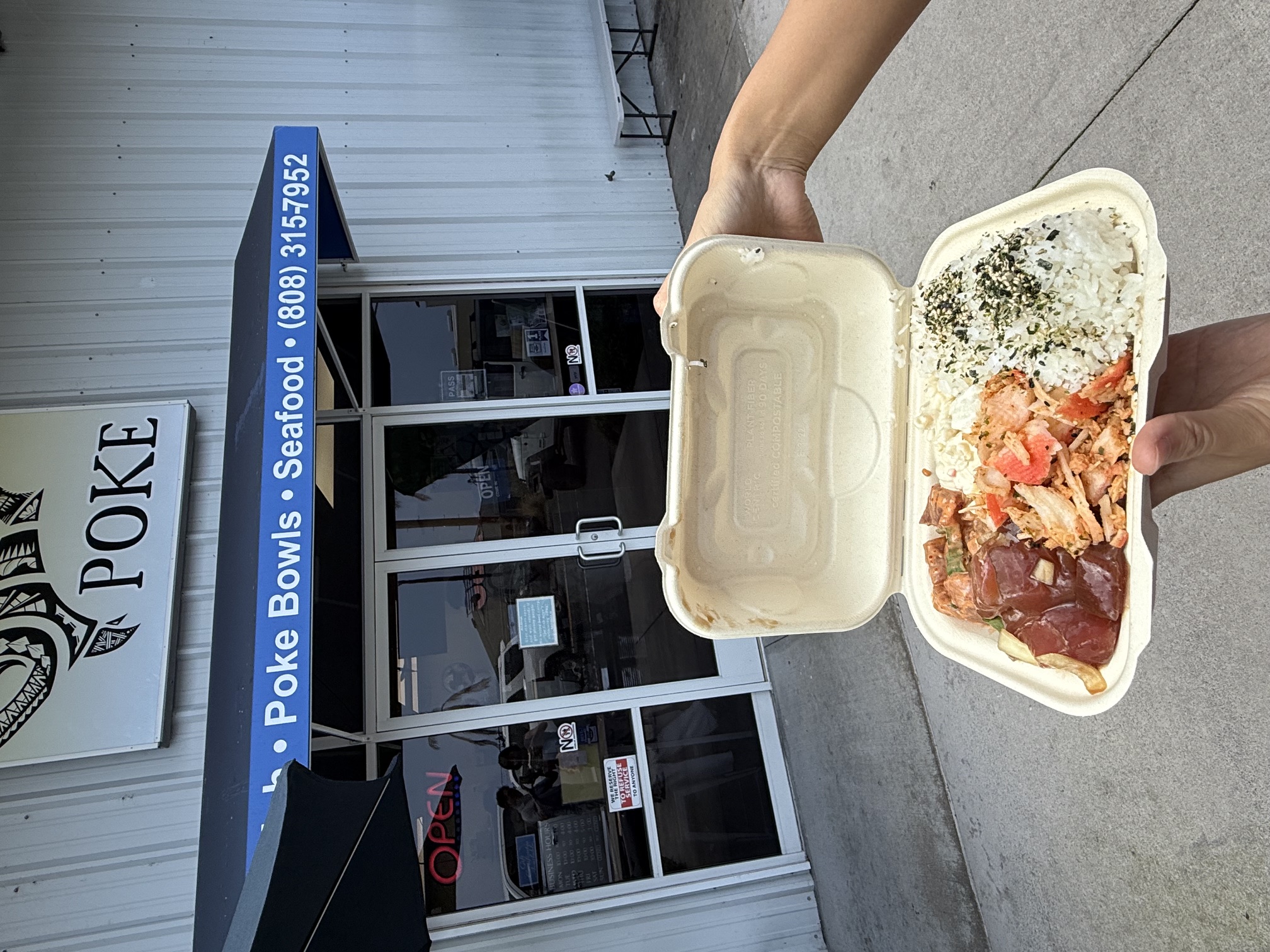
For Emil and me, three places immediately come to mind: Umeke's, Da Poke Shack, and Pau Hana Poke.
Da Poke Shack is probably the most famous. It gained national attention after being named Yelp's highest-rated restaurant in America back in 2014. The hole-in-the-wall location is fantastic, and many visitors absolutely love it.
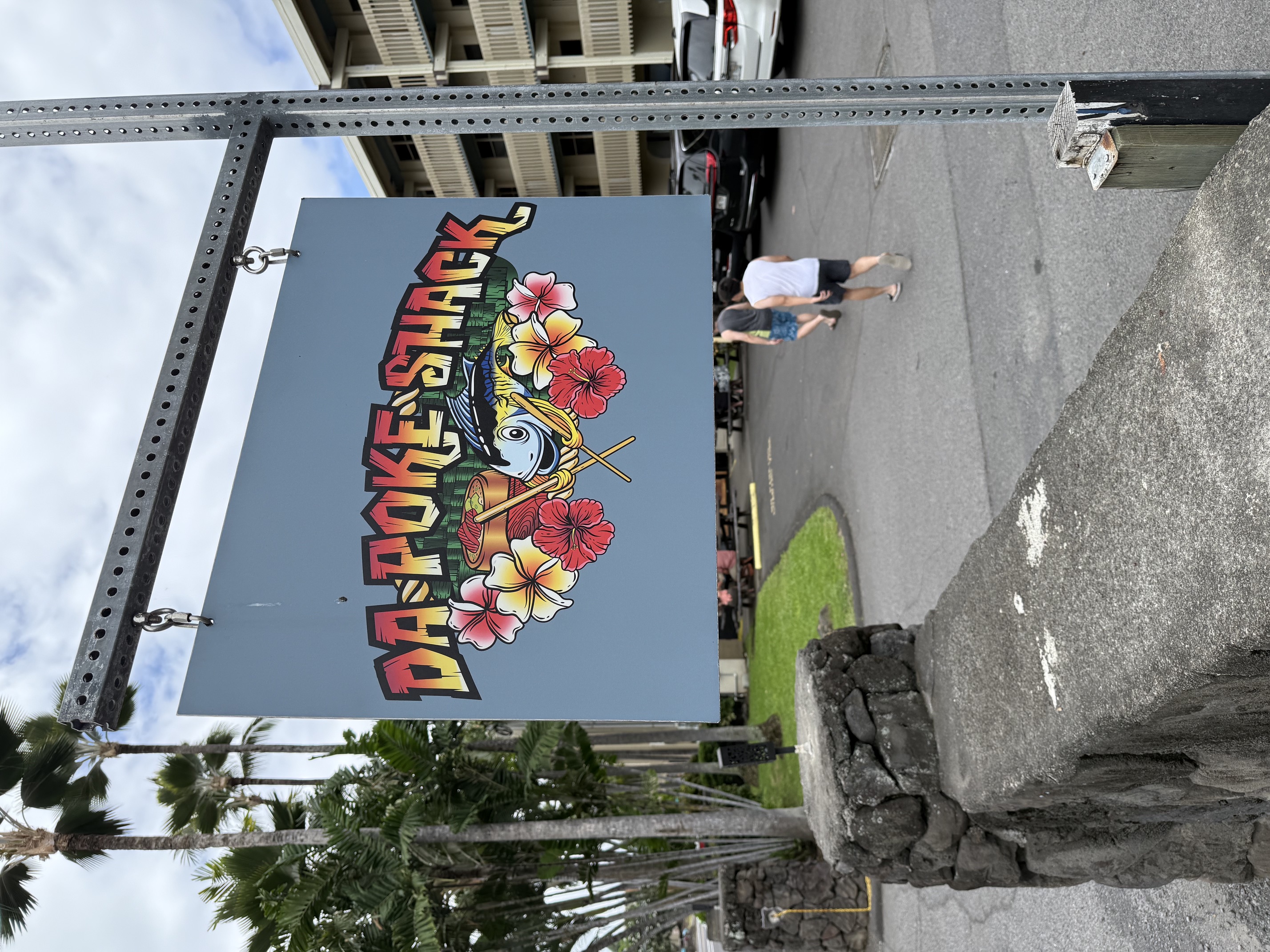
That said, I never quite understood the "best restaurant in America" label. Maybe that's just me. It's in the Kona Bali Kai Condo, and there aren't many tables to eat at. Taking the poke to the ocean and eating while watching the surfers at Banyans may be the best option.
Inside the Da Poke Shack is quaint. I like it.
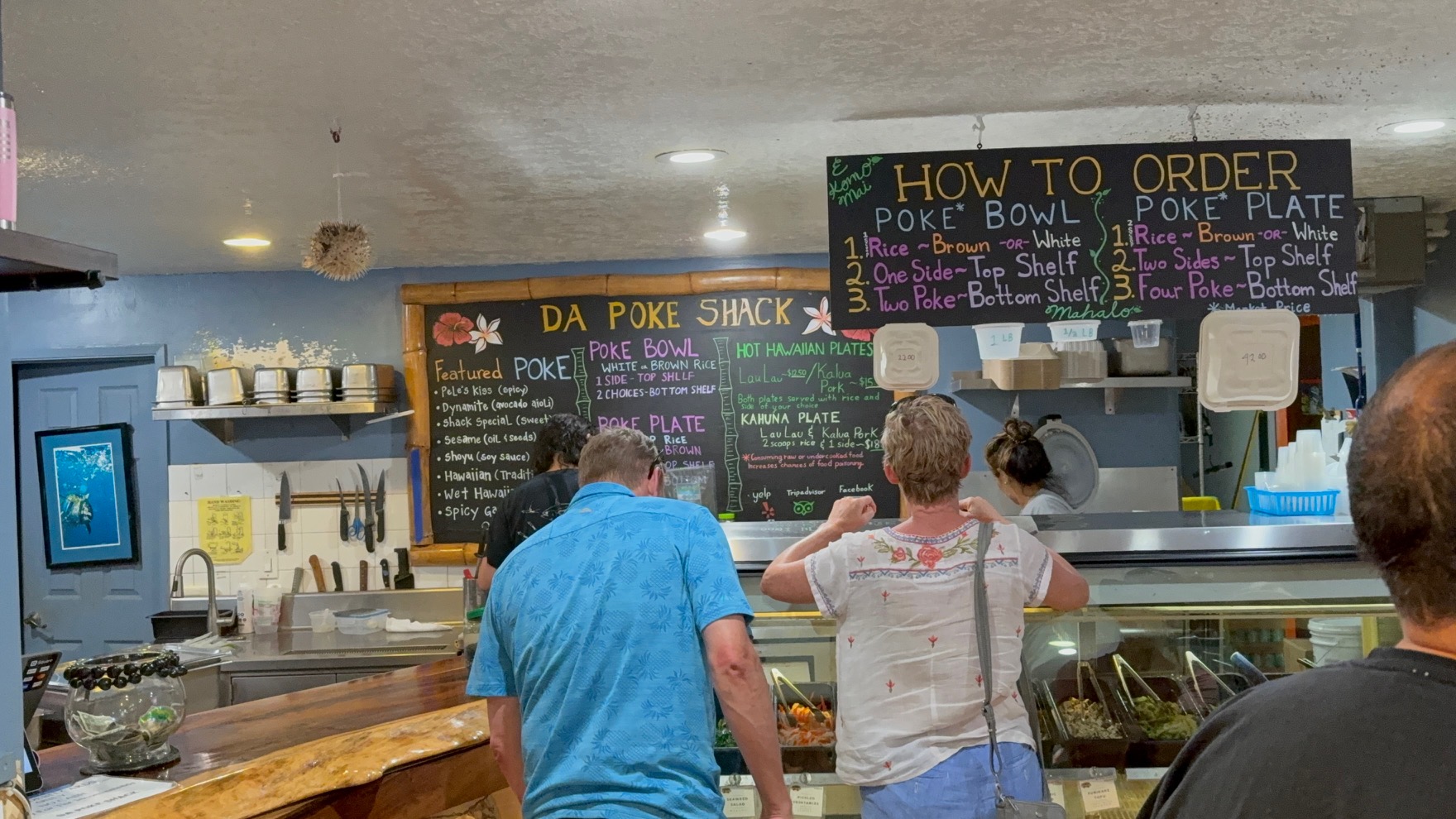
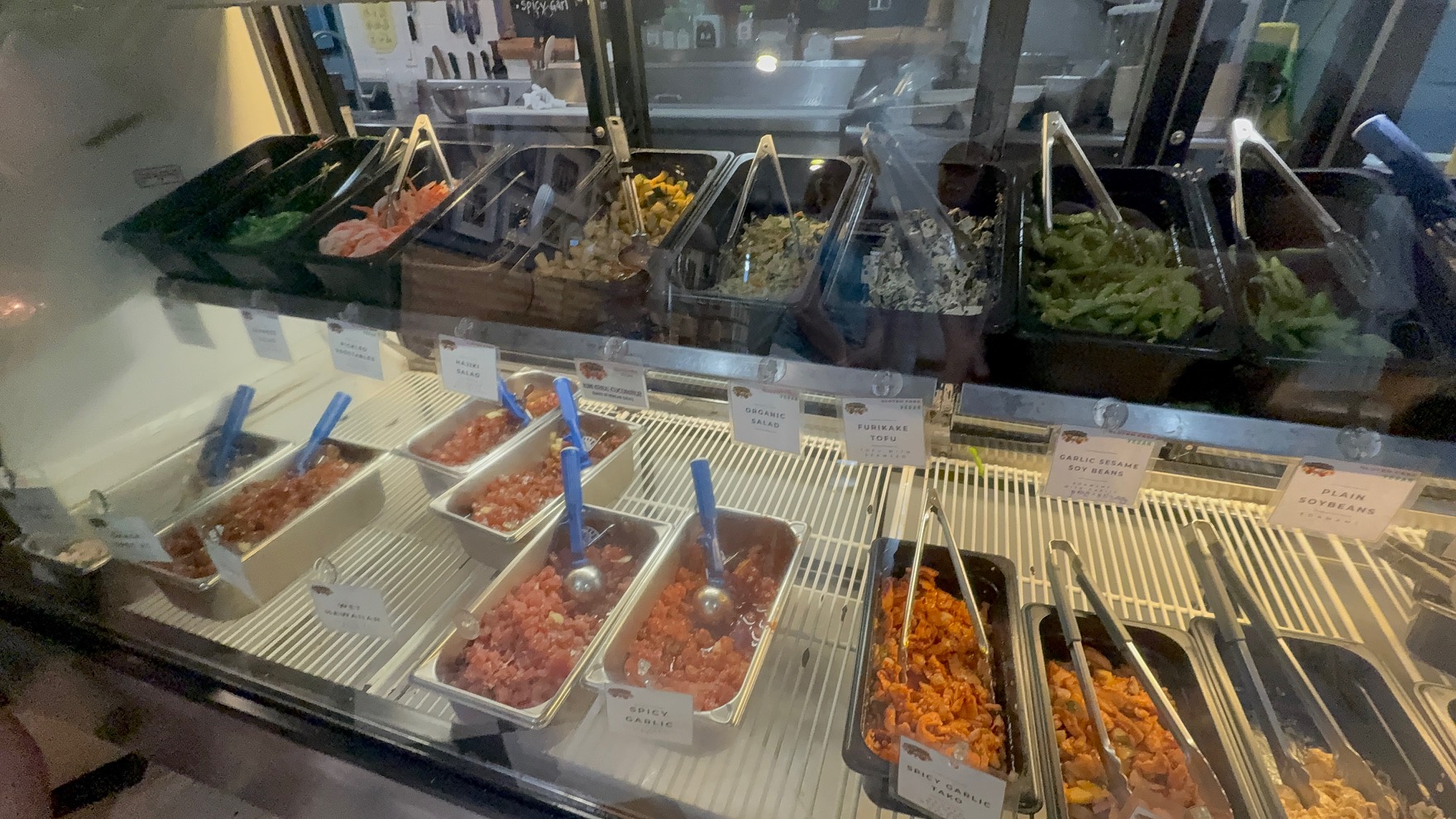
They offer: Pele's Kiss, Dynamite, Sesame, Shoyu, Hawaiian, Wet Hawaiian, Spicy Garlic Sesame.
I like shoyu. I find the cut smaller compared to other Poke places.
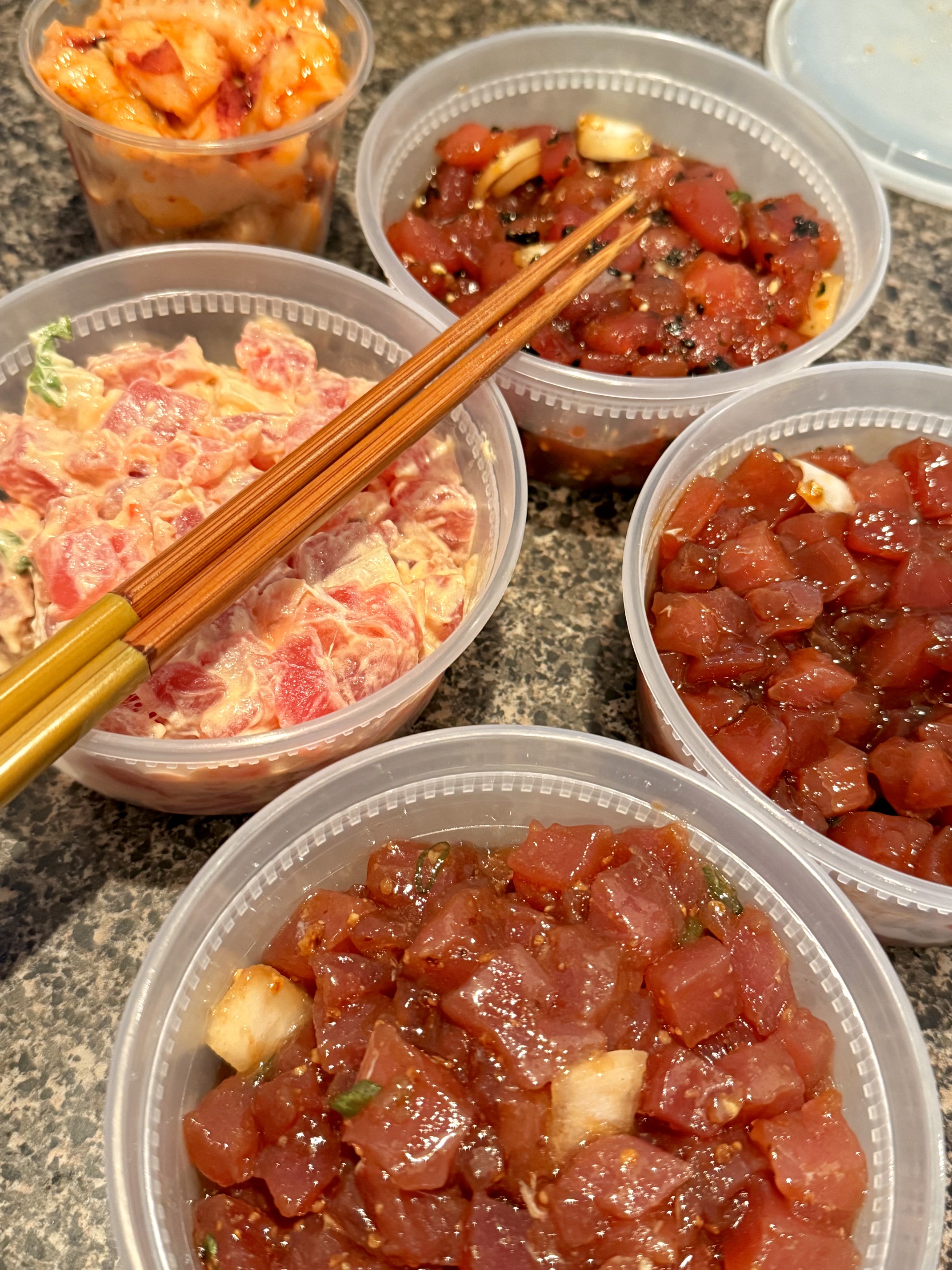
Pau Hana Poke has built an extremely loyal following and consistently receives some of the highest ratings in Kona. Many locals like them, including my older daughter. Somehow, she does not approve of Umeke's but likes Pau Hana and Foodland. I prefer Umeke's over Foodland. I guess we all have different tastes.
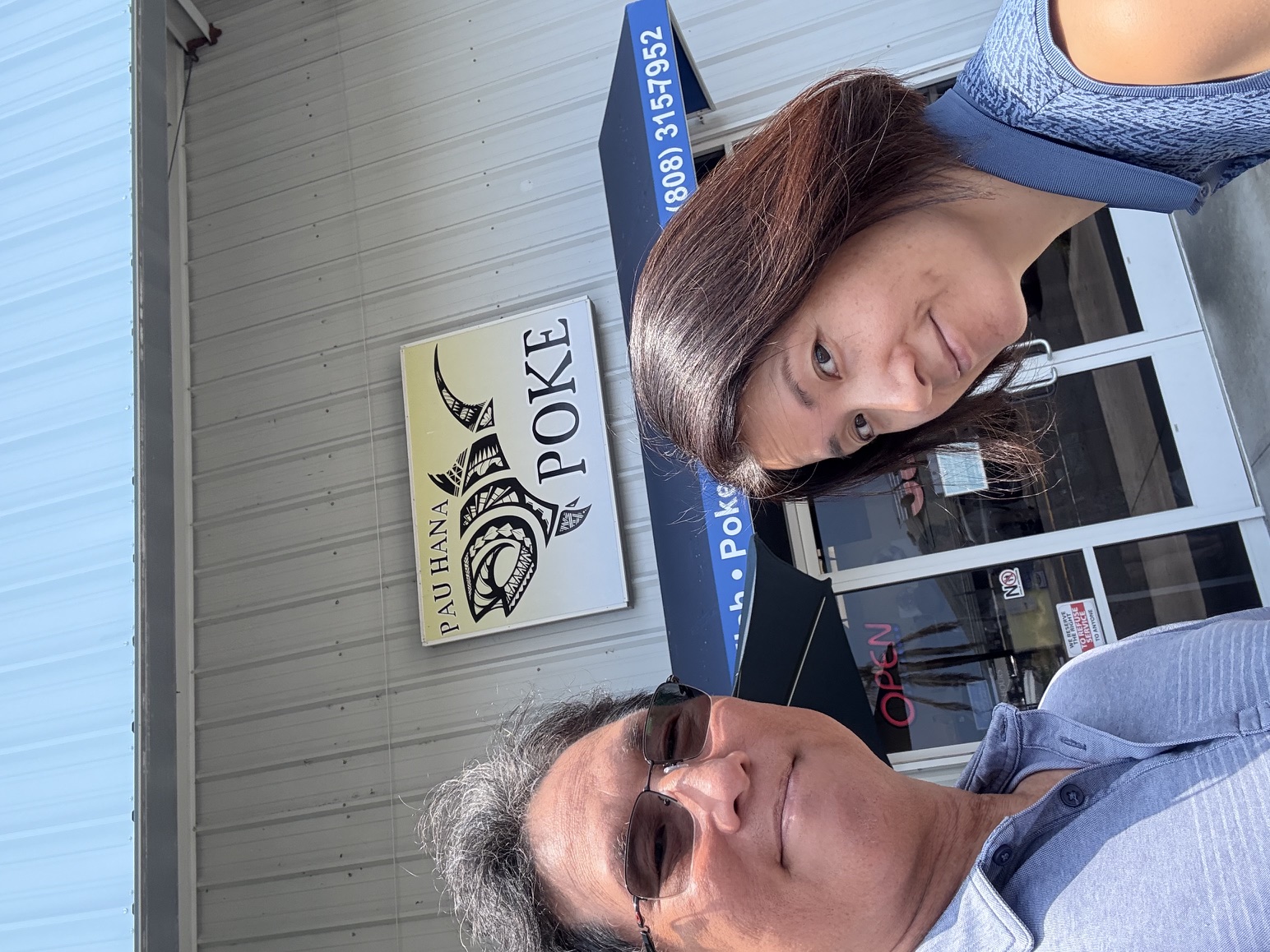
Pau Hana: Garlic Ahi, Hawaiian Style, Spicy Salmon, Salmon Poke, California Roll, Spicy Ahi, Shoyu Ahi, Wasabi and more.
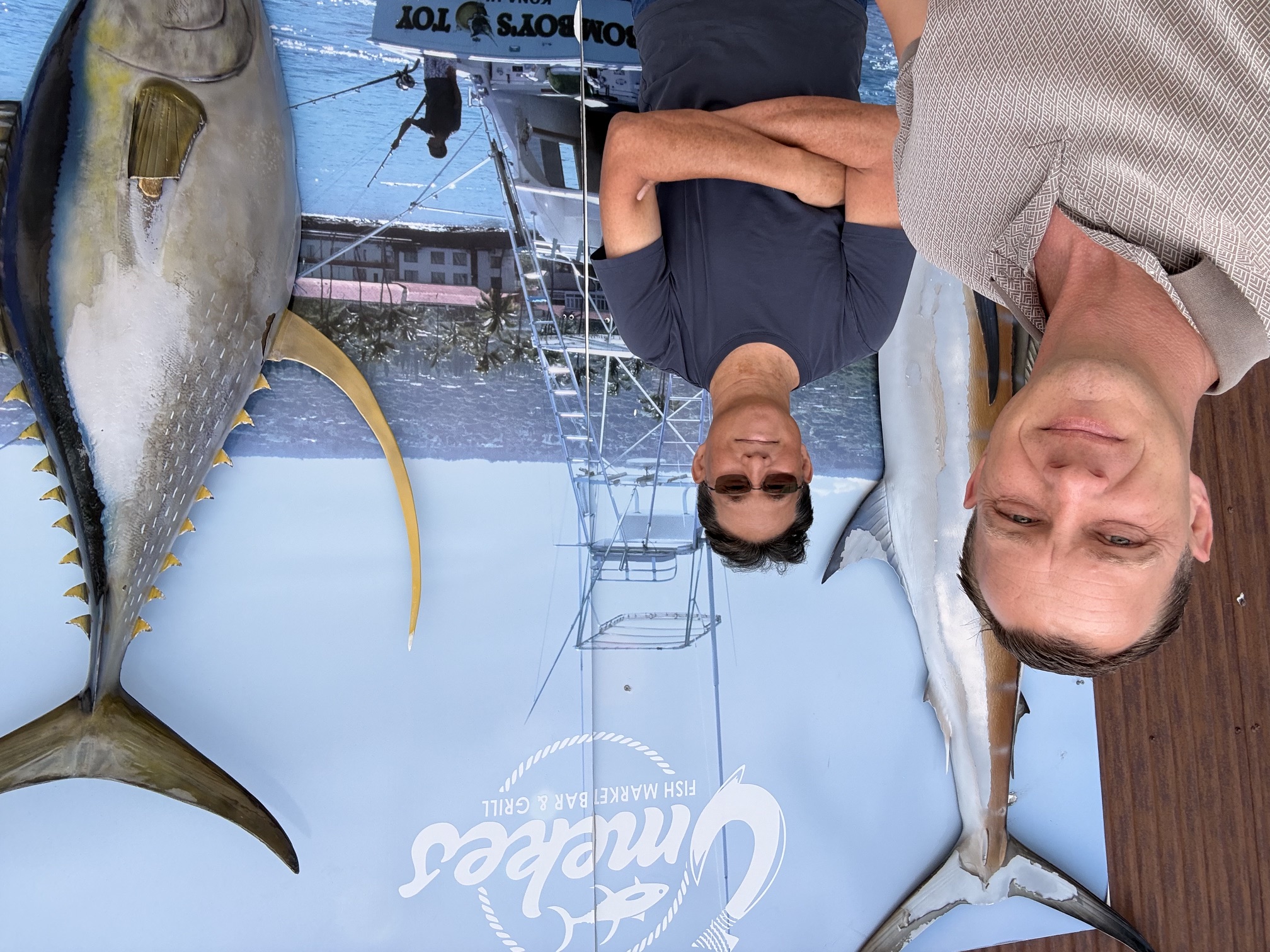
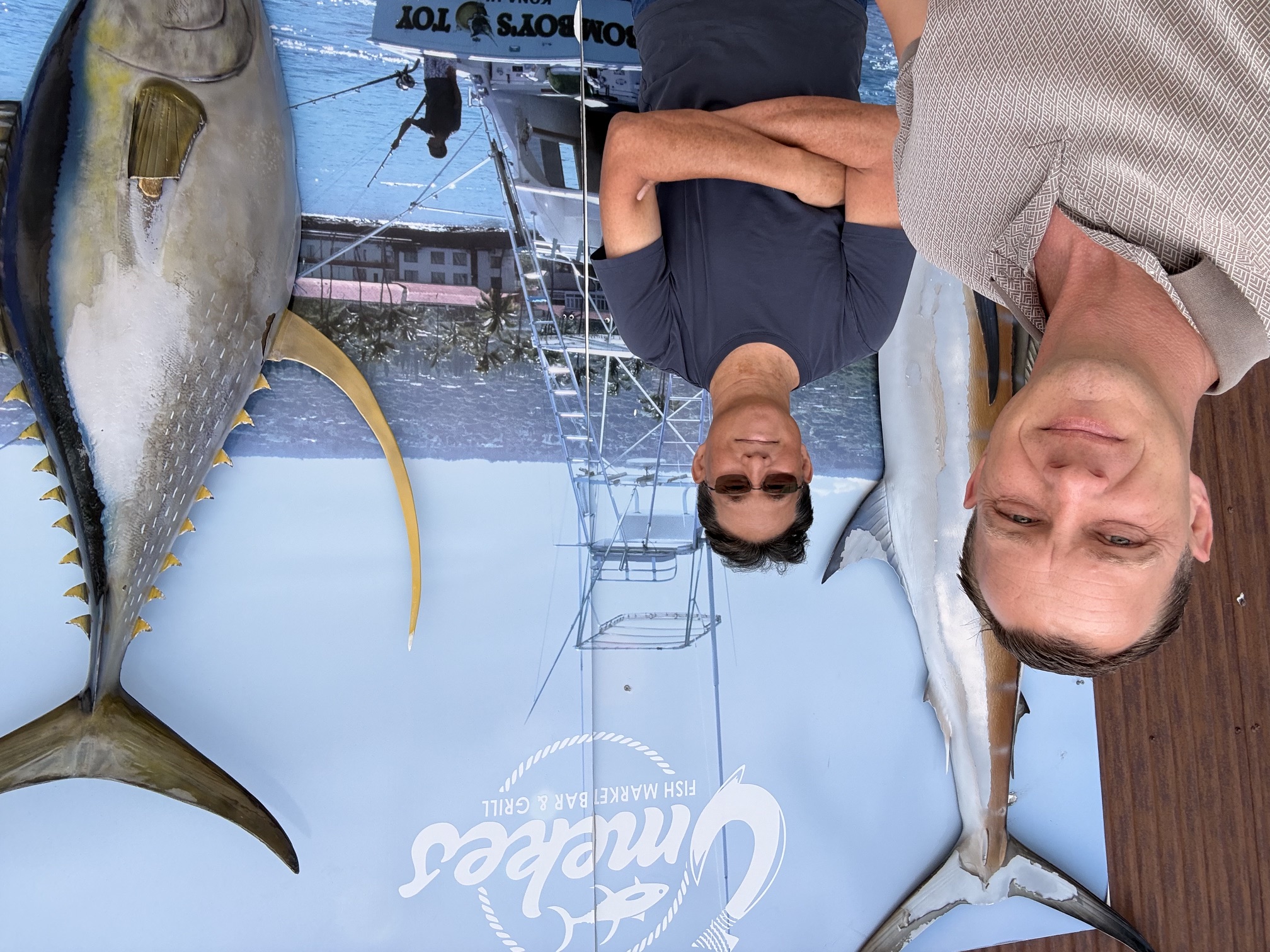
As for Emil and me, we probably find ourselves at Umeke's most often.
Partly because it's a full restaurant. Partly because the food is consistently excellent. And partly because it's nice to sit down, relax, and enjoy a complete meal rather than grabbing poke to go.
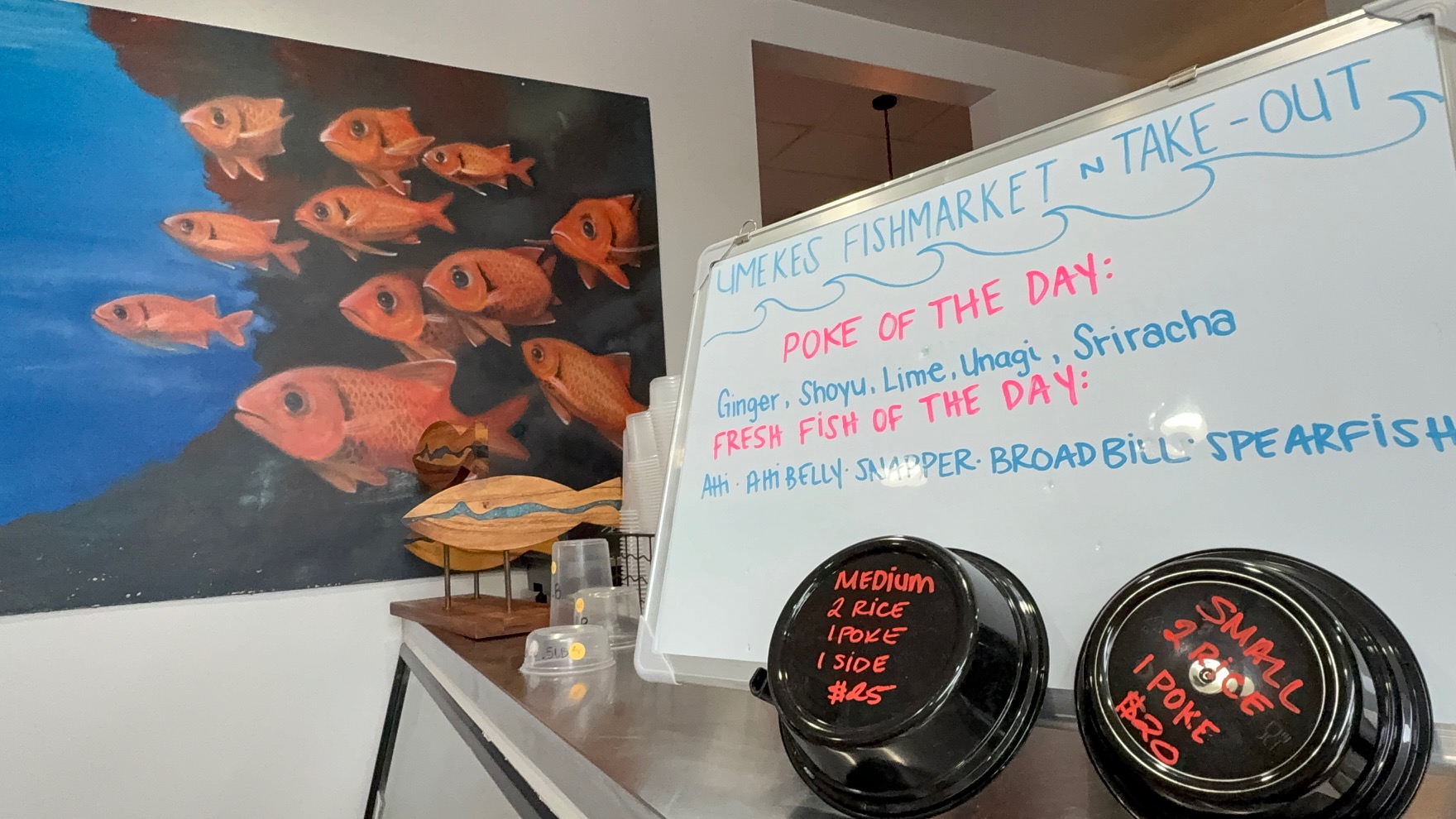
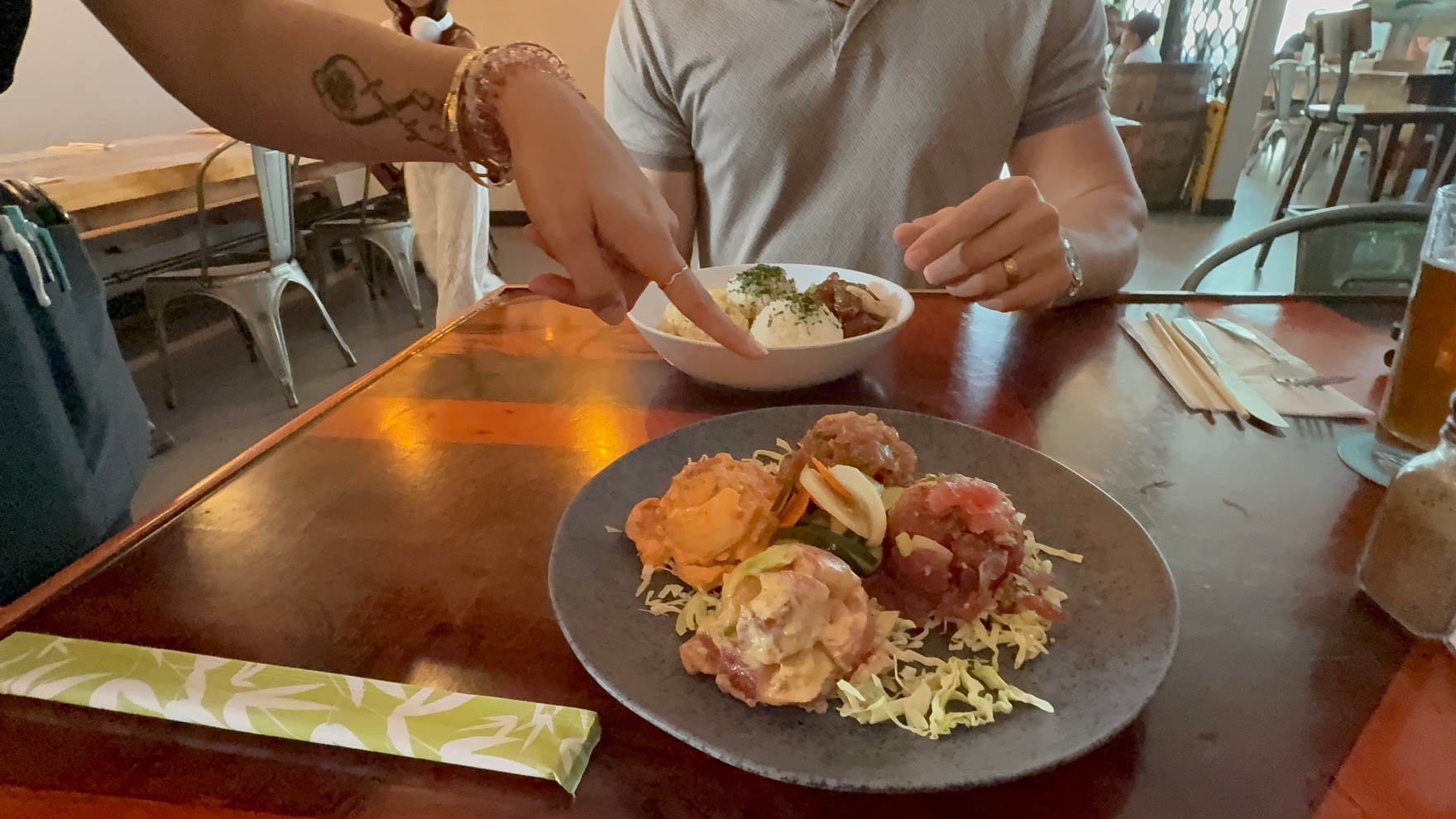
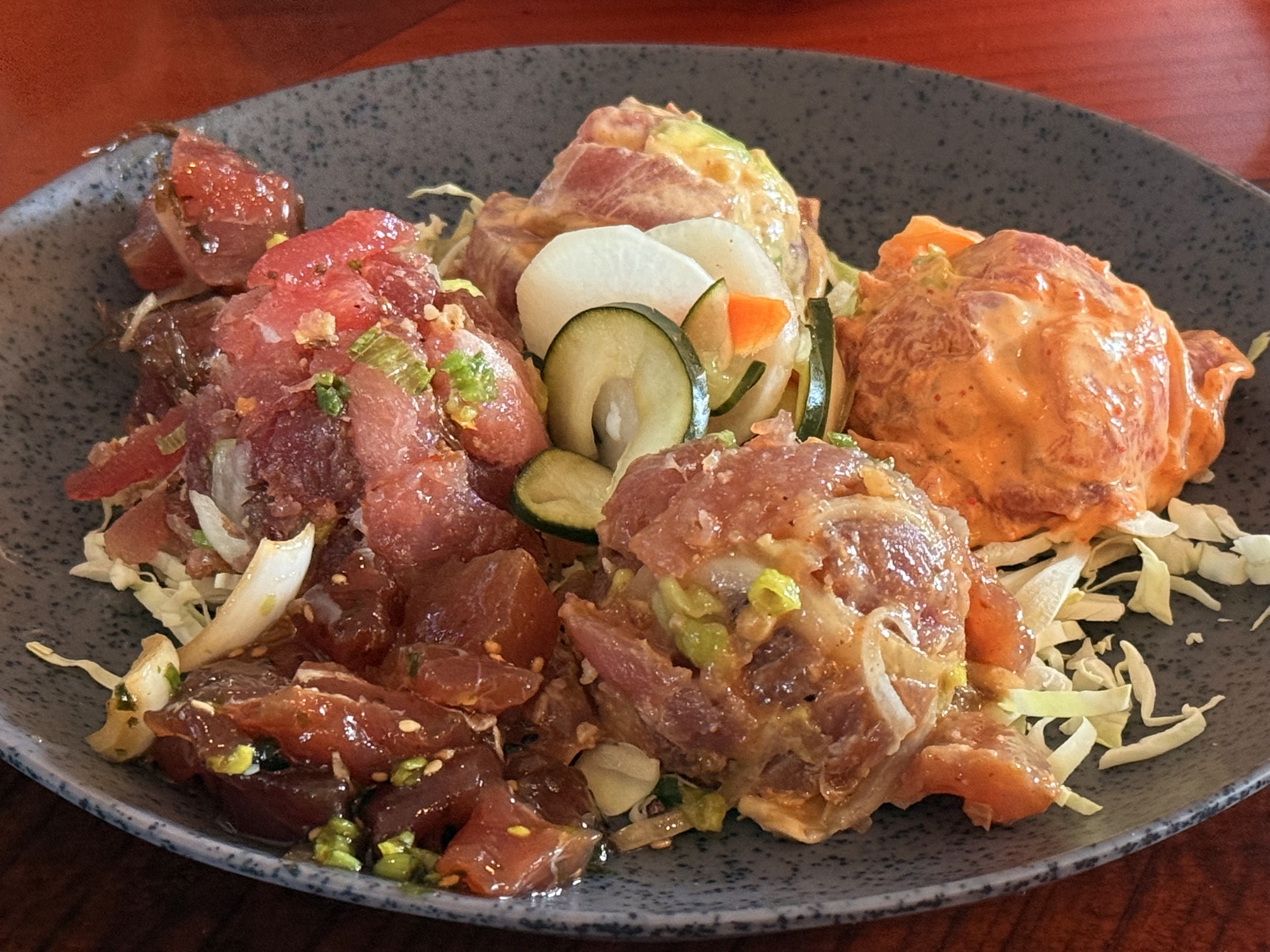
Umeke's offers four standard Pokes: Sweetie, Hottie, Avo, Kanaka and one poke of the day.
Today we tried them all: The photo below shows all six pokes available that day.
Of course, this is Hawaiʻi.
Ask ten Kona residents where to find the best poke, and you'll probably receive ten different answers. And many make poke at home. And we make our own poke at home. I like simple shoyu poke with sweet onion. Spicy Ahi poke with sriracha and sesame oil.
More Than Just Food
What fascinates me most about poke is that it tells the story of Hawaiʻi itself.
Native Hawaiian traditions. Japanese influence. Immigration and cultural exchange.
Family gatherings. Local entrepreneurship.
Global popularity.
All of these threads come together in one deceptively simple dish.
Every time I see a poke shop in Tokyo, Los Angeles, or New York, I'm reminded how far this local Hawaiian food has traveled. What began as a simple fishermen's snack has become one of Hawaiʻi's most recognizable culinary exports.
Yet despite all of its global success, the best poke experiences are often still the simplest.
Fresh fish. Good ingredients and Good company.
And if you happen to be visiting Kona, just remember one thing before placing your order.
It's POH-keh.
My daughters would want me to remind you.