

Kailua-Kona 2026 Real Estate Market Report
By Kai Ioh and KE TEAM Hawaii
Kai Ioh is a luxury real estate advisor based in Kona, Hawai‘i, specializing in second home, resort, and ultra-high-net-worth markets across the Big Island.
Key Takeaways
The Kailua-Kona 2026 real estate market is moving away from the extreme seller’s market of recent years and into a more balanced phase.
Single-family homes remain relatively resilient, with stable price-per-square-foot trends and inventory near balanced-market levels.
Condominiums have shifted more clearly in favor of buyers, with higher inventory, softer prices, and more room for negotiation.
Kona differs from many mainland markets because second-home, investment, and cash buyers remain an important part of demand.
The second half of 2026 is likely to reward accurate pricing, strong property presentation, and careful negotiation more than speed alone.
What Is Happening in the Kailua-Kona 2026 Real Estate Market?
The Kailua-Kona 2026 real estate market is best described as a return to normal conditions after several unusual years. Here on the west side of the Big Island of Hawai‘i, especially across Kona and the Kohala Coast, the market is no longer defined by historically low inventory, rapid appreciation, and constant competition.
That does not mean the market is weak. It means buyers and sellers are finally working in a more thoughtful environment. Buyers have more options. Sellers still have opportunities, but pricing strategy matters again. In some ways, this is a healthier market. Not quite as exciting as the pandemic boom, but honestly, a little less exhausting. Emil and I are having a record-breaking year; it is fun to work with creative twists and strategies.
Nationally, the housing market continues to adjust under mortgage rates in the mid 6% range. Inventory has improved to approximately 1.07 million homes, but that remains below the 1.2 million homes available in 2019. The national median list price has declined 3.2% year-over-year, and active listing prices have been trending lower since late 2025.
Kona reflects many of these same trends, but with its own local rhythm.
Why Is the Market Normalizing in 2026?
The market is normalizing because supply, pricing, and buyer behavior are all moving back toward more traditional patterns.
During the pandemic years, many buyers moved quickly because inventory was scarce and competition was intense. Sellers often had strong leverage, especially for well-located properties. That environment has changed.
Higher borrowing costs, slower economic growth, and rising inventory have given buyers more time to evaluate homes. Many homeowners are still reluctant to sell because they do not want to give up historically low mortgage rates, but inventory has still improved enough to change the tone of the market.
In Kona luxury and second-home markets, this adjustment is especially important. Buyers are still interested, but they are more selective. They are looking carefully at condition, location, view quality, costs, rental rules, and long-term value.
Single-Family Homes: Is Kona Moving Into a Balanced Market?
The Kona single-family home market has remained relatively resilient through the first half of 2026.
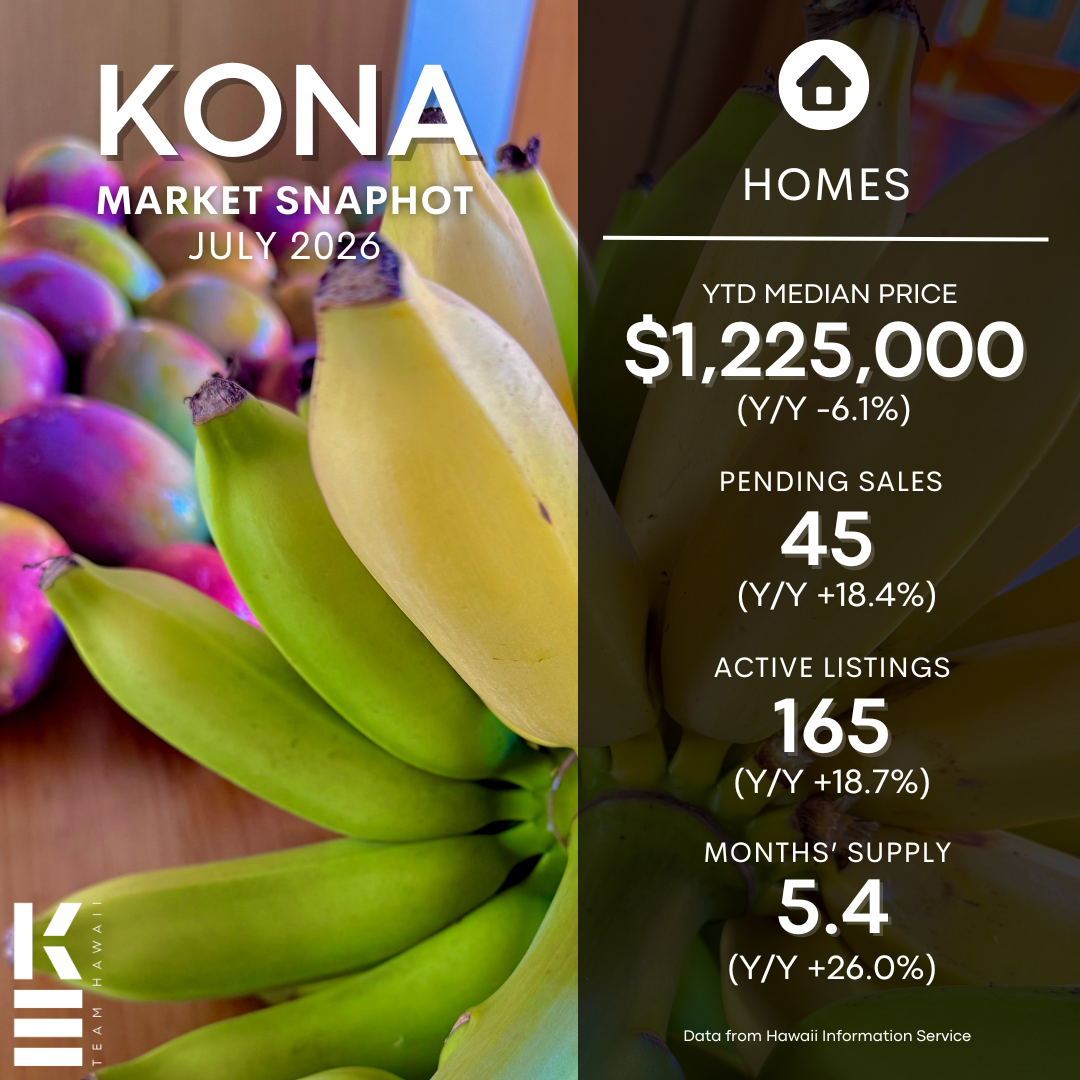
Year-to-date, the median sales price is $1.225 million. That is down 6.1% from last year and only about 2% below the 2025 year-end median. The more important detail is the median price per square foot, which has declined only 1%. That suggests home values have remained fairly stable, even with modest price adjustments.
Inventory has continued to grow. Active listings are up nearly 19% year-over-year, and months of supply has risen to 5.4 months. This is generally considered a balanced-market level.
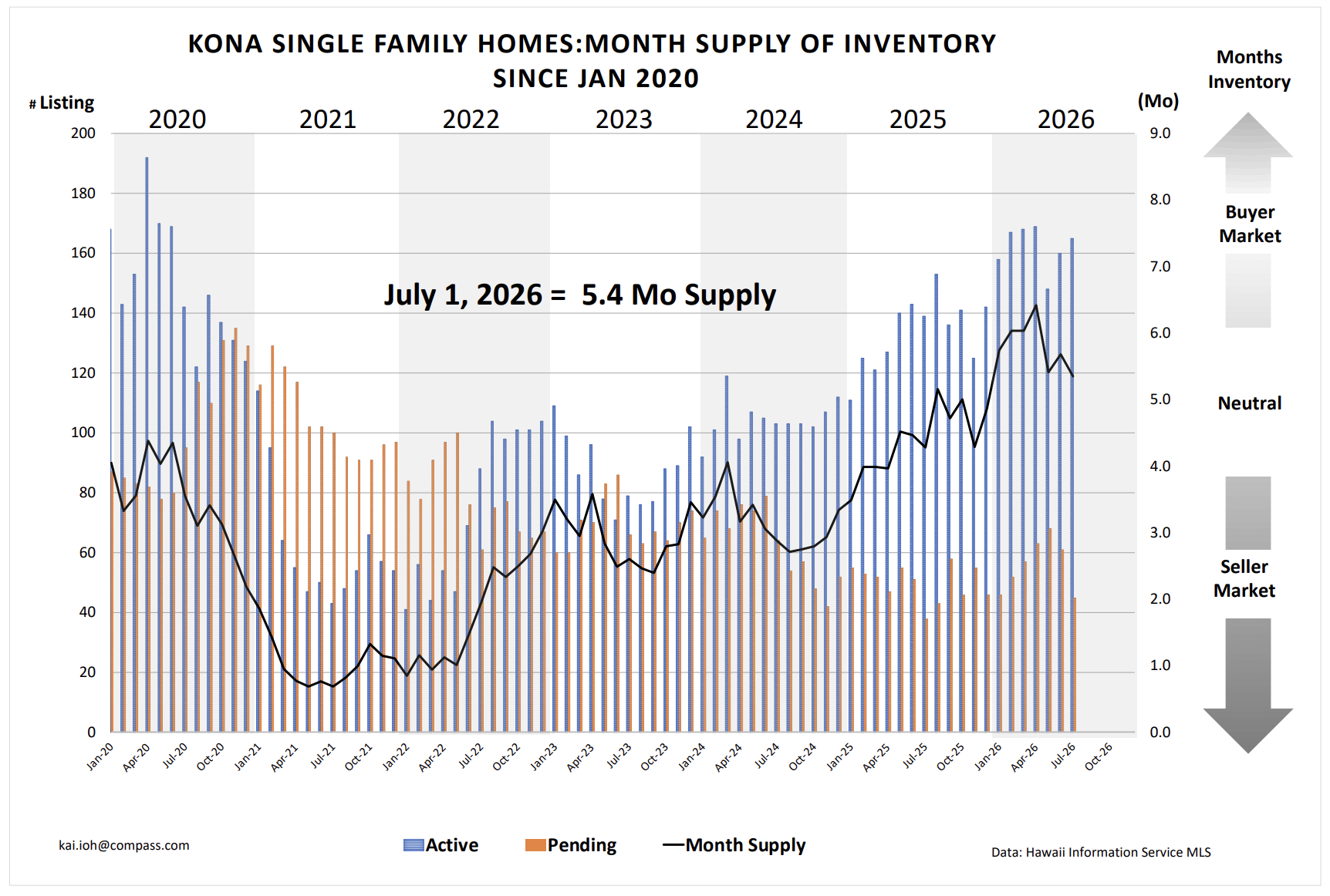
For buyers, this means more choices than we have seen in several years. This is especially true in the $1.2 million to $2.5 million range, where new inventory has increased noticeably.
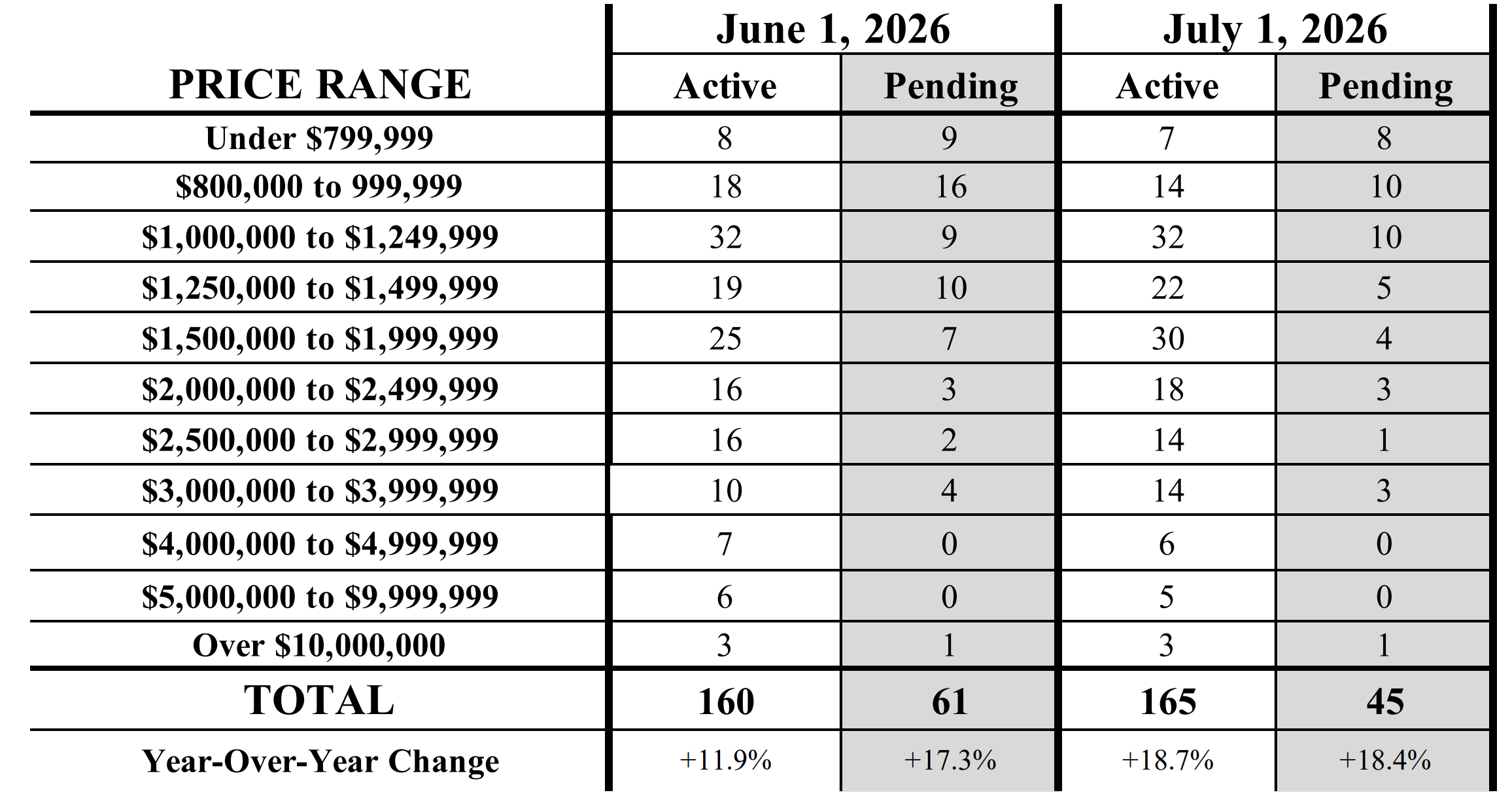
For sellers, this means preparation matters. Homes that are priced appropriately and presented well still attract qualified buyers. Overpriced listings, however, are sitting longer. The market is not punishing good properties. It is simply becoming more honest.
What Do Pending Sales Tell Us?
Demand has cooled from the very fast pace of the pandemic years, but it has not disappeared.
Sales activity typically slows after June in Kona, and 2026 followed that pattern with a 26% month-over-month decline. I feel the summer peak market lost momentum a little early this year. However, pending sales are still 18% higher than one year ago, and year-to-date closed sales remain virtually unchanged from 2025.
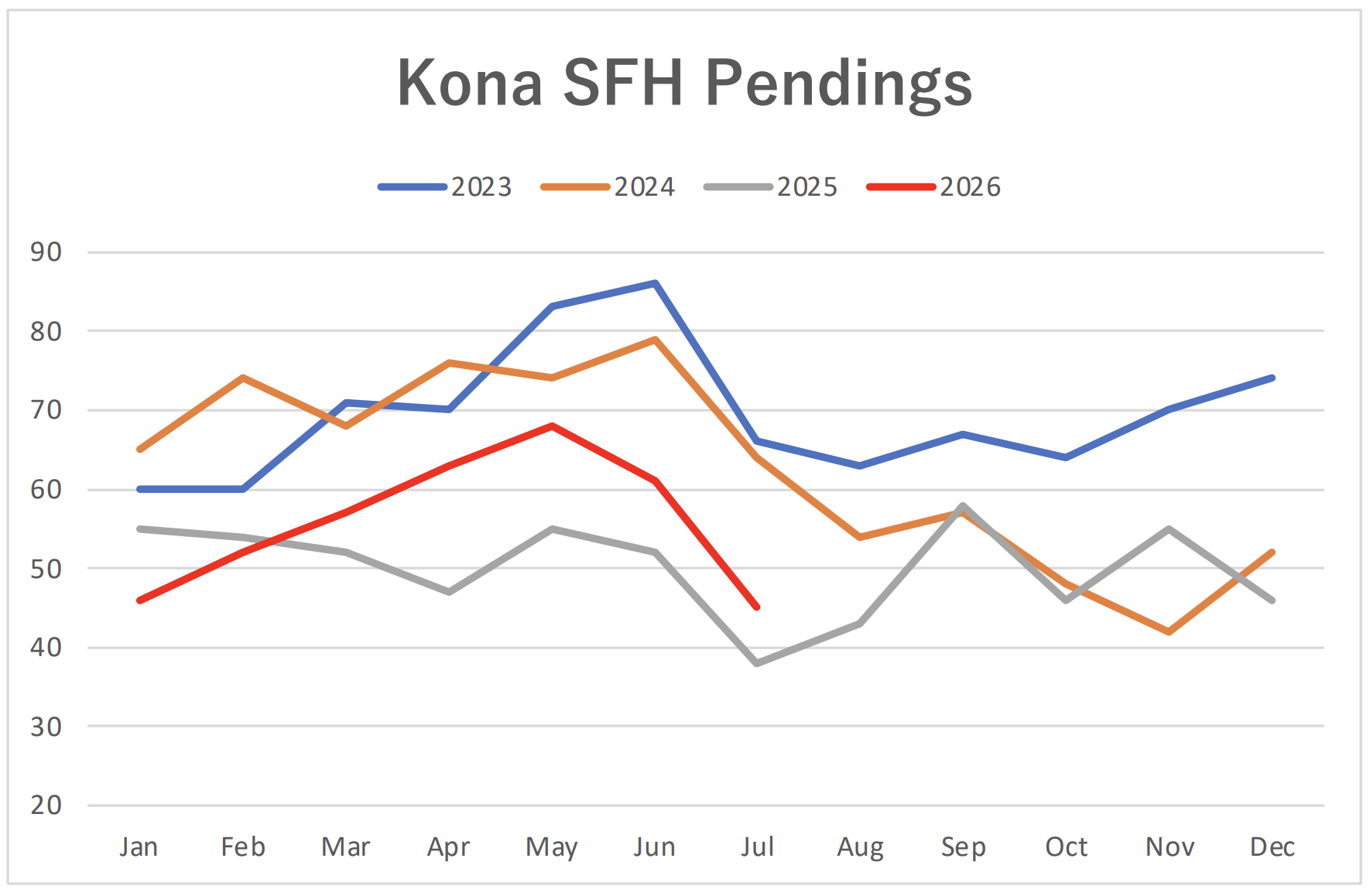
This tells us the single-family market is not frozen. It is selective. Buyers are still moving when the property, price, and lifestyle fit together.
Condominiums: Why Do Buyers Have More Leverage?
The condominium market has seen a more noticeable adjustment.
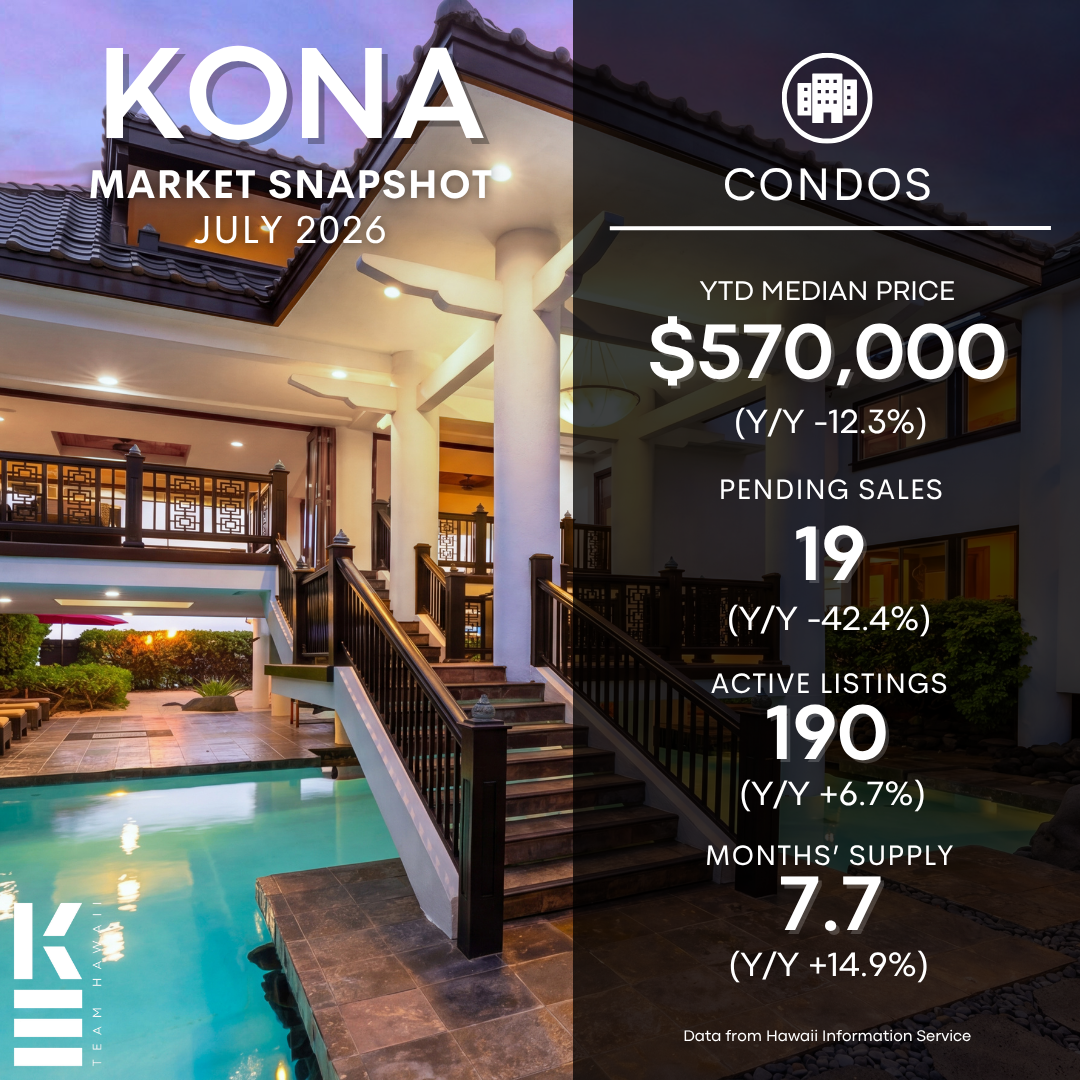
Year-to-date, the median condo price has declined to $570,000. That is down 12.3% year-over-year, bringing pricing back to levels last seen in 2023 after peaking near $694,000 in April 2025. Price per square foot has also softened, which reflects a broader correction after several years of strong appreciation. The condo market had to deal with insurance issues and tightening rental zoning regulations.
Inventory is the biggest story. Active listings have increased, pushing months of supply to 7.7 months. That is the highest level in roughly six years and places the condo market firmly in buyer’s market territory.
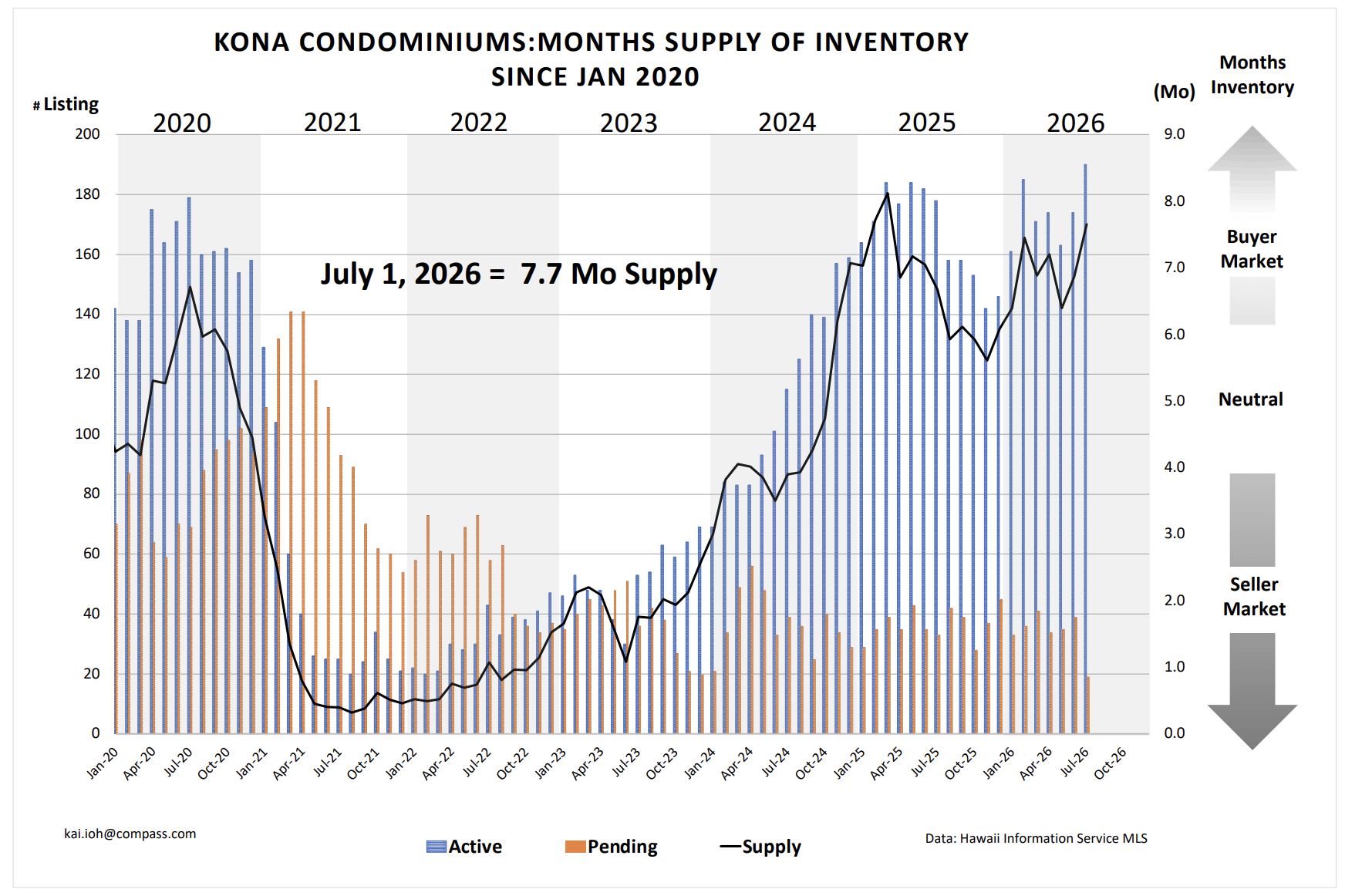
Supply has largely returned to pre-pandemic norms. Buyers now have significantly more choices and more negotiating leverage.
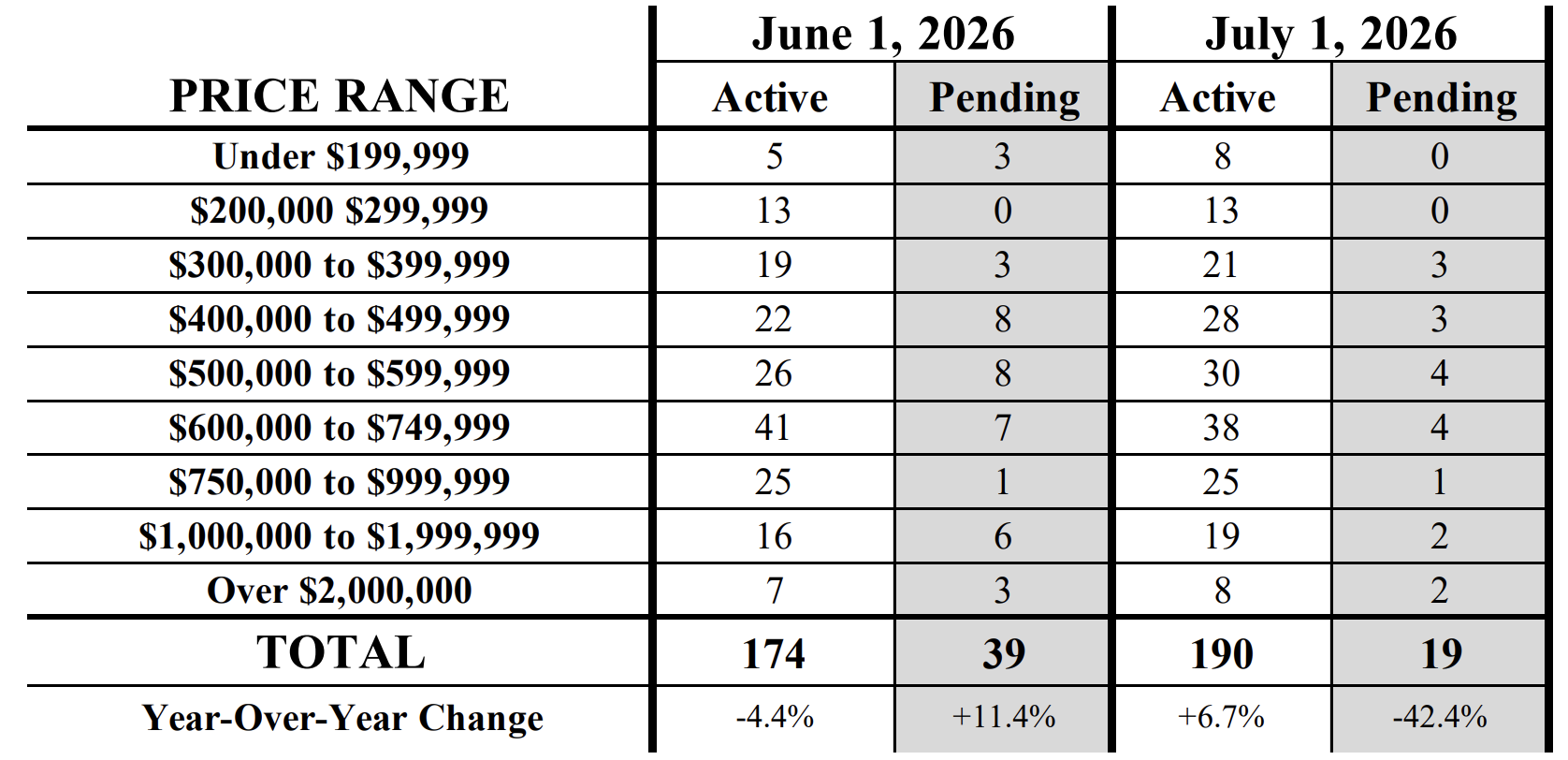
What Does the Active-to-Pending Ratio Mean?
Buyer activity has slowed. Pending sales dropped sharply in July, and the current 10-to-1 Active-to-Pending ratio shows a clear shift in the balance between supply and demand.
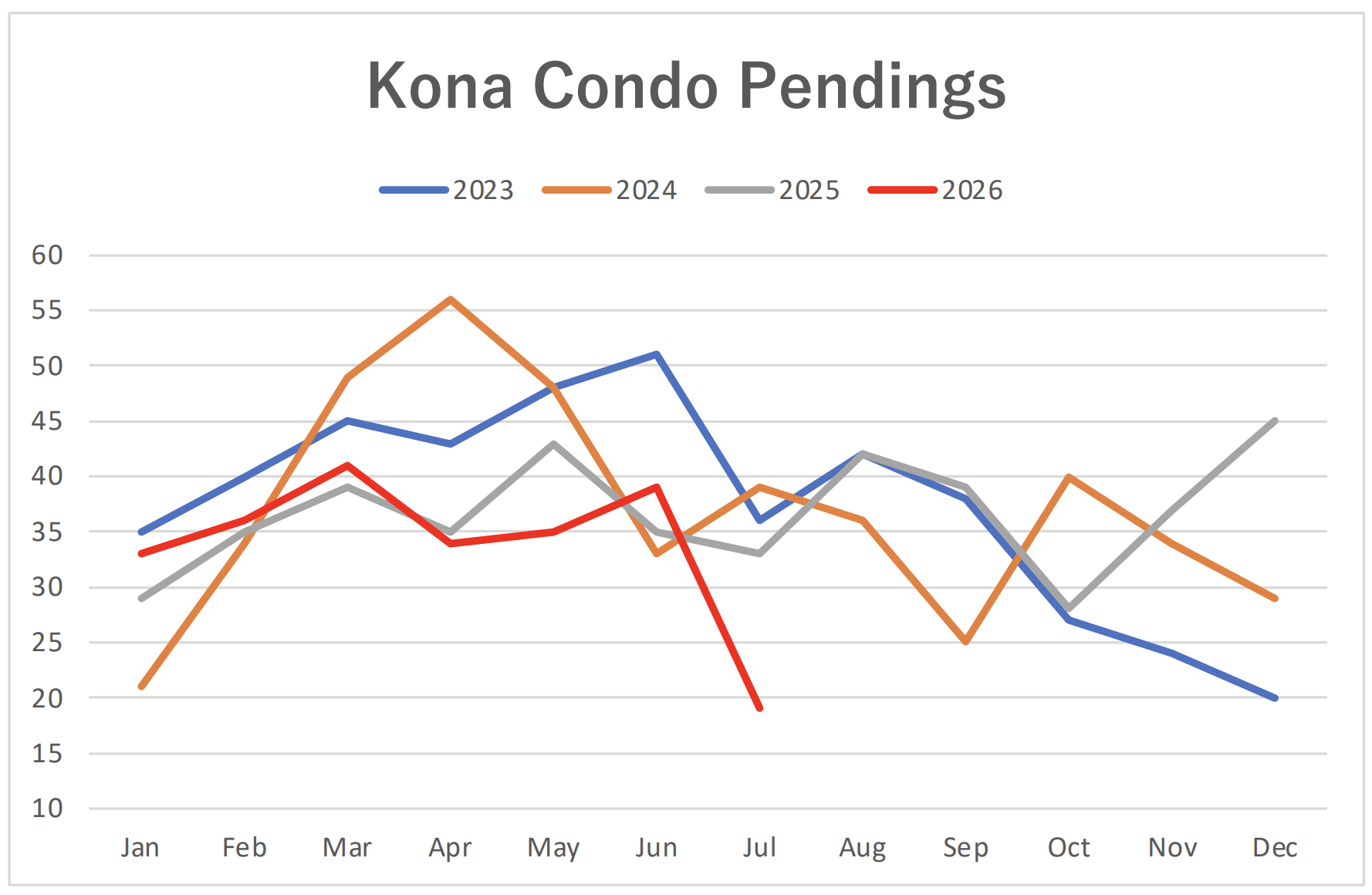
This does not mean every condo is difficult to sell. Quality properties still move, especially when they are well-priced, well-maintained, and located in desirable communities. But buyers are no longer rushing. They are comparing options, reviewing fees, studying rental performance, and asking more detailed questions.
That is not bad. It is normal due diligence finally making a comeback.
How Does Kona Differ From Mainland Markets?
Kona is following the broader national trend toward normalization, but it is not the same as many mainland housing markets.
Unlike many mainland areas where affordability is the dominant challenge, Kona continues to benefit from a significant number of discretionary, second-home, investment, and cash buyers. These buyers may still care about interest rates, but they are often less dependent on mortgage financing.
Lifestyle also plays a larger role here. Climate, ocean access, resort amenities, privacy, and limited long-term land supply all support Kona and Kohala Coast real estate over time.
At the same time, Kona is not insulated from the broader economy. Higher borrowing costs, slower economic growth, higher maintenance costs, and greater inventory are giving buyers more confidence to negotiate. This is not a distressed market. It is a market returning to fundamentals.
What Should Buyers Understand in the Second Half of 2026?
Buyers have more opportunity now than they have had in several years, especially in the condo market.
More inventory means more time to compare properties. It also means buyers can be more thoughtful about location, view quality, building condition, maintenance fees, short-term rental rules, and long-term ownership costs.
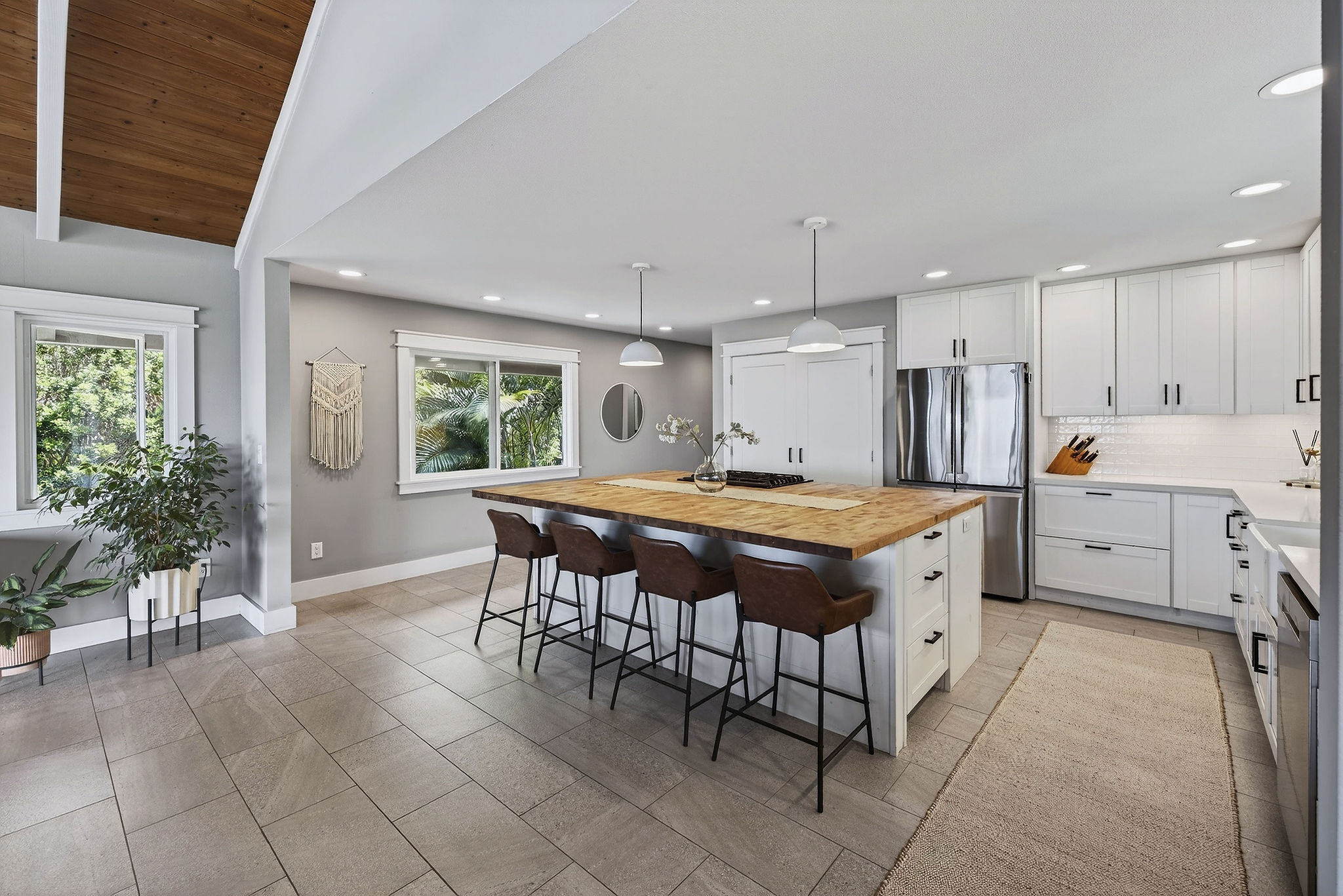
In the single-family market, buyers should not assume every seller is deeply negotiable. Well-priced homes in strong locations can still attract serious interest fast. The best opportunities are usually found where a property has been sitting because of presentation, pricing, or timing rather than a serious underlying problem.
What Should Sellers Understand in the Second Half of 2026?
Sellers need to be more strategic than they were in 2021 through 2025.
Pricing too aggressively can lead to longer market time and eventual price reductions. Buyers now have enough inventory to make comparisons, and they are using that leverage. A property must make sense against the current competition, not against the peak of the market.
Condition also matters. Small deferred-maintenance items can become negotiation points. Presentation, photography, staging, disclosures, and pre-market preparation all carry more weight in a balanced market.
In Kona, a good property can still sell well. But the market is rewarding discipline, not wishful thinking.
What Could Shape the Rest of 2026?
Several factors will influence the second half of the year.

Nationally, market watchers will be looking at whether year-over-year pricing gaps widen or stabilize. New listings will also matter. If more homeowners become willing to move, supply could continue to rise.
Employment growth and consumer confidence will also play a role. Even in second-home and luxury markets, confidence matters. Buyers may be able to purchase, but they still want to feel comfortable with the timing.
Locally, inventory will be the key issue. If single-family inventory remains near balanced levels, prices are likely to stay relatively stable. The condominium market may continue to favor buyers until pending sales recover and excess inventory is absorbed.
What Is the Main Misconception About the 2026 Kona Market?
The biggest misconception is that slower sales automatically mean a weak market.
That is not what the data suggests. In single-family homes, price-per-square-foot trends remain relatively stable, and closed sales are nearly unchanged from last year. In condos, the adjustment is more pronounced, but it follows several years of exceptional appreciation.
The better interpretation is that Kona has moved from an extreme seller’s market into a more normal market. Buyers have more room to think. Sellers need a better strategy. Both sides benefit from understanding the details.
The second half of 2026 is shaping up to be defined not by rapid appreciation or steep declines, but by stability, opportunity, and a return to fundamentals. In Kona, that is not a bad thing. It is the kind of market where good decisions matter again.
Please access our July 2026 KE TEAM Market Update Flipbook for the detailed market data
Frequently Asked Questions
What is happening in the Kailua-Kona 2026 real estate market?
The Kailua-Kona 2026 real estate market is normalizing after several years of unusually low inventory and rapid price growth. Single-family homes are moving toward balance, while condominiums have shifted more clearly in favor of buyers.
Is Kailua-Kona a buyer’s market in 2026?
It depends on the property type. Single-family homes are near balanced-market conditions, with 5.4 months of supply. Condominiums are more clearly in buyer’s market territory, with 7.7 months of supply and more negotiating leverage.
Are Kona home prices falling in 2026?
Kona single-family home prices have softened modestly. The year-to-date median price is $1.225 million, down 6.1% year-over-year. However, median price per square foot is down only 1%, suggesting values remain relatively stable.
Why is the Kona condo market softer than the home market?
The condo market has more inventory and slower buyer activity. The year-to-date median condo price has declined to $570,000, and months of supply has risen to 7.7 months. Buyers now have more choices and more leverage.
How does Kona differ from mainland real estate markets?
Kona has more discretionary, second-home, investment, and cash buyers than many mainland markets. These buyers are often less sensitive to mortgage rates. However, Kona is still affected by broader economic conditions and inventory levels.
Is the Kona real estate market in distress?
No. The market is adjusting, but it is not showing broad signs of distress. Single-family sales remain relatively stable, and condo pricing is correcting after several years of strong appreciation. This is better described as normalization.
What should buyers watch in the second half of 2026?
Buyers should watch inventory, days on market, price reductions, condo fees, property condition, and rental rules. More choices can create opportunity, but each property still needs careful evaluation.
What should sellers do differently in 2026?
Sellers should price realistically, prepare the property carefully, and understand current competition. In a more balanced market, buyers compare options closely. Presentation and accurate pricing matter more than they did during the peak seller’s market.
Will Kona real estate prices stay stable in late 2026?
Single-family prices may remain relatively stable if inventory stays near balanced levels. The condo market may continue to favor buyers until pending sales improve and excess inventory is absorbed.
Why does limited land supply matter in Kona?
Kona and the Kohala Coast have long-term geographic and land-use constraints. Limited land supply can support values over time, especially in desirable areas, but it does not prevent short-term market adjustments.