
Updated
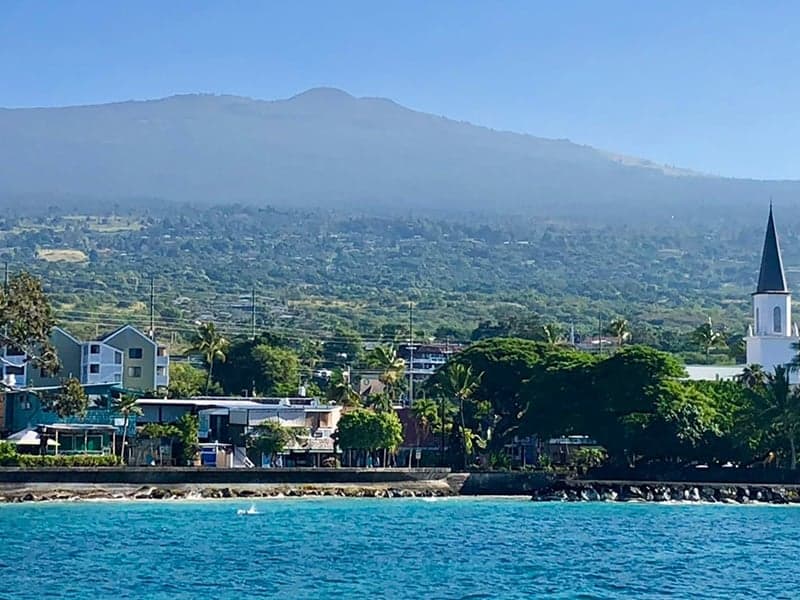
Kona is the dry, sunny western coast of Hawaii Island — a roughly 60-mile stretch from Ka‘ūpūlehu in the north through Kailua-Kona village down to Honaunau and the South Kona coffee country. It is the most active real estate market on the Big Island, with everything from $400K studio condos on Ali‘i Drive to $60M+ oceanfront trophy estates on the Kohala Coast. Buyers come for the year-round 80-degree weather, 280+ sunny days, lower pricing than Maui or Oahu for comparable inventory, and a real cross-section of communities ranging from gated resort enclaves to historic town centers and upland coffee farms.
Kona Market Snapshot
The 2026 Kona market spans an extraordinary price range, with single-family median sale prices running near $1.34M in Kailua-Kona, condo medians near $725K, and Kohala Coast resort communities trading at $2M–$9M medians per Hawaii Information Service MLS data as of May 2026.
Inventory dynamics vary by sub-market. Kailua-Kona condos and Waikoloa Beach Resort villas turn most actively (45–90 days). Custom single-family estates at Mauna Lani, Mauna Kea, and Hualalai turn slower (100–180+ days). The Kohala Coast’s private-club communities (Hualalai, Kūki‘o, Kohanaiki) trade a meaningful share off-market. Overall, the 2025–2026 market has softened modestly from peak 2022, with rising inventory and more negotiating room for well-qualified buyers, while the top of the market remains structurally tight.
A Brief History of Kona
Kona has been continuously settled by Native Hawaiians for over 1,000 years, with the Kailua-Kona shoreline (Kamakahonu) serving as a royal residence and ceremonial center. Kailua Village remains the historic core of the coast, anchored by Hulihe‘e Palace (1838) and Moku‘aikaua Church (1820). Modern resort development began in 1965 at Mauna Kea Resort and expanded through the 1980s with Mauna Lani and Waikoloa Beach Resort. Hualalai opened in 1996, Kūki‘o and Kohanaiki followed in the 2000s. The coffee country south of Kailua-Kona has been culturally and agriculturally distinct from the coastal resort corridor for over a century.
What Schools Serve Kona
Kona spans two Hawaii Department of Education complexes — Kealakehe (Kailua-Kona through North Kona) and Kohala (northern Kohala Coast and upcountry) — per Hawaii DOE 2025–2026 boundaries.
Public school options vary by sub-area: Kealakehe Elementary, Intermediate, and High serve Kailua-Kona; Waikoloa Elementary and Middle serve the central Kohala Coast; Honoka‘a and Kohala schools serve the northern districts. West Hawaii Explorations Academy (WHEA) is a regarded public charter. Private school options center on Hawaii Preparatory Academy (HPA) and Parker School, both in Waimea.
Neighborhood Character and Daily Life
Kona’s defining feature compared with other Hawaii Island markets is the sheer diversity of community types within a single 60-mile coastal corridor.
What stands out about Kona is the breadth of sub-markets and how meaningfully they differ in daily life. Kailua-Kona village offers walkable historic urbanism along Ali‘i Drive. Keauhou mixes resort condos with full-time single-family neighborhoods around the Kona Country Club. The Kohala Coast resorts are gated and golf-driven. Hualalai, Kūki‘o, and Kohanaiki are members-only private clubs. Holualoa and the upland coffee country are agricultural and pastoral. Buyers who choose Kona typically choose a specific sub-market that fits their lifestyle, not Kona as a whole.
Architecture and the Built Environment
Architectural language across Kona spans original 1960s–80s plantation Hawaiian (Ali‘i Drive condos, Kailua-Kona village), 1980s–2000s contemporary Hawaiian (Mauna Lani, Mauna Kea, Waikoloa villa complexes), contemporary single-family resort estates (Hualalai, Kūki‘o, Kohanaiki), and traditional upland ranch and coffee-country vernacular (Holualoa, Honaunau). New construction across the coast trends contemporary Hawaiian with lava-stone accents, deep lanais, and pool-and-spa programs oriented to ocean and sunset.
Where Kona Sits
Kona sits at approximately 19.6406° N, 155.9969° W on Hawaii Island. The map below centers on the community.
Commute and Connectivity
Kona International Airport (KOA) sits at the geographic center of the Kona coast, with daily nonstop commercial flights to West Coast hubs and full private aviation services through Kona Jet Center and Hawaii Aviation Services. Drive times from KOA range from 10 minutes (Kailua-Kona village) to 45 minutes (Mauna Kea Resort). Waimea sits 25 minutes mauka of the Kohala Coast for HPA, Parker School, and cross-island access to Hilo and the Hāmākua Coast.
Adjacent Communities
Kona’s sub-markets include Kailua-Kona homes, Kona condos, Kona luxury homes, Keauhou, Holualoa, and the Kohala Coast resort communities (Mauna Lani, Mauna Kea, Hualalai, Kūki‘o, Kohanaiki, Waikoloa Beach Resort). South Kona continues toward Honaunau and the coffee country.
Frequently Asked Questions
- What does Kona real estate cost in 2026?
- The 2026 Kona market spans Kailua-Kona single-family medians near $1.34M, condo medians near $725K, Kohala Coast resort medians from $2M to $9M depending on community, and ultra-luxury private-club estates from $8M to $60M+ per Hawaii Information Service MLS data as of May 2026.
- Which part of Kona is best for full-time residents?
- Kailua-Kona village and Keauhou offer the most accessible full-time residential community fabric with on-site schools, commercial services, and historic town character. Waikoloa Village is the upland residential peer at 900 feet of elevation. The Kohala Coast resort communities (Mauna Lani, Mauna Kea, Waikoloa Beach Resort) serve more second-home and seasonal-use buyers, while Hualalai, Kūki‘o, and Kohanaiki are private-club enclaves.
- What is the difference between Kona and the Kohala Coast?
- Kona is the broader 60-mile western coastal corridor of Hawaii Island; the Kohala Coast is the northern 25-mile sub-region with the highest concentration of luxury resort communities (Mauna Lani, Mauna Kea, Hualalai, Kūki‘o, Kohanaiki, Waikoloa Beach Resort). The two terms overlap in everyday usage — most "Kohala Coast" properties are within "Kona" as a market region.
- Are short-term rentals allowed in Kona?
- Yes — most resort-zoned condo and villa product across Kona (Ali‘i Drive complexes in Kailua-Kona, Keauhou condos, Mauna Lani and Waikoloa Beach Resort villas) permits short-term vacation rentals under Hawaii County V (Resort) zoning. Hawaii County has tightened STR rules over recent years in residential zones, so single-family neighborhoods are more restrictive. Verify per property during due diligence.
- How is Kona’s climate different from other parts of Hawaii?
- Kona is the driest and sunniest part of Hawaii Island, averaging under 20 inches of annual rainfall along the Kohala Coast (under 12 at the immediate shoreline) and 280+ sunny days per year. Temperatures run 80–88°F year-round at sea level with low humidity and consistent tradewinds. The combination of dry climate and reliable sunshine is a primary structural reason for sustained luxury demand on the Kona-Kohala coast.
Talk to KE Team Hawaii About Kona
KE Team Hawaii — Kai Ioh and Emil Knysh of Compass — represents buyers and sellers across every sub-market of Kona. Reach out for candid community-by-community comparisons, current MLS data, and access to off-market inventory. Start a conversation or browse live featured properties.
Kai Ioh · Hawaii Real Estate License RB-19352 · Compass · 75-1029 Henry Street, Suite 301, Kailua-Kona, HI 96740 · (808) 936-6148 · kai.ioh@compass.com